Remove Oil Stains from Concrete with Pressure Cleaning
Pressure cleaning can lift surface oil from concrete, but preparation matters more than maximum water pressure. This guide explains the treatment sequence, product limits, wastewater considerations and when an old stain may only improve rather than disappear.
How to Remove Oil Stains from Concrete with Pressure Cleaning
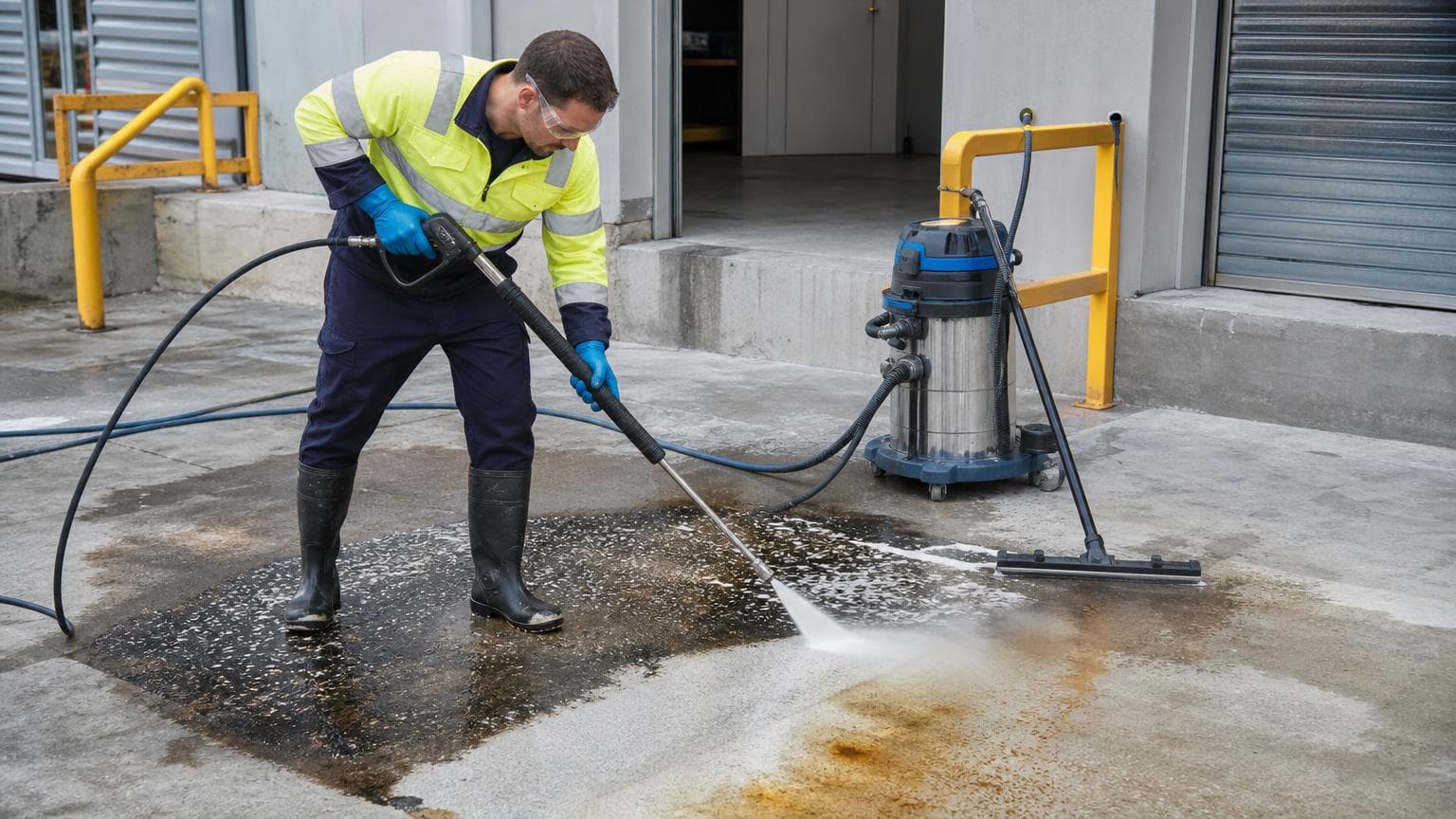
Pressure cleaning removes loose oil and degreaser residue, not usually oil that has soaked into concrete pores. For a fresh spill, first absorb pooled oil, then use a concrete-compatible degreaser, agitate it, recover the residue and rinse with controlled pressure.
Author: Eco Spark Facility Services, NSW commercial cleaning contractor.
The short answer
Yes, pressure washing can remove an oil stain when the oil remains near the concrete surface and the operator prepares the area first. If a dark mark remains after the surface is clean and dry, the oil may have travelled into the pores or earlier cleaning may have spread the residue.
Most people start by using the highest available pressure. That is backwards, because pressure cannot replace oil absorption or chemical preparation. Start by identifying the stain, removing loose oil and choosing a degreaser whose label permits use on concrete, then set the pressure, nozzle, dwell time, agitation and wastewater controls to suit the site.
What this looks like in practice
A commercial site needs more than a clean-looking patch. A warehouse, school, medical centre, office or construction site may have pedestrian areas, vehicle movement, drains, painted markings and nearby surfaces that must remain protected.
- Inspect the concrete, stain age, surrounding surfaces and drainage route.
- Remove pooled oil and loose contamination before adding water.
- Apply a suitable degreaser and allow the label-directed dwell time.
- Agitate the product so it can lift residue from the concrete pores.
- Rinse with equipment suited to the surface, then inspect the whole area rather than one small spot.
- Recover or direct wastewater in line with the site's procedures and applicable environmental requirements.
Eco Spark Facility Services brings NSW commercial cleaning, industrial and construction cleaning experience to this type of work. Its programmes use eco-friendly products and methods, with insured team messaging on site. Product choice still needs to match the concrete, contamination and site controls; an eco-friendly claim should describe those choices rather than act as a substitute for them.
Can pressure washing remove oil stains from concrete?
Pressure washing removes loosened oil and degreaser residue more effectively than it removes oil that has soaked into the slab. Fresh surface contamination usually responds better than a dark mark that has weathered through repeated vehicle traffic and earlier cleaning attempts.
The strongest pressure setting is not automatically the best setting. Excessive pressure can spread dirty water, damage weak or deteriorated concrete, strip coatings and leave a visibly cleaner circle surrounded by a darker surface. A professional should adjust the method after checking the concrete condition, not choose a PSI number in isolation.
Pressure cleaning will not repair cracking, replace a failed coating or guarantee complete removal of a stain that has penetrated deeply. Ignore this approach if the main problem is structural damage or a failed coating, because cleaning alone will not correct it. In those cases, the realistic outcome may be improvement rather than a return to an unstained appearance.
What is the strongest degreaser for concrete?
There is no single strongest degreaser for every concrete surface. For most oil-stained commercial concrete, start with a commercial alkaline degreaser labelled as suitable for concrete, then follow its dilution, contact time and rinsing directions.
Stronger is not automatically better. An aggressive product can create a new problem through surface damage, residue, odour or incompatibility with nearby coatings and metals. The correct product ranks above maximum strength, and a small test area ranks above guesswork.
Do not pay for specialised treatment until the site has confirmed the concrete condition, stain depth, access, drainage and desired finish. Those details determine the preparation, labour and wastewater controls included in a quote.
What a useful cleaning video should show
People searching YouTube for concrete oil-stain removal often see short demonstrations. A useful video should show the full process, not only the final rinse.
- The condition of the concrete before treatment.
- How excess oil is removed before water is introduced.
- The degreaser label, dilution and dwell time.
- Agitation before pressure cleaning.
- Nozzle distance and technique around edges, joints and painted markings.
- Where the dirty water goes and how the final result looks across the whole area.
A video that shows only a high-pressure lance can hide the part that does most of the stain-lifting work: chemical preparation and agitation. Treat online demonstrations as technique examples, not proof that the same setting will suit your site.
Why preparation matters more than PSI
Oil sits partly on the surface and partly within the pores of concrete. Water pressure can remove the first part after a degreaser loosens it, but pressure does not replace absorption, chemical action or agitation.
For a manageable stain, the practical order is absorb, degrease, agitate, recover and rinse. Keep the treated area large enough to blend with the surrounding concrete. Cleaning one small rectangle can leave a sharp boundary even after the oil has gone.
Drain protection also matters. Dirty wash water may contain oil, detergent and suspended solids. The NSW Environment Protection Authority provides information about stormwater and water pollution controls, so site teams should check the relevant requirements before directing runoff towards a drain.
For broader exterior work, Eco Spark's Specialised Cleaning Carpet Pressure Solar NSW page provides a relevant service pathway. Commercial sites can also review Commercial Industrial Cleaning in Wagga Wagga when the concrete forms part of a larger cleaning programme.
How to deal with old stains and garage floors
Old oil stains need a slower assessment than fresh spills. Look for a greasy feel, darkened pores, a previous coating, flaking concrete or a stain that has spread beyond its original outline. Each condition changes the risk of aggressive pressure cleaning.
For an old garage floor, remove loose debris, absorb any remaining surface oil and test a concrete-compatible degreaser in an inconspicuous area. If the stain lightens but remains visible after rinsing and drying, further treatment may produce diminishing returns. Painting or sealing the floor should wait until the surface is clean, dry and suitable for the selected coating.
Without a pressure washer, scrub the degreaser into the stain with a stiff brush, absorb the loosened residue and rinse using the least water needed for the surface. This method suits small accessible areas, but it demands more manual work and does not provide the same rinse capability as commercial equipment.
Products people commonly ask about
WD-40: Do not treat WD-40 as the primary oil-stain remover for concrete. It is itself a petroleum-based product, so adding it may leave another residue to remove.
Bleach: Bleach is not a degreaser. It may affect organic discolouration, but it does not provide the right action for removing embedded oil and can create an unnecessary chemical hazard if mixed with other products.
Vinegar: Vinegar is not the recommended first choice for an oil stain. It does not replace a concrete-compatible degreaser, absorption and mechanical agitation.
TSP: TSP is sometimes suggested for greasy concrete, but its suitability depends on the product, surface and wastewater controls. Follow the label and site procedures rather than assuming a stronger cleaner is safer or more effective.
Common mistakes that reduce the result
- Starting with high pressure before removing pooled oil.
- Using a household product without checking concrete compatibility.
- Rinsing too soon, before the degreaser has had time to work.
- Cleaning only the darkest mark and leaving a visible boundary.
- Ignoring nearby paint, metal, glass, landscaping or floor coatings.
- Allowing oily wastewater to move towards an uncontrolled drain.
The most common belief to correct is that pressure does all the work. It does not. Preparation decides how much oil becomes removable, while pressure cleaning removes the loosened contamination.
Local considerations for NSW commercial sites
For sites in Sydney, Greater Sydney, Wagga Wagga, Estella and Regional NSW, the cleaning scope should identify access times, vehicle movement, drainage, water availability and the areas that need to remain open. These details matter more than adding a generic “oil stain removal” line to a work order.
Schools, healthcare clinics and offices may need a method that limits disruption and keeps treated areas controlled until they are ready for use. Warehouses, builders and property managers may need the work coordinated with deliveries, handover activities or construction cleaning. Eco Spark Facility Services offers commercial and specialised cleaning across NSW, including Commercial Cleaning Wagga Wagga NSW and wider commercial cleaning services through its Commercial Cleaning Services Wagga Wagga page.
Pricing varies depending on the stained area, concrete condition, access, stain depth, preparation required, water controls and whether the work forms part of a wider cleaning programme. A photo helps with an initial discussion, but an accurate scope may require site information.
Where to go from here
For a small, fresh stain, use the sequence in this article and test a discreet area first. For old stains, large hardstandings, warehouse floors, construction sites or areas near drainage, prepare a site-specific scope before choosing equipment or chemicals.
If you want Eco Spark Facility Services to assess the concrete, send the site location, approximate area, stain age, photographs and any access or drainage restrictions with your quote request. That gives the cleaning team information to assess the method rather than guessing from the stain alone.