Commercial Cleaning Quality Audits in NSW: A Practical Guide
Learn how a commercial cleaning quality audit in NSW measures service results, records defects, verifies corrective actions and improves facility standards.
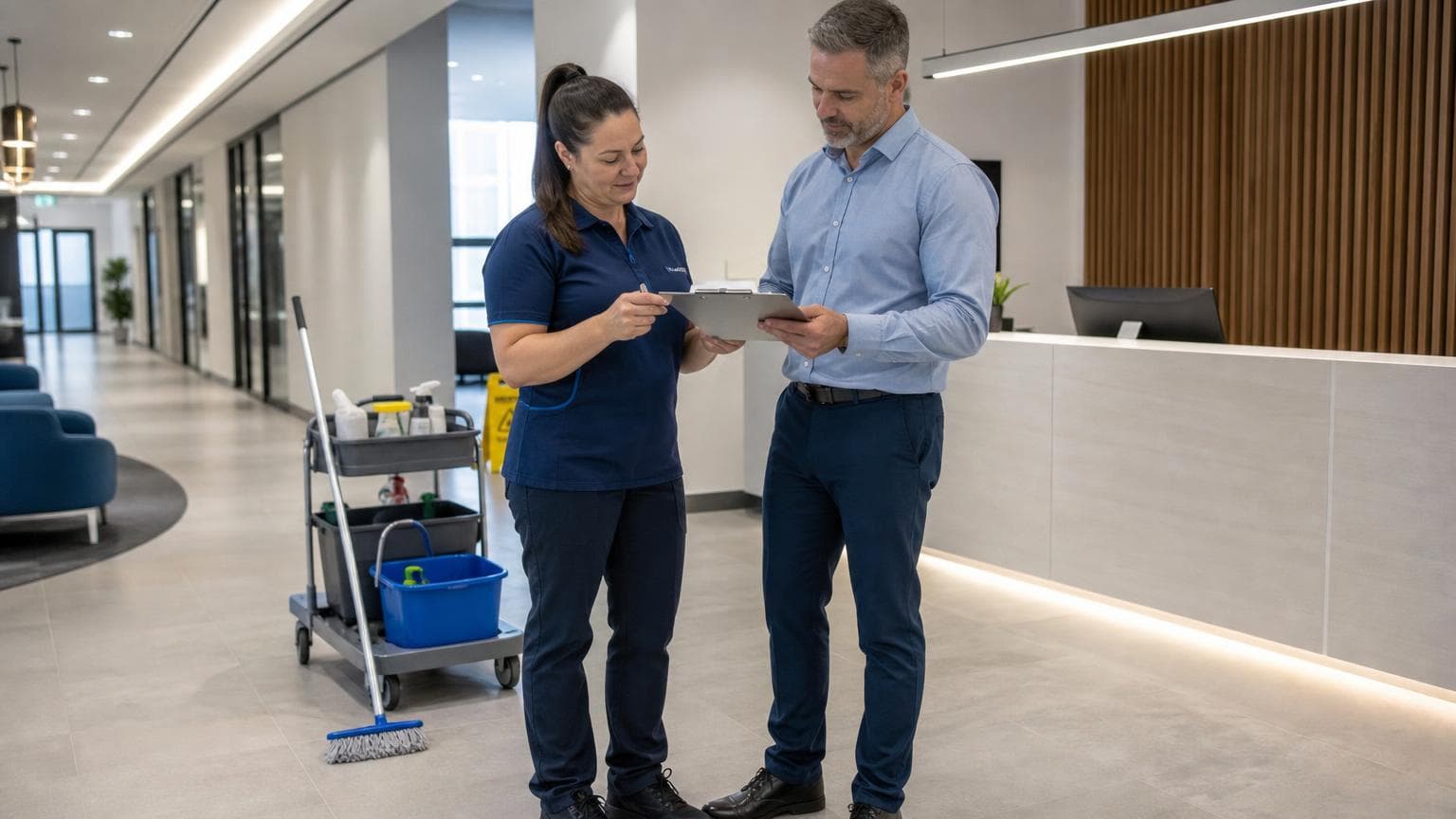
A clean workplace should be assessed by what is visible, measurable and consistently delivered, not simply by whether a cleaning team attended the site. A commercial cleaning quality audit NSW process gives facility managers, business owners and cleaning providers a structured way to inspect completed work, record defects and confirm that corrective actions have been completed.
This approach is useful for offices, warehouses, schools, medical centres, retail premises and other commercial facilities across New South Wales. It shifts quality control from informal feedback to a repeatable process based on agreed standards and site conditions.
What is a commercial cleaning quality audit?
A commercial cleaning quality audit is a post-service inspection of cleaning outcomes. It compares the condition of a facility against the expected scope of work, area-specific standards and any health, safety or presentation requirements relevant to the site.
An audit may be completed by a facility manager, an independent reviewer, a cleaning supervisor or a combination of these people. It can involve visual inspections, review of cleaning records, staff feedback and checks of high-use or higher-risk areas.
The purpose is not to criticise cleaners for its own sake. A useful audit identifies what is working, where standards are slipping and what action will prevent the same issue from recurring.
Why post-service inspections matter in NSW facilities
Commercial buildings change throughout the day. Foot traffic, weather, food preparation, deliveries, shared amenities and workplace activities all affect how quickly surfaces become soiled. A service that appears satisfactory in one area may not meet the needs of a medical centre, warehouse or education facility.
Regular inspections help to:
- Confirm that completed tasks match the agreed cleaning scope.
- Identify recurring defects instead of treating each complaint as an isolated event.
- Prioritise issues that affect hygiene, safety, access or the public image of the business.
- Give cleaning teams clear and practical feedback.
- Support consistent communication between site contacts, supervisors and cleaners.
- Track whether corrective actions actually improve results over time.
For an office, this may include checking desks, kitchens, meeting rooms, floors and washrooms. For a warehouse, the focus may also include loading areas, break rooms, hard floors, high dust levels and safe cleaning around stock or equipment. Eco Spark provides industrial and warehouse cleaning in Wagga Wagga for sites where cleaning requirements extend beyond a standard office routine.
Build the audit around measurable standards
An audit is more useful when the inspector knows what acceptable performance looks like. Avoid broad statements such as “clean the office well” and define observable outcomes for each area.
Examples of measurable inspection points
- Floors: free from visible dust, loose debris, spills, sticky residue and avoidable streaking.
- Washrooms: fixtures, mirrors, partitions and floors visibly clean, with consumables replenished where included in the service.
- Kitchens and staff areas: benches, sinks, appliance exteriors and floors cleaned without food residue or overflowing waste.
- Touchpoints: door handles, push plates, lift controls and other agreed high-contact surfaces cleaned according to the site schedule.
- Glass and windows: cleaned to the agreed frequency and free from readily visible marks in normal lighting.
- Waste areas: bins emptied, liners replaced where required and surrounding surfaces free from loose waste.
- Carpets and upholstery: vacuumed or treated according to the agreed method, with visible spots recorded for specialist attention where necessary.
Standards should reflect the building's use. A school, healthcare setting and distribution facility should not be judged by an identical checklist. Include a field for “not applicable” so inspectors do not create false failures for tasks that were not required on that visit.
What to include in a quality audit checklist
A practical checklist should be detailed enough to produce useful evidence but simple enough to complete consistently. Include the following sections:
- Site details: facility name, inspected areas, inspection date, service period and inspector.
- Area-by-area results: list each room or zone with its relevant standards.
- Rating or status: use clear options such as pass, attention required, failed or not applicable.
- Defect description: record exactly what was observed, rather than using vague wording.
- Location: identify the room, floor, corridor or asset involved.
- Evidence: add photographs where appropriate and permitted by the site.
- Priority: classify the issue by hygiene, safety, presentation, access or operational impact.
- Corrective action: state what needs to happen and who is responsible for follow-up.
- Verification: record when the action was checked and whether the outcome was accepted.
A checklist should support the cleaning team rather than become a paperwork exercise. Keep recurring problems visible and review the form if it fails to capture important site conditions.
How to conduct a commercial cleaning quality audit NSW businesses can use
1. Review the expected service
Before walking through the site, check the current scope of work, area schedule and any recent instructions. This avoids marking a task as incomplete when it was not included or was assigned to a different service frequency.
2. Inspect soon after service
Post-service inspections should take place while the results are still reasonably fresh. Note the inspection time because high-traffic spaces can change quickly. A fair audit distinguishes between a cleaning defect and new soiling caused after the team left.
3. Inspect consistently
Use the same route or sampling approach where possible. Begin with shared areas, then inspect specific rooms, amenities and higher-risk zones. Look at surfaces from normal standing height and under ordinary lighting, while using closer checks for known problem areas.
4. Record facts, not assumptions
Write “crumbs visible beneath the kitchen bench” instead of “kitchen poorly cleaned”. Clear observations make it easier for a supervisor to investigate and for the cleaner to understand the required correction.
5. Discuss findings promptly
Share the completed audit with the cleaning supervisor or nominated contact. Confirm which items need immediate attention, which can be scheduled and whether a site condition requires a change in method, equipment or frequency.
6. Recheck corrective actions
An issue is not closed simply because it has been reported. Verify the completed action and record the result. If the same defect returns, investigate the underlying cause instead of repeatedly assigning the same task.
Common corrective actions after an audit
Corrective action should match the cause of the problem. Examples may include:
- Repeating a missed task in the affected area.
- Changing the cleaning sequence to avoid re-soiling finished surfaces.
- Providing a refresher briefing on a specific procedure.
- Replacing unsuitable tools or adjusting equipment settings.
- Allowing additional attention for high-use amenities or entrances.
- Escalating stains, damaged surfaces or hard-to-access areas for specialist treatment.
- Updating area instructions when building use or occupancy has changed.
Specialist work should be assessed separately from routine cleaning. Eco Spark's specialised cleaning services for carpet, pressure and solar cleaning in NSW can support sites where standard cleaning methods are not enough. For energy assets, see the dedicated solar panel cleaning service in Wagga Wagga and Estella.
Using audit results for ongoing quality control
The strongest audit programs look for patterns. Review results over time by area, task, shift or type of defect. Repeated problems may indicate unclear instructions, unsuitable products, access limitations, insufficient time, equipment issues or a mismatch between the cleaning schedule and actual site use.
Share positive results as well as defects. Recognising consistent performance helps maintain engagement and gives managers a more balanced view of service quality. A simple monthly review can identify which issues are isolated and which require a broader improvement plan.
Environmental performance can also be included without replacing cleanliness standards. Record whether approved products were used, whether chemical dilution procedures were followed and whether waste was managed according to site instructions. Eco Spark's commercial and industrial cleaning services in Wagga Wagga NSW can be aligned with practical green cleaning objectives and facility requirements.
Questions to ask when reviewing audit performance
- Which areas pass consistently?
- Which defects appear more than once?
- Are issues concentrated around particular shifts, rooms or tasks?
- Are corrective actions completed and verified?
- Have building use, occupancy or access conditions changed?
- Are specialist services needed for carpets, windows, pressure washing or solar panels?
- Does the audit still reflect the current needs of the facility?
Improve cleaning consistency with a practical inspection process
A commercial cleaning quality audit NSW program should be clear, fair and focused on outcomes. When inspections use measurable standards, accurate observations and verified corrective actions, they become a tool for continuous improvement rather than a formality.
Eco Spark Facility Services supports commercial, industrial and specialised cleaning requirements across NSW, including offices, warehouses, education facilities and other operational sites. Explore Eco Spark's commercial cleaning services or contact the team to discuss a site-specific quality control approach.