Commercial Vacuum Maintenance Guide for NSW Businesses
Follow this commercial vacuum maintenance NSW guide to prevent faults, improve cleaning performance and extend equipment service life.
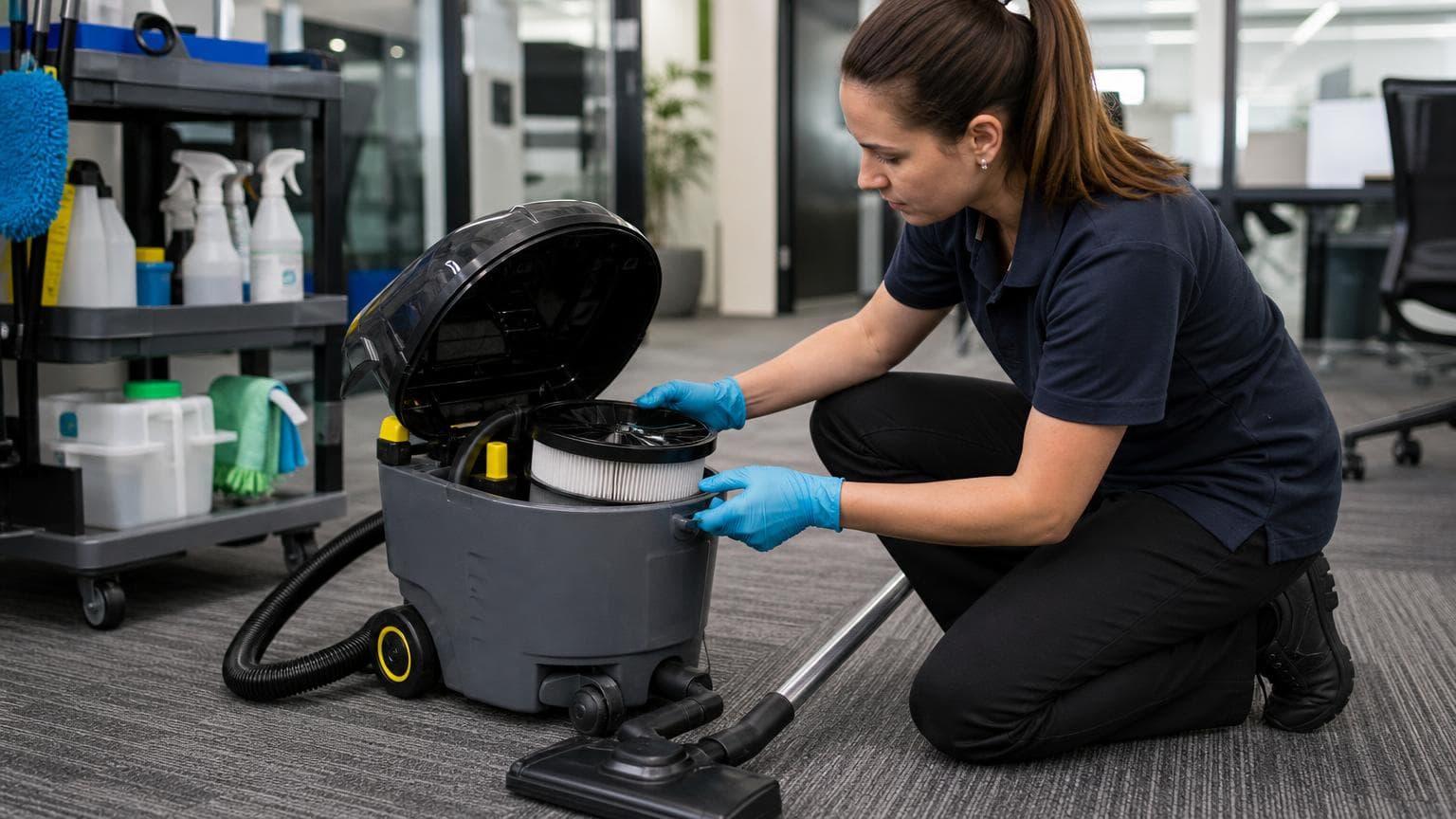
A commercial vacuum is essential equipment for offices, warehouses, schools, medical facilities and other workplaces across New South Wales. When it is maintained properly, it can collect dust efficiently, protect indoor air quality and support consistent cleaning results. When routine care is overlooked, small issues such as blocked filters, worn brushes or damaged cords can quickly reduce performance.
This commercial vacuum maintenance NSW guide explains how to prevent common faults, extend equipment service life and create a practical maintenance routine for your cleaning team.
Why commercial vacuum maintenance matters
Commercial vacuums often operate for longer periods and across more demanding surfaces than domestic machines. They may collect fine office dust, carpet fibres, warehouse debris, soil and other materials during the same cleaning program. This places pressure on filters, hoses, motors, floor heads and power connections.
Preventative maintenance helps your business to:
- Maintain suction and cleaning performance
- Reduce the risk of overheating and motor damage
- Identify worn or unsafe components before use
- Reduce avoidable interruptions to cleaning schedules
- Protect carpets, hard floors and upholstery from ineffective cleaning
- Get more value from existing cleaning equipment
Maintenance should be part of your facility management process rather than something performed only after a vacuum stops working.
Daily checks before and after use
A short operator inspection can prevent many common vacuum problems. Before starting a shift, check the machine body, hose, wand, floor head and power lead for visible damage. Do not use equipment with exposed wiring, cracked casings, loose plugs or other electrical defects. Isolate the machine and report it according to your workplace procedure.
After use, cleaning staff should:
- Switch off and unplug the vacuum before clearing blockages or removing parts
- Empty the dust bag or container when it reaches the manufacturer's recommended level
- Check the hose and floor head for hair, fibres, paper and other obstructions
- Wipe dust from external vents and controls using a suitable method
- Wind the power lead loosely without creating sharp bends
- Store the vacuum in a dry, secure location away from impacts and excessive heat
Do not pull a vacuum by its power cord or continue using it when the motor sounds unusual. These habits can turn minor wear into a more expensive repair.
Filters, bags and dust containers
Blocked filters are one of the most common causes of weak suction and overheating. Filter care depends on the vacuum model. Some filters can be washed, some must be replaced and others require specialist handling. Always follow the manufacturer's instructions rather than washing a filter simply because it appears dirty.
Bagged vacuum cleaners
Replace bags before they become overfilled. An overfilled bag can restrict airflow, reduce suction and place additional strain on the motor. Fit the correct bag securely and check that the collar is seated properly. Using an unsuitable bag may allow dust to bypass the filtration system.
Bagless vacuum cleaners
Empty the container in a controlled area and avoid creating airborne dust. Clean the container and seals as directed, checking that the lid closes correctly. A damaged seal can allow fine particles into the motor area or back into the room.
High-filtration systems
Vacuums used in medical centres, schools or sensitive commercial environments may require particular filtration controls. Replace filters at the recommended interval and keep a record of changes. If the machine is used for fine dust or specialist cleaning, confirm that its filtration system is suitable for the material being collected.
Inspecting hoses, heads and brushes
Airflow can be lost through a split hose, loose connection or damaged seal. Run your hand along the hose while the vacuum is switched off and look for cracks, flattened sections and loose fittings. Check extension tubes and connectors for dents that could restrict airflow.
Floor heads and rotating brushes also need regular attention. Remove tangled hair, thread and carpet fibres before they restrict movement. Inspect brush bristles for excessive wear and check that wheels roll freely. A worn floor head may leave soil behind even when the motor is operating correctly.
For carpeted offices, a clean and properly adjusted head can improve soil removal without requiring repeated passes. For warehouses and hard floors, use the correct attachment so larger debris does not damage delicate components.
Power, motor and overheating checks
A vacuum that becomes unusually hot, emits a burning smell or trips a circuit should be removed from service. Common causes include blocked airflow, a full bag, a damaged filter or a motor fault. Allowing the machine to continue running can increase the risk of further damage.
Cleaning staff should never attempt unauthorised electrical repairs. Record the symptoms, identify the equipment and send it to an appropriately qualified repair provider or the manufacturer's service network. Keep electrical equipment inspection and repair records as part of your workplace safety system.
Power leads deserve particular attention in busy NSW workplaces. Inspect plugs, strain reliefs and the full length of the cable. Avoid running leads across wet areas, sharp edges or vehicle routes. Use safe cable management practices and follow site-specific procedures for electrical equipment.
A practical maintenance schedule
The correct frequency depends on the vacuum type, workload, floor surfaces and collected materials. A simple schedule can help assign responsibility without replacing the manufacturer's instructions.
Every use
- Check the cord, plug, hose, floor head and casing
- Empty the bag or container as required
- Remove visible blockages
- Store the machine safely after cleaning
Regularly during the cleaning program
- Inspect and clean accessible filters according to the manual
- Check brush rolls, wheels, seals and attachments
- Wipe down high-touch handles and controls with a compatible product
- Review suction and noise for changes from normal operation
At planned service intervals
- Arrange a detailed inspection based on manufacturer guidance and usage
- Replace worn consumables and components
- Check motor performance and airflow
- Review repair history and decide whether the machine remains suitable for the workload
Record the date, equipment identification, inspection result and action taken. A maintenance log can reveal repeated failures and help facility managers plan equipment replacement based on condition rather than guesswork.
Commercial vacuum troubleshooting NSW teams can use
Weak suction: Check the bag or container, filter, hose, floor head and seals. If airflow remains poor after these checks, arrange a service inspection.
Unusual noise: Stop the machine and inspect for an obstruction. Rattling, grinding or squealing may indicate a damaged fan, bearing, brush or loose component.
Overheating: Switch off and unplug the vacuum. Check for restricted airflow and allow it to cool. Repeated overheating requires professional assessment.
Dust escaping: Check the bag, filter, container lid, seals and hose connections. Do not continue using the machine if fine dust is bypassing its filtration system.
Brush not rotating: Remove tangled fibres and check the attachment. If the brush still does not operate, the belt, drive or motor may require repair.
These checks can help identify the likely cause, but they should not replace qualified repair work or the manufacturer's service instructions.
Maintenance considerations for NSW businesses
Local conditions can influence vacuum wear. Dust entering from outdoor areas, seasonal pollen, warehouse particulates and high foot traffic can increase the load placed on filters and dust containers. Cleaning teams in Sydney, Wagga Wagga and other NSW locations should adjust inspections to reflect the building and its environment.
Different sites also need different controls. A school may need careful attention to fine dust and hygiene routines. A warehouse may require equipment suited to larger debris and hard floors. A medical centre may need documented cleaning procedures and appropriate filtration. If your site has varied surfaces or specialist requirements, review the wider service approach through commercial and industrial cleaning in Wagga Wagga NSW.
Vacuum maintenance is only one part of a reliable cleaning program. For offices, consistent schedules, correct equipment selection and trained operators all affect results. See our office cleaning services in Wagga Wagga for support with broader workplace cleaning needs.
When to replace rather than repair
Repair may be sensible when a vacuum has a minor, identifiable fault and remains appropriate for the site. Replacement may be worth considering when the machine has recurring breakdowns, damaged safety components, poor filtration, inadequate capacity or parts that are difficult to source.
Compare the machine's condition with its workload, maintenance history and cleaning requirements. A vacuum that is too small or unsuitable for the surface may continue to underperform even after repair. For help assessing equipment types before purchase, read our guide to commercial office vacuum selection in NSW.
Support beyond vacuum maintenance
Well-maintained equipment supports better results, but some surfaces require specialist methods and equipment. Carpet extraction, pressure cleaning and other periodic tasks should be planned separately from routine vacuuming. Explore our specialised cleaning services for carpet, pressure and solar cleaning when your facility needs more than daily floor care.
Eco Spark Facility Services provides eco-conscious commercial cleaning solutions for businesses and facilities across NSW. Contact Eco Spark Facility Services to discuss a practical cleaning program for your workplace.