How Often Should a Commercial Kitchen Be Deep Cleaned?
Commercial kitchens need an inspection-led deep-cleaning schedule, not an automatic calendar interval. This guide explains which conditions to check, how to assess extraction cleaning, and how routine hygiene records should shape specialist work.
Commercial Kitchen Deep Cleaning: A Practical Schedule
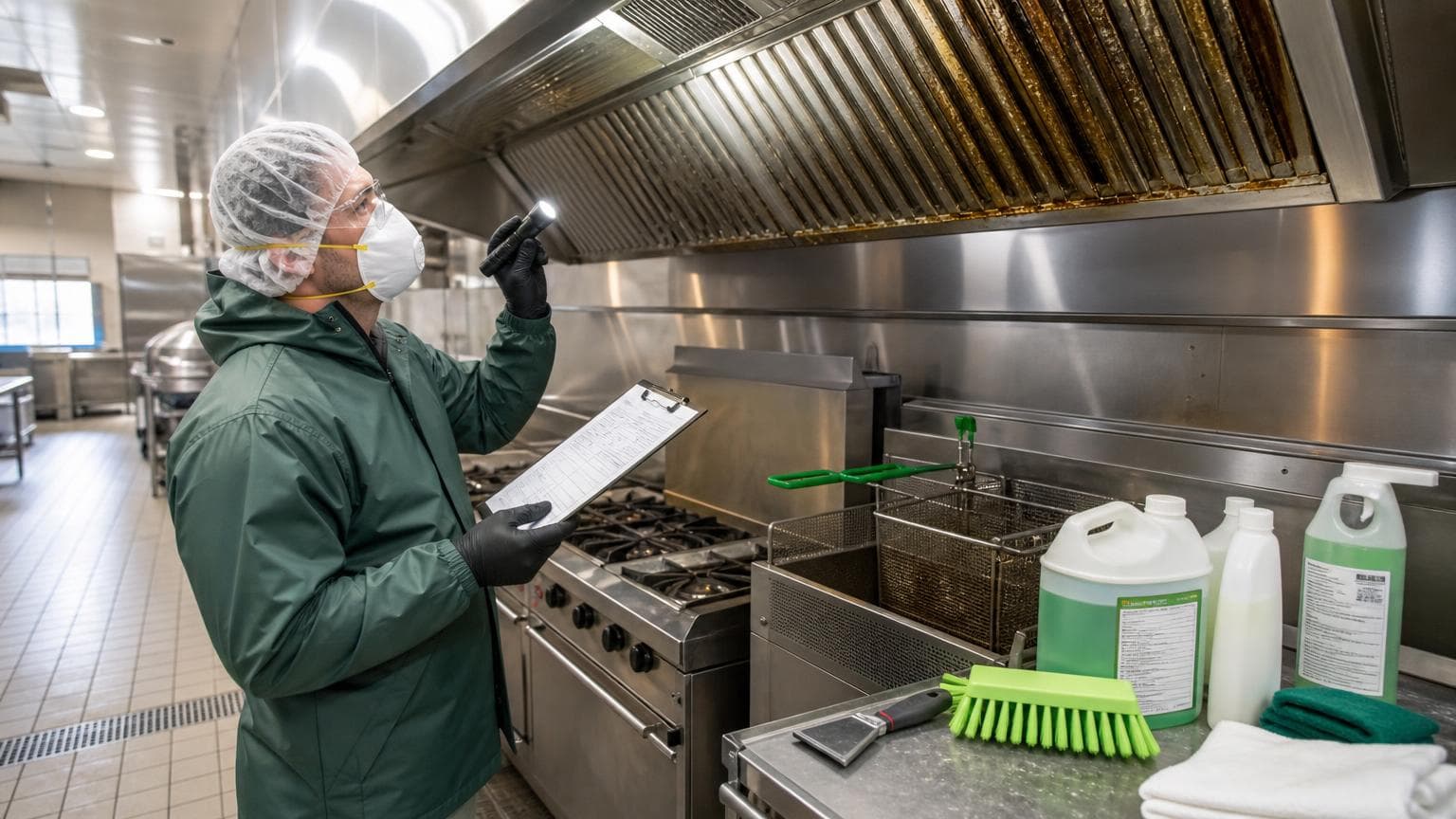
Most commercial kitchens should use an inspection-led schedule rather than automatically booking an annual deep clean. Check grease on filters and extraction surfaces, residue beneath equipment, drain condition, operating hours, cooking methods, and the cleaning records before deciding when specialist work is due.
That recommendation is a planning method, not a universal legal interval. Keep the schedule only when daily cleaning, weekly detail work, and documented checks show that staff are controlling grease, food residue, odours, and hard-to-reach build-up.
The short answer
There is no single deep-cleaning frequency for every commercial kitchen. Arrange specialist work when cooking methods, grease load, trading hours, extraction condition, or inspection records show that routine cleaning no longer controls build-up. A lower-volume kitchen may need fewer specialist visits, but it still needs documented cleaning and checks between visits.
Do not choose the interval from the calendar alone. Check the cooking methods, trading hours, extraction system, equipment layout, cleaning records, and the condition of areas staff cannot safely reach during a normal close. Those details identify whether the scope needs attention to filters, ductwork, equipment bases, drains, wall junctions, or food-contact surfaces. Recommend an inspection-led schedule over a fixed annual booking because it connects the work to conditions the kitchen can actually verify.
- Daily: remove food debris, clean food-contact surfaces, wash floors, and deal with spills before they dry.
- Weekly: detail equipment edges, splashbacks, drains, storage areas, and other points that accumulate residue.
- Specialist cleaning: inspect and clean areas affected by grease, smoke, dust, and inaccessible build-up when routine records or inspection findings show that staff cannot control them safely.
- After a change: arrange a deeper clean before a new tenant, operator, or kitchen team moves into the space.
Food businesses must follow applicable food safety requirements and the instructions for each cleaning or sanitising product. Food Standards Australia New Zealand sets national food safety standards, and NSW businesses can use the NSW Food Authority cleaning and sanitising guidance when developing site procedures.
What this looks like in practice
A move-in deep clean illustrates why one-off work and recurring cleaning serve different purposes. Eco Spark Facility Services has a published case study about detailed cleaning before a client moved into a property. That type of clean resets the space before regular operations begin; it does not replace the schedule that follows.
For a kitchen, a useful scope should separate visible surfaces from concealed or difficult areas. Review the underside of benches, equipment legs, wall junctions, splashback edges, drains, storage bases, and the exhaust system. A polished floor does not prove that grease has been removed from the areas above it.
Rank the inspection points by risk and access. Food-contact surfaces come first, grease-bearing extraction components come next, and cosmetic areas come after those tasks. Paying for appearance before removing contamination from difficult areas reverses the sensible order, so a cheaper visible clean is not the better choice when concealed build-up remains.
How long does it take to clean a commercial kitchen hood?
There is no reliable single time for cleaning a commercial kitchen hood. The duration depends on the hood's size, the length of the ductwork, the amount of grease, access to filters and fan components, the equipment beneath it, and whether the work requires isolation or coordination with other trades.
A hood with removable filters and light residue needs a different scope from a system with built-up grease across filters, canopy surfaces, and connected ductwork. Ask the contractor to state which components the quote includes. A canopy wipe alone is not the same service as cleaning the extraction system.
Plan the work outside food preparation and service, then confirm how the kitchen will reopen safely. An insured NSW commercial cleaning contractor should be able to explain access, products, equipment protection, and the areas included before work starts.
Five hygiene rules that should guide the schedule
- Keep raw and ready-to-eat work separate. Use separate equipment or a controlled cleaning and sanitising process to prevent cross-contamination.
- Clean before sanitising. Dirt and food residue can reduce the effectiveness of a sanitiser, so follow the product label for dilution and contact time.
- Wash hands at the right points. Staff should wash after handling raw food, waste, cleaning chemicals, or contaminated equipment, and before handling ready-to-eat food.
- Control temperature and time. Cleaning cannot correct unsafe food storage or handling. Keep food safety procedures separate from the cleaning schedule.
- Record what was done. A dated checklist should identify the area, task, person responsible, and any defect that still needs attention.
These rules come from food safety practice, not from a promise that one deep clean will solve every hygiene problem. The FSANZ food safety standards provide the national reference point, while the business must apply procedures suited to its operation.
Odour and surface clues that deserve investigation
A persistent smell after cleaning often points to a source that the routine has missed. Grease in extraction components, residue around drains, food trapped under equipment, damp materials, and waste areas can all require separate inspection.
Use your senses as prompts, not as proof. A sour, stale, or greasy odour should trigger a check of drains, bins, floors, refrigeration seals, wall junctions, and extraction areas. A clean-looking bench does not rule out build-up beneath equipment or inside a filter.
The same principle applies to appearance. Sticky handles, darkened grout, greasy filter surfaces, dust on high ledges, and residue beneath shelving indicate that the routine needs revision or that a specialist clean is due.
Mistakes that weaken a deep-cleaning plan
- Choosing an annual clean for a busy kitchen without checking grease and extraction build-up.
- Using the same checklist for a low-volume kitchen and a high-volume cooking operation.
- Counting a floor wash as a complete deep clean.
- Cleaning food-contact surfaces but ignoring equipment bases, drains, and high-level areas.
- Failing to document defects that require maintenance rather than cleaning.
Do not pay for a recurring frequency before someone has inspected the areas that drive the workload. A written scope gives you a better basis for comparing quotes than a vague promise to clean the kitchen thoroughly.
Local considerations for NSW kitchens
Eco Spark Facility Services provides commercial and specialised cleaning across Sydney NSW, Greater Sydney, Wagga Wagga, Estella, and Regional NSW. The service area matters when you need a contractor to coordinate access, work around trading hours, and return for recurring cleaning.
For a site-specific scope, describe the kitchen type, operating hours, extraction arrangement, access restrictions, and the last professional deep clean. Eco-friendly claims should describe product and method choices rather than vague green language, and the selected products still need to be appropriate for the surface and task.
Eco Spark Facility Services is a NSW commercial cleaning contractor with industrial and construction cleaning experience, eco-friendly product programmes, and insured team messaging on site. Its related Commercial Industrial Cleaning in Wagga Wagga, Commercial Cleaning Wagga Wagga NSW, and Specialised Cleaning Carpet Pressure Solar NSW pages may help facility managers compare the wider scope of services.
Questions people ask about commercial kitchen deep cleaning
How often do you deep clean your kitchen?
Do not set the frequency from a generic calendar rule. Use grease load, production volume, operating hours, extraction condition, and inspection findings to decide when specialist cleaning is due, while daily and weekly tasks continue between visits.
What is the 20 minute rule in cleaning?
There is no single general Australian commercial-kitchen rule that assigns every cleaning task a 20-minute duration. The correct contact time comes from the cleaning or sanitising product instructions, so staff should follow the label rather than a blanket timer.
How often should a commercial kitchen be deep cleaned reddit?
Online discussions can reveal common practice, but they do not set a safe schedule for your premises. Use the kitchen's grease load, extraction condition, operating hours, and cleaning records to set the interval.
How often should a commercial kitchen be deep cleaned australia?
Australia does not set one universal deep-cleaning frequency for every commercial kitchen. Set the schedule from the operation's conditions, documented inspection findings, and applicable food safety procedures, rather than treating an online recommendation as a legal requirement.
This advice does not cover faulty extraction, plumbing, refrigeration, or drainage, and it is not a substitute for a site inspection or a food safety plan. Ignore any suggested cleaning interval if those maintenance defects are creating the problem, because cleaning alone will not correct them.
Where to go from here
Write a kitchen cleaning schedule that names each area, task, frequency, product, responsible person, and sign-off method. Then request a quote from Eco Spark Facility Services when you need the schedule converted into a site-specific commercial cleaning scope.