Colour Coded Cleaning Systems for Commercial Sites
A colour coded cleaning system assigns equipment to defined areas or risks, helping teams prevent tools from moving between washrooms, offices, kitchens and other controlled zones. The system works only when the colour map, training, storage and inspection process match the facility's documented requirements.
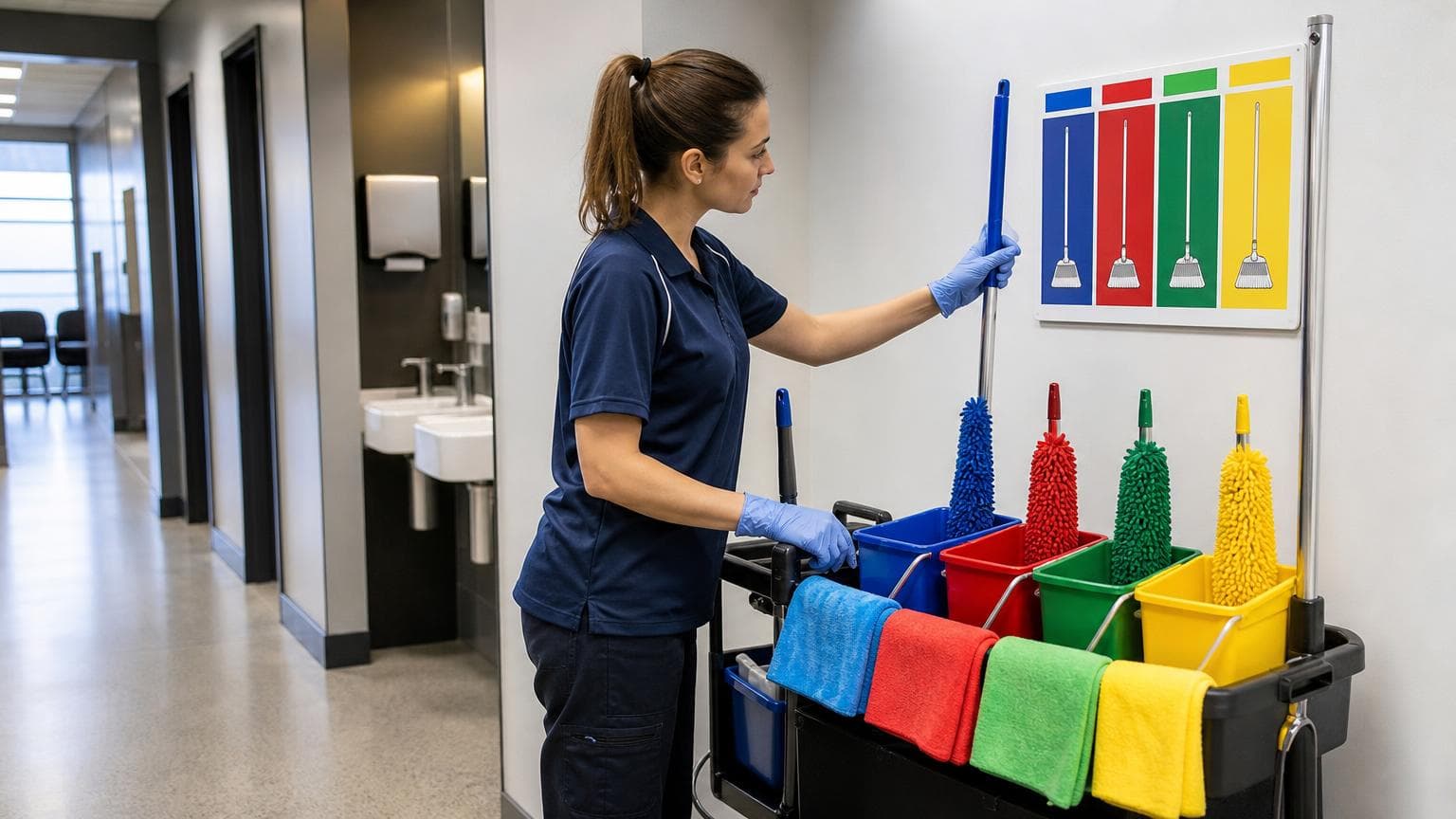
Colour Coded Cleaning Systems: How They Work on Commercial Sites
Set a written colour map before buying equipment. A common arrangement assigns blue to general areas, red to washrooms, green to kitchens or food-related areas and yellow to isolation or other higher-risk work, but the site's documented procedure takes priority. Apply each colour to the mop heads, buckets and cloths used in that zone.
Display the colour map at equipment collection and storage points. Check each shift that tools remain in their assigned area, and train staff in hand hygiene, chemical use and the site's response to spills or body fluids. A coloured handle or cloth cannot make an unsafe cleaning process safe.
The short answer
Colour coding separates cleaning equipment by area or risk. A common four-colour arrangement uses blue for general areas, red for washrooms, green for kitchens or food-related areas, and yellow for isolation or higher-risk cleaning, but sites may use a different documented arrangement.
Start with one written colour map for the whole facility. Name the colour assigned to each room, task and risk before buying colour-coded equipment, then display the map where staff collect and store tools. Otherwise, staff may follow different systems on different shifts.
What this looks like in practice
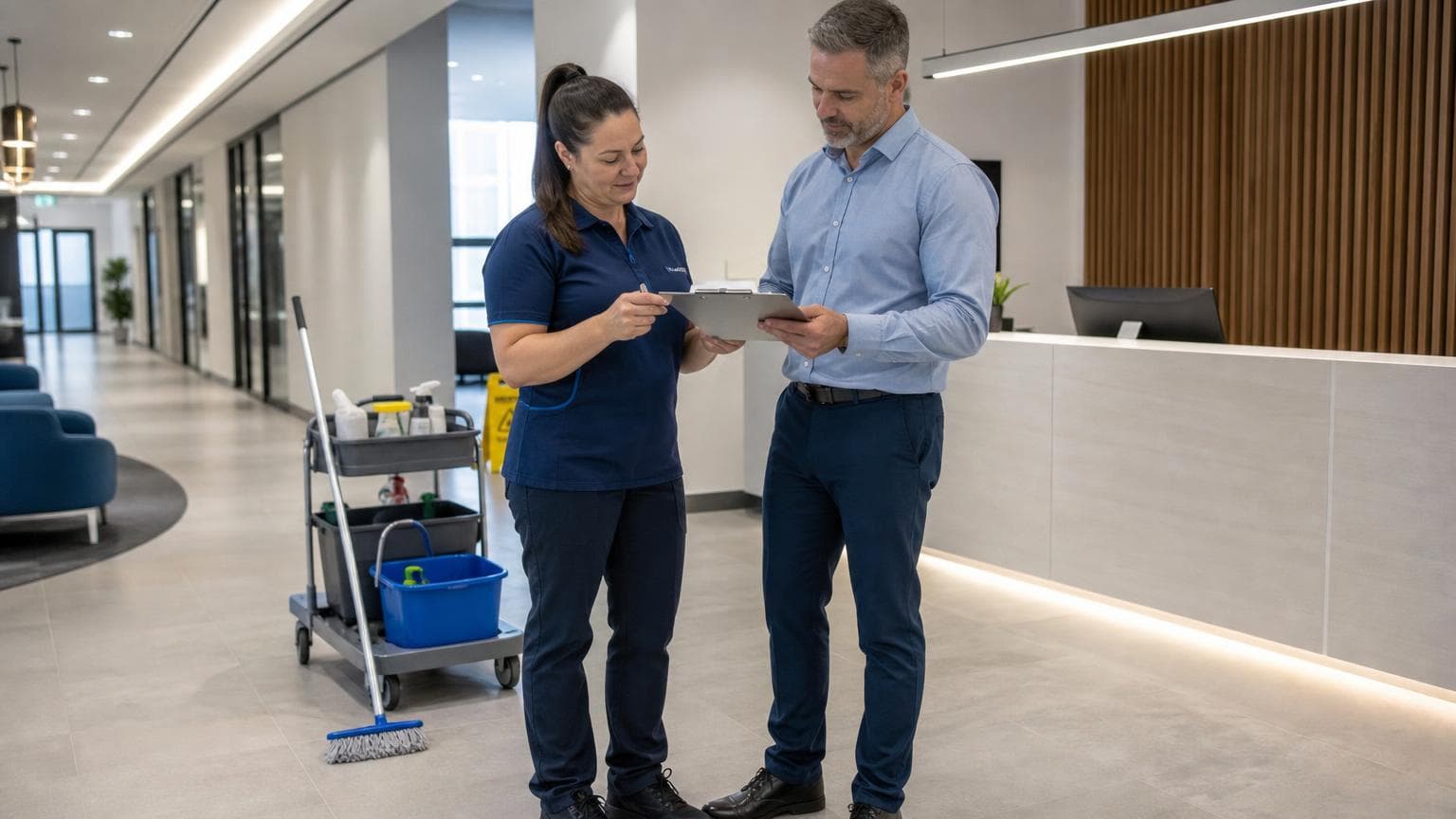
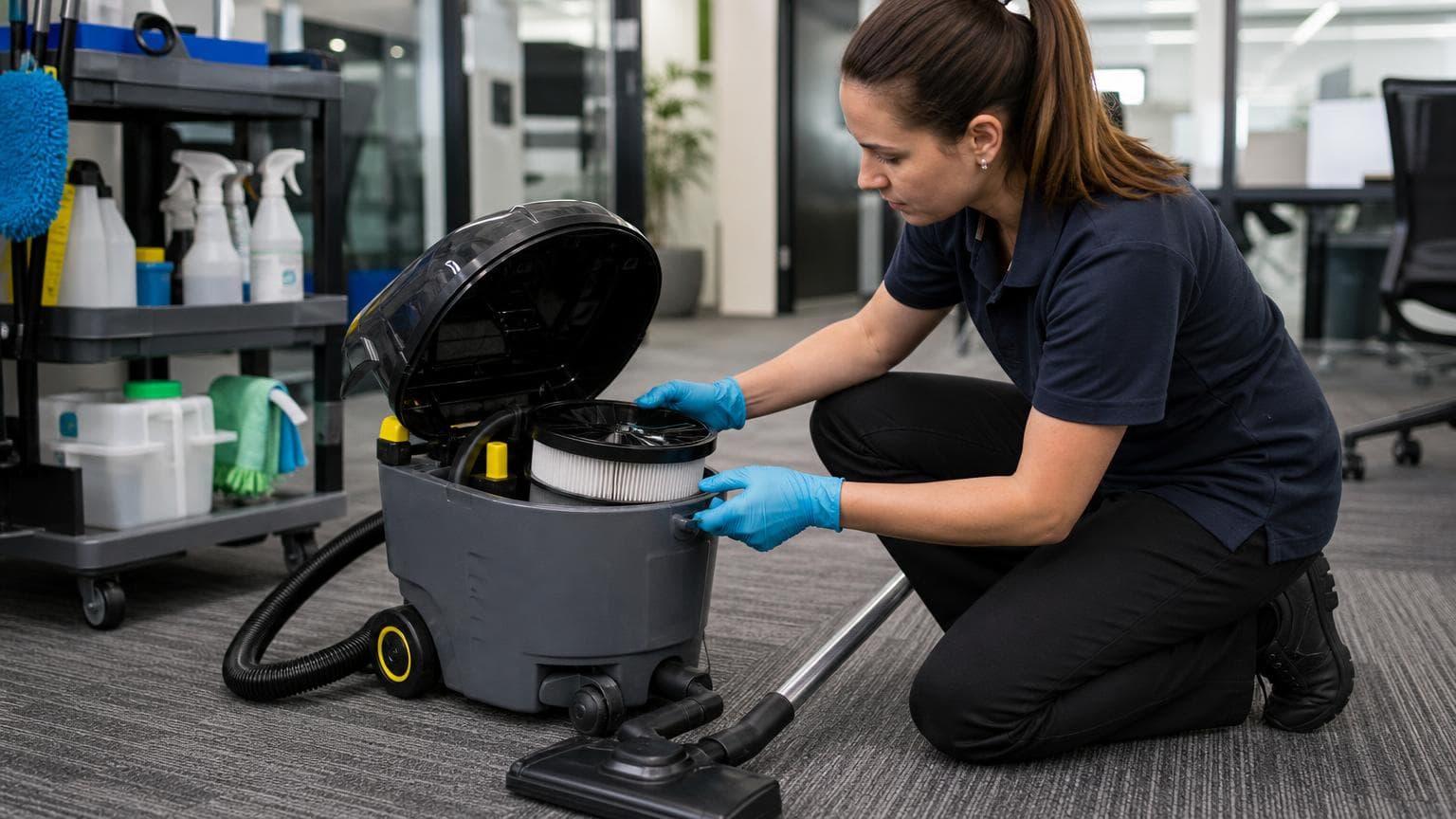
On a commercial site, colour coding should cover more than a set of cloths. The system may include mop heads, buckets, dusters, microfibre cloths, warning signs and storage locations. Each item needs a clear purpose and a way for supervisors to identify incorrect use.
Eco Spark Facility Services is a NSW commercial cleaning contractor with eco-friendly product programs and experience across industrial, construction, office, school and healthcare environments. Its cleaning method combines colour separation with product and method choices intended to reduce unnecessary chemical use. Eco-friendly products do not replace equipment segregation, surface cleaning or site-specific instructions.
For a contractor, the scope should state the colour arrangement before work begins. It should also identify access arrangements, areas requiring specialist cleaning, the client's inspection standard and how the team reports damaged or missing equipment. An insured team and clear on-site messaging support the system, but neither replaces a documented procedure.
Why colour code cleaning equipment?
Colour coding answers a practical question before cleaning starts: where is this item allowed to be used? That decision matters because a cloth or mop used in a washroom should not then enter an office, treatment room or food preparation area.
Most sites gain more from clear allocation rules than from buying more coloured equipment. Do not buy additional tools until the site has agreed its colour map and trained staff to follow it. The strongest reason to colour code equipment is control, not appearance. A visible colour system helps cleaning staff select the right tools, helps supervisors spot mistakes and gives facility managers a simple way to explain area separation during induction.
It also creates a useful audit trail. If the written procedure says red equipment belongs to washrooms, a red mop found in a general office shows that the process needs correction. A mixed pile of unmarked equipment gives the supervisor less information.
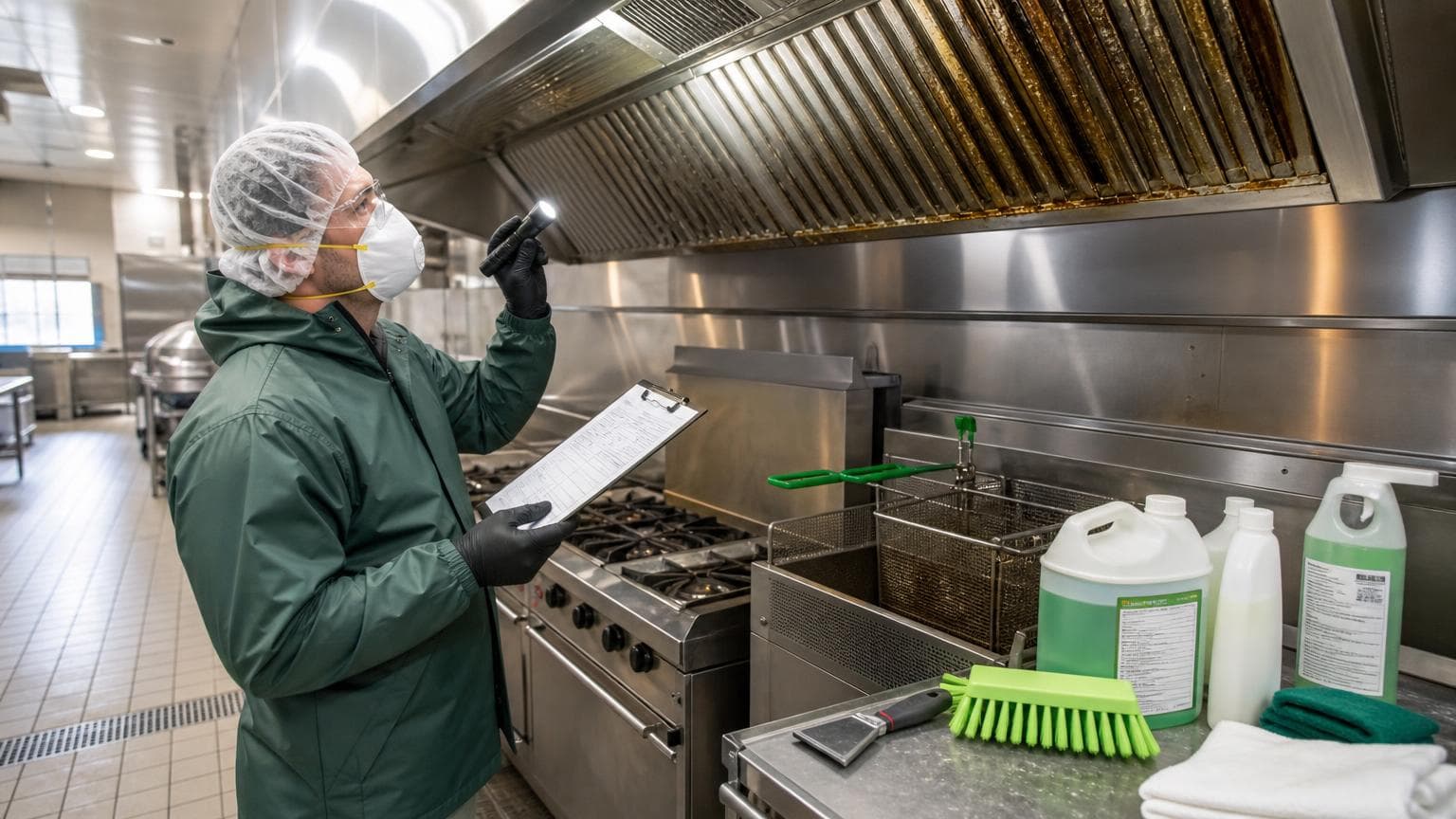
Colour coding will not solve poor hand hygiene, incorrect chemical dilution, inadequate training or unsuitable cleaning methods. Ignore this system if the site has not first defined its cleaning risks and procedures, because colour labels alone cannot show that a room has been cleaned properly.
What is the 7 step cleaning process in housekeeping?
There is no single universal seven-step process that every housekeeping team must follow. A practical seven-step sequence gives staff a repeatable order, while the facility procedure determines the products, contact times, protective equipment and specialist controls.
- Prepare the area. Check the room, confirm the required colour, gather the correct equipment and follow the site's access and safety instructions.
- Remove loose waste. Clear rubbish and disposable items before wet cleaning. Report sharps, spills, damage or other hazards instead of handling them outside the approved procedure.
- Work from high surfaces down. Clean ledges, fittings and other higher surfaces before lower surfaces so falling dust does not soil completed work.
- Clean from lower risk to higher soil. Move through the area in a planned direction and change equipment when the procedure requires it.
- Clean touch points and usable surfaces. Follow the site list for handles, switches, rails, desks, fixtures and other named surfaces.
- Finish the floor. Floors usually come after higher surfaces and furniture. Use the assigned mop and bucket, then manage the mop head according to the site's laundering or disposal procedure.
- Inspect and reset. Check the result, return equipment to its designated storage area, report defects and record completion where the contract requires a sign-off.
This order prevents a common mistake: cleaning the most visible surface first without controlling where the equipment has already travelled. The checklist should describe the room and task, not simply state that cleaning is complete.
What are the British International cleaning Standards (BICSc)?
BICSc refers to the British Institute of Cleaning Science, a professional organisation that provides cleaning training, education and industry guidance. Its material can help organisations structure cleaning skills and procedures, but BICSc is not an Australian law and its guidance does not automatically replace a client's own risk assessment or site requirements.
Use BICSc information as a reference point, then check that the final procedure suits the facility. A NSW healthcare clinic, school, warehouse and construction site will not have identical access rules, surfaces or cleaning hazards. The colour map, training record and inspection method should match the actual site.
The BICSc website is the appropriate starting point for current information about its training and standards. Do not rely on an old colour chart copied into a local procedure without confirming its source and relevance.
What is a red mop used for?
A red mop is commonly assigned to washrooms, toilets and other sanitary areas. Some organisations also use red equipment for higher-risk or body-fluid cleaning, but that allocation must come from the site's written procedure. Colour meanings vary between organisations, so staff should never infer the rule from the mop alone.
Red equipment should remain separate from blue, green and yellow equipment during use, transport and storage. If a facility uses red for a different purpose, display that rule where staff select equipment and include it in induction training.
Clients we work with
A colour coded system suits any facility where cleaning zones need clear separation, but the reason for using it changes by site:
- Offices and commercial properties: separate washroom equipment from desks, meeting rooms and shared areas.
- Schools and education facilities: give cleaning teams a visible system that can be explained across classrooms, amenities and staff areas.
- Healthcare clinics: align colour allocation with the clinic's approved cleaning procedures, room functions and infection prevention requirements.
- Warehouses and industrial sites: distinguish general cleaning equipment from tools used around heavy soil, amenities, loading areas or production-related spaces.
- Construction and end-of-lease projects: define equipment by work zone when dust, residue and handover standards make uncontrolled movement harder to manage.
For an existing program, rank the priorities in this order: agree the colour rules, train the people using them, then inspect compliance. Buying more coloured equipment before fixing the first two issues creates a larger pile of inconsistently used tools.
Local considerations
Eco Spark Facility Services provides commercial and specialised cleaning across Sydney, Greater Sydney, Wagga Wagga, Estella and Regional NSW. The colour system should be confirmed with the person responsible for each site because the same colour may have a different meaning under an existing client procedure.
Before a contractor starts, provide the site map, room functions, access arrangements, induction requirements, approved products and the preferred inspection or sign-off method. Those details determine how the system operates more reliably than a generic chart.
For broader commercial and industrial requirements, see Commercial Industrial Cleaning in Wagga Wagga. If the scope includes carpet, pressure washing or solar panel work, the Specialised Cleaning Carpet Pressure Solar NSW page covers those services separately. Businesses comparing service options in the Riverina can also review Commercial Cleaning Wagga Wagga NSW.
Where to go from here
Ask for a one-page colour control sheet before approving a cleaning program. It should name each colour, permitted areas, equipment covered, storage location, changeover rule and the person who checks compliance. This simple document exposes gaps that a colour-coded product list will miss.
For a site-specific cleaning scope across Sydney, Greater Sydney, Wagga Wagga, Estella or Regional NSW, request a quote from Eco Spark Facility Services and provide the facility type, locations, specialist tasks and existing colour rules.