Solar Panel Cleaning Methods for NSW Businesses
Discover safe, effective solar panel cleaning methods for NSW businesses, including equipment, water systems, access planning and maintenance checks.
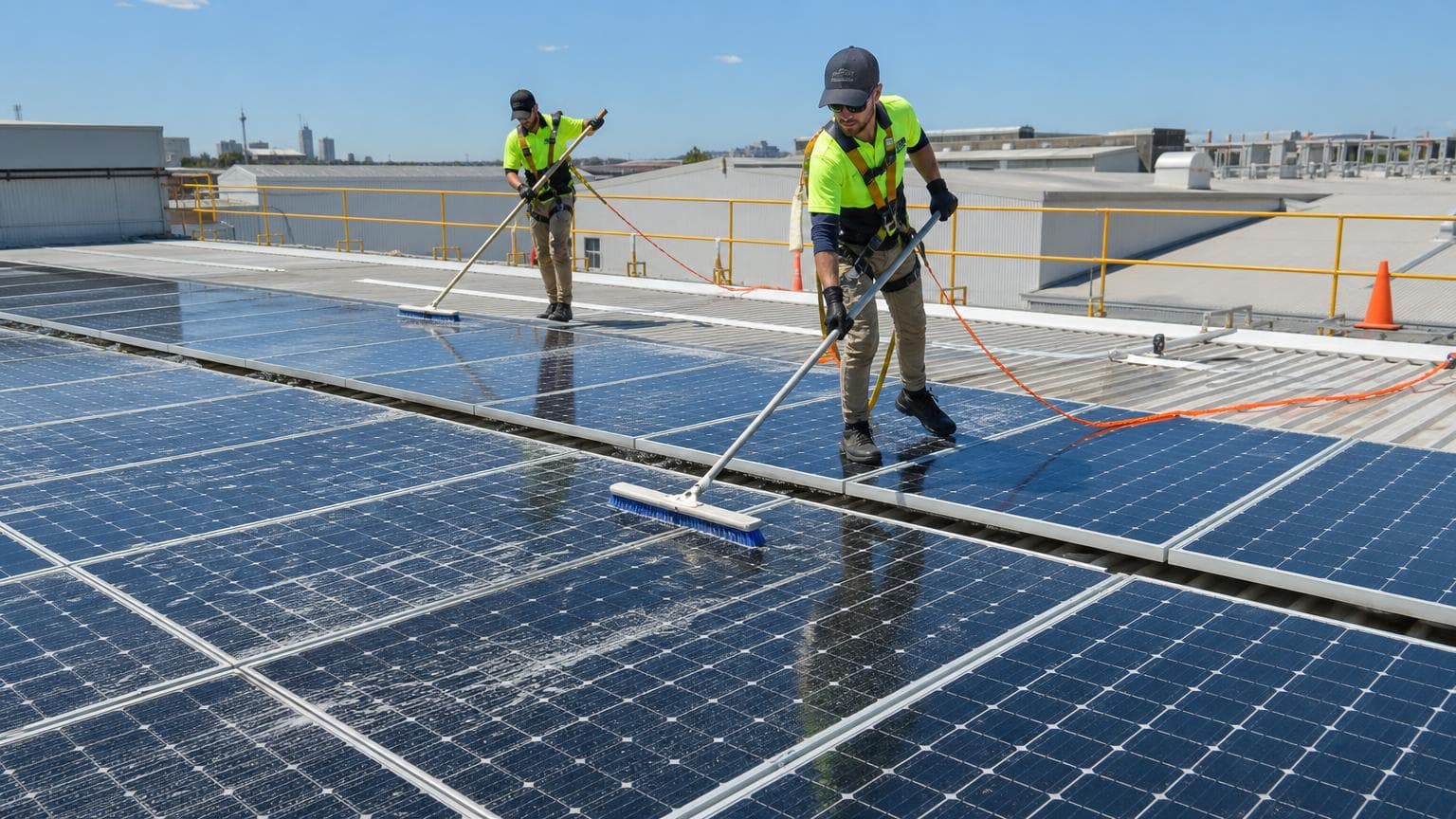
Commercial solar panels are exposed to dust, bird droppings, pollen, leaves, pollution and weather across New South Wales. When surface contamination builds up, it can reduce the amount of sunlight reaching the panels and make faults, cracks or drainage issues harder to spot. A planned cleaning approach helps businesses protect their solar investment while keeping workers, equipment and building occupants safe.
The best solar panel cleaning methods NSW businesses use depend on the array’s size, roof access, panel condition, local environment and manufacturer instructions. The process should never be treated as ordinary window cleaning. Solar arrays combine electrical equipment, fragile glass, elevated work areas and potentially slippery surfaces.
Why commercial solar panels need a planned cleaning method
Light dust may be removed by rainfall, but rain does not always clear oily residue, bird droppings or compacted grime. Panels installed near busy roads, construction areas, farms, warehouses or industrial sites may collect contamination more quickly than panels in cleaner locations. Wagga Wagga and Estella businesses may also experience dry conditions that leave fine dust on exposed surfaces.
Cleaning is also an opportunity for a visual condition check. A trained cleaning team can look for heavy soiling, damaged frames, loose cabling visible from a safe position, nesting activity and blocked access around the array. Cleaning teams should report concerns rather than attempting electrical repairs or unauthorised maintenance.
Safe solar panel cleaning methods for NSW businesses
1. Start with a site and access assessment
Before equipment is brought to the roof, assess how the panels can be reached and cleaned without creating unnecessary risk. Consider roof pitch, fragile surfaces, skylights, edge protection, access points, weather, nearby power lines and the location of inverters and isolation points.
A safe work plan should identify whether the task can be completed from ground level, with an elevated work platform, or by workers using approved roof access systems. If roof access is unsuitable, the job should be referred to an appropriately qualified access or solar maintenance provider. Never walk directly on solar panels.
2. Remove loose dust with a soft, non-abrasive brush
For light, dry dust, a soft solar panel brush can loosen surface particles without scratching the glass. Brushes should be designed for solar surfaces, clean and free from grit. Long-reach poles can help reduce roof access, but they must be controlled carefully around cabling, frames and other roof equipment.
Dry brushing should be gentle. Aggressive scrubbing can mark the surface, damage coatings or push grit across the glass. It is also important to avoid cleaning during strong wind, when dust can quickly settle back onto wet or freshly cleaned panels.
3. Use purified or low-mineral water for a streak-free finish
Water-fed cleaning systems using purified or deionised water are suitable for many commercial solar applications. Removing minerals from the water helps reduce spotting as the surface dries. A soft brush can agitate stubborn film while the purified water rinses residue away.
Water quality matters because hard water can leave deposits that affect appearance and require additional cleaning. The cleaning method should still follow the panel manufacturer’s guidance. Teams should use controlled water flow, avoid flooding electrical components and direct water away from connectors, junction boxes and exposed damage.
4. Treat bird droppings and bonded deposits carefully
Bird droppings should be softened before removal rather than scraped while dry. A controlled application of suitable water can loosen the deposit, after which it can be lifted with a soft tool or brush. Abrasive pads, metal scrapers and harsh chemicals should not be used on panel glass.
Where contamination is oily, sticky or difficult to remove, a solar-compatible cleaning solution may be considered after checking the manufacturer’s recommendations. Avoid general-purpose detergents that can leave residue, degrade seals or flow into roof drainage systems.
5. Rinse and inspect without pressure washing the panels
Solar panels are not a suitable target for high-pressure cleaning. Forceful water can damage seals, lift edges, drive moisture into sensitive areas or loosen components. A low-pressure rinse with suitable equipment is generally more appropriate.
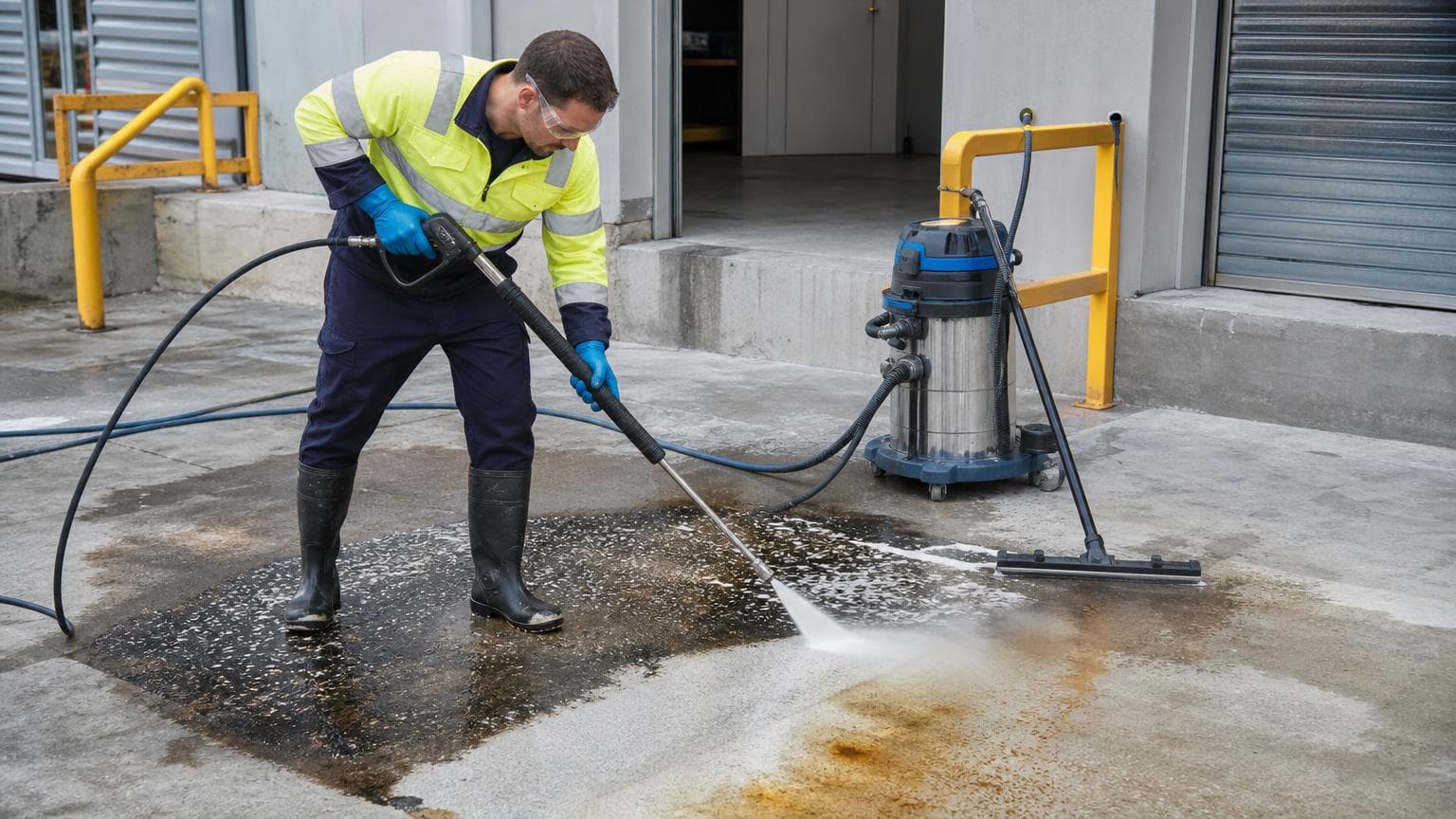
Pressure cleaning may still be useful for separate areas such as surrounding hardstand, walls or access paths, but it should be planned so overspray does not reach the solar array. Eco Spark also provides commercial pressure cleaning in Wagga Wagga for suitable non-panel surfaces.
Equipment used for commercial solar panel cleaning
Professional equipment should be selected for the panel surface, building access and site conditions. Common items may include:
- Soft, non-abrasive solar panel brushes.
- Water-fed poles suitable for controlled elevated cleaning.
- Purified or deionised water systems where appropriate.
- Clean hoses and fittings that will not drag across panels.
- Non-slip footwear and suitable personal protective equipment.
- Roof access, edge protection or elevated work equipment selected for the site.
- Warning signs and barriers to separate the work area from staff, visitors and vehicles.
- Inspection and reporting tools for recording visible issues and completed areas.
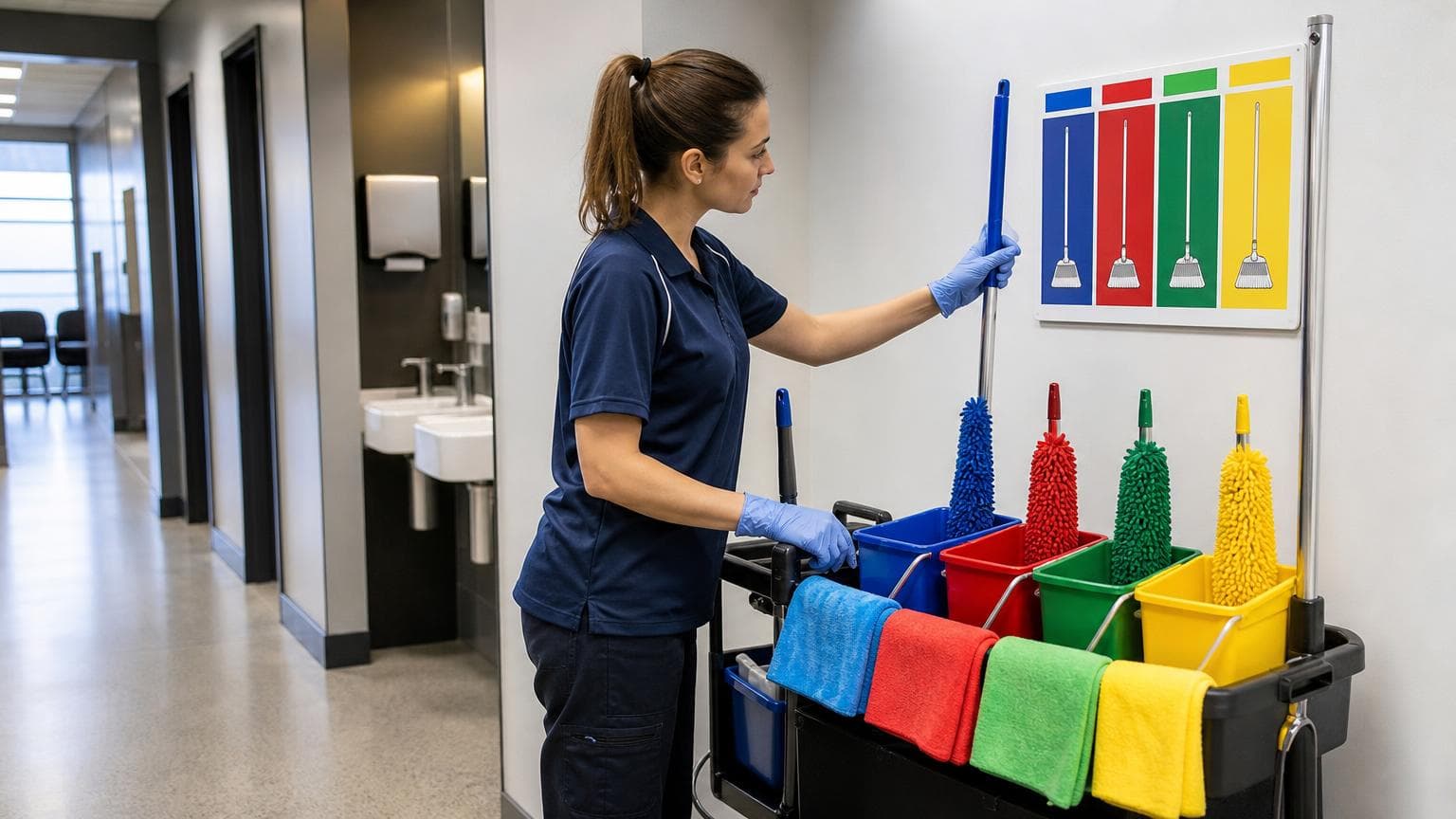
Equipment must be kept clean. A brush used on gritty warehouse surfaces should not then be used on solar glass. Separating tools by task helps prevent scratches and cross-contamination.
Commercial solar panel cleaning safety in NSW
Safety planning should be completed before the first panel is touched. Solar systems may generate electricity whenever light is present, so cleaning personnel should not assume that switching equipment off makes the entire array safe. Electrical isolation, testing and repairs should be handled by appropriately qualified professionals.
Key controls for commercial solar panel cleaning safety NSW businesses should consider include:
- Following the panel and system manufacturer’s cleaning and access instructions.
- Checking weather and postponing work during rain, storms, high winds or unsafe heat.
- Using documented roof access and fall prevention procedures.
- Keeping workers away from exposed electrical components and damaged panels.
- Controlling hoses and poles to prevent trip hazards and contact with live equipment.
- Protecting people below with exclusion zones and clear communication.
- Using appropriate training, supervision and personal protective equipment.
- Recording defects and escalating electrical or structural concerns to the right contractor.
Businesses can also review their broader cleaning requirements through Eco Spark’s specialised cleaning services for carpet, pressure and solar cleaning.
A practical commercial solar panel maintenance checklist
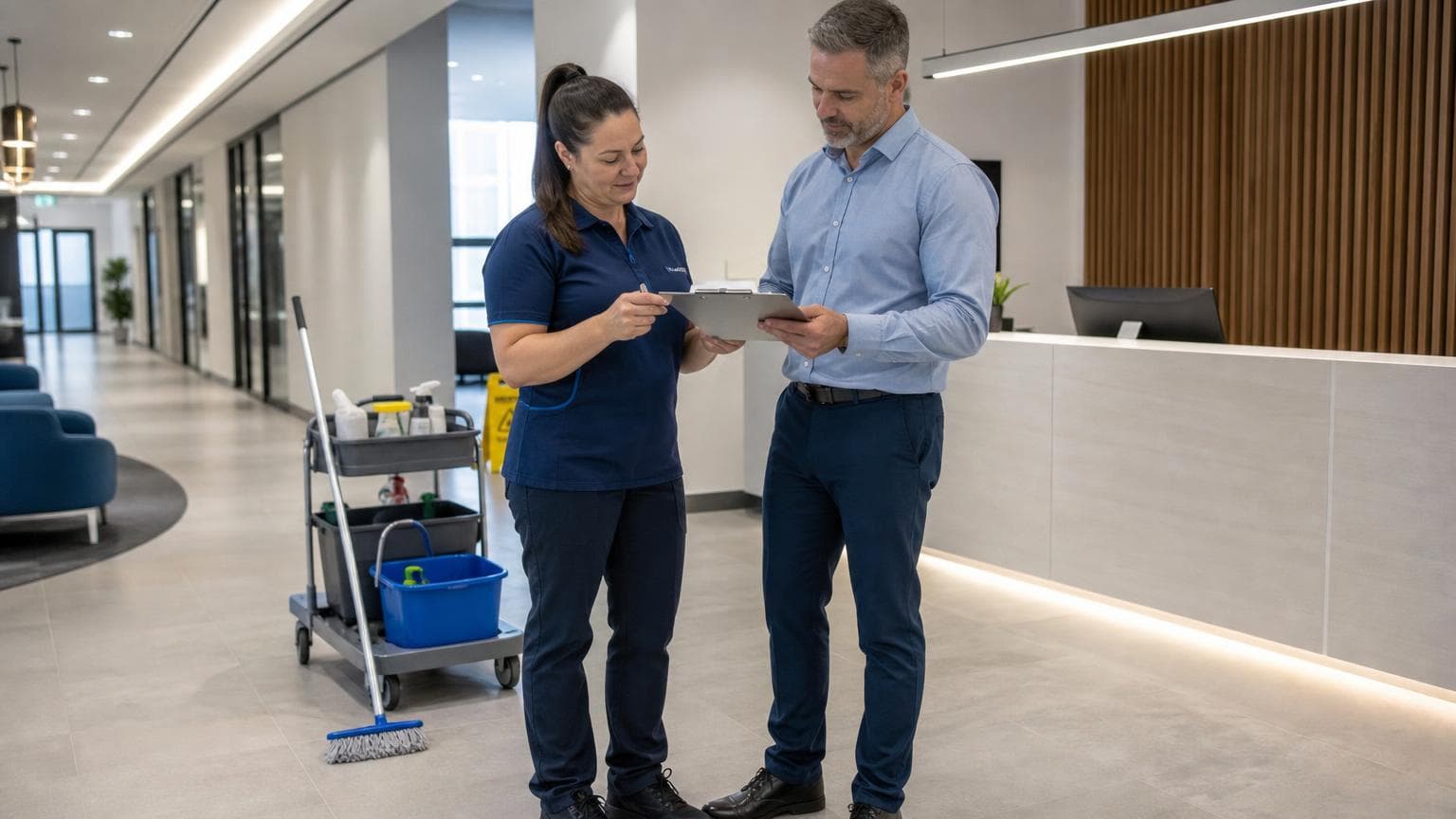
A repeatable checklist helps facility managers brief cleaning teams and maintain consistent standards across offices, warehouses, schools and other commercial properties.
- Confirm the work area, access route and responsible site contact.
- Review manufacturer instructions and known site hazards.
- Inspect the roof and surrounding area from a safe position.
- Check weather, access equipment, barriers and personal protective equipment.
- Remove loose dust with a clean, soft brush where suitable.
- Clean bird droppings and bonded residue with controlled, non-abrasive methods.
- Rinse with suitable water at low pressure, keeping electrical components protected.
- Complete a visual check for remaining residue, damage or access issues.
- Leave the work area clean and record observations for the facility manager.
The checklist should be adapted to the site rather than copied without review. A ground-mounted array may have different access risks from panels on a warehouse roof. Schools and medical facilities may also require additional controls for public access and sensitive operating areas.
Choosing a cleaning approach for different NSW sites
Small, accessible arrays may be cleaned using a soft brush and purified water system. Large warehouse arrays may require staged work, specialist access equipment and stronger coordination with operations. Panels near dusty loading zones may need closer observation than arrays on a quiet office building.
For industrial properties, solar cleaning should fit within the site’s broader housekeeping and safety program. Eco Spark supports businesses with industrial and warehouse cleaning in Wagga Wagga, helping facility managers coordinate specialist tasks without treating solar panels as a standard floor or façade surface.
There is no universal cleaning interval that suits every business. The right frequency depends on visible contamination, the site environment, rainfall, panel tilt and the system owner’s maintenance plan. Reviewing the array after dusty periods, nearby construction or recurring bird activity can help determine when professional cleaning is warranted.
When to use a professional solar panel cleaning service
Professional support is appropriate when panels are difficult to access, installed at height, heavily soiled or located above busy operational areas. It is also sensible when staff do not have suitable equipment, training or time to complete the work safely.
A qualified cleaning contractor should explain the proposed method, access controls, water approach and reporting process before work begins. Ask how the team will protect the panels, manage fall risks and escalate damage. For a site-specific discussion, contact Eco Spark about solar panel cleaning in Wagga Wagga and Estella.
Keep your solar investment clean and protected
Effective solar panel cleaning combines gentle tools, controlled water, careful access planning and clear safety procedures. For NSW businesses, the goal is not simply a visibly cleaner array. It is a repeatable maintenance process that protects fragile surfaces, reduces avoidable risk and gives facility managers better visibility of the site.
Speak with Eco Spark Facility Services about commercial cleaning support in NSW and plan a safer, more suitable approach for your property.