How Dust Affects Solar Panel Output
Dust can reduce solar panel output by blocking sunlight, but the effect varies with residue, rainfall, panel angle and site conditions. This guide explains how NSW businesses can assess soiling and plan safe cleaning without confusing dust with equipment faults.
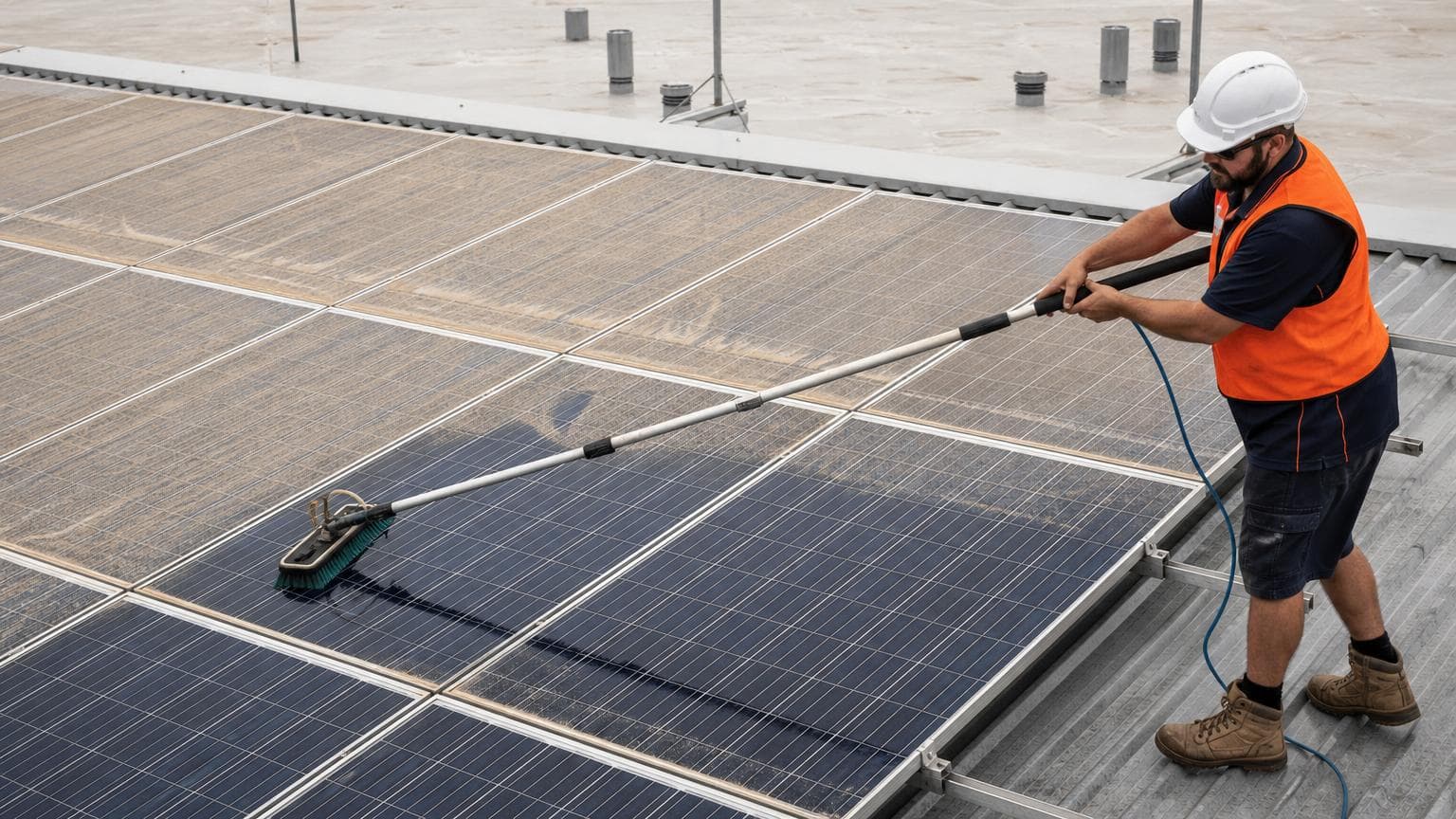
How Does Dust Affect Solar Panel Output?
The short answer
Dust reduces solar panel output by blocking some sunlight from reaching the photovoltaic cells. The effect is not fixed: the amount of dust, its composition, panel angle, rainfall and the array's surroundings all influence the loss.
Light surface dust may have little practical effect, while a thick or sticky layer can reduce solar production enough to justify inspection and cleaning. Do not rely on a universal percentage. Compare the array's performance with its historical data, inspect the surface, and check whether another fault explains the drop.
Research on photovoltaic soiling treats dust as a performance loss rather than a simple cleaning issue. The National Renewable Energy Laboratory's soiling research explains why local particles, weather and panel design affect the result.
What this looks like in practice
For a business, the clearest sign is a change in generation that does not match the available sunlight. Compare the monitoring data with similar clear days, then check for shading, inverter alerts, damaged modules and unusual consumption before blaming dust.
Dust can also combine with bird deposits, pollen, construction residue or industrial particles. Rain may move this material without removing it, leaving marks or concentrated deposits rather than a clean surface.
Eco Spark Facility Services is a NSW commercial cleaning contractor with eco-friendly product programmes, industrial and construction cleaning experience, and insured team messaging on site. Its specialised work includes solar panel cleaning and exterior maintenance, so the cleaning scope can be assessed alongside the surrounding commercial property rather than treated as an isolated household task.
Why are people getting rid of solar panels?
Dust alone is not a sound reason to remove a functioning solar system. People may consider removal because of an ageing system, roof work, property changes, repeated faults, poor installation, replacement plans or a building sale. Cleaning addresses surface contamination, not failed inverters, damaged wiring, shading or underperforming equipment.
Start with diagnosis, not removal. If the array produces less than expected, check monitoring records and arrange a qualified solar inspection before deciding that the panels have reached the end of their useful life. Removing panels may solve a roof-access problem, but it also gives up future generation unless the system is replaced.
How does dust affect solar panel output for Tesla systems?
Tesla-branded solar panels still depend on sunlight reaching photovoltaic cells, so dust can reduce available light in the same basic way as it does on other PV modules. The brand does not create a special exemption from soiling.
Do not diagnose a Tesla system from a single low-production reading. Check the monitoring information, weather conditions, shading and system alerts first. Use the manufacturer's instructions for access and cleaning, and arrange professional help when the array is difficult to reach or the surface has bonded residue.
What does a solar panel output PDF usually show?
A PDF about solar panel output and dust usually presents a method for measuring soiling loss, such as comparing a dirty reference surface with a cleaned reference surface under similar conditions. It may also discuss tilt, particle type, rainfall and the difference between short-term readings and longer performance records.
Read the method before applying a reported result to a warehouse, school or office. A laboratory test or solar farm study cannot predict the loss on every NSW roof. The useful question is not simply how much dust affects panels in general, but what the monitoring data and surface condition show on your array.
For a credible starting point, use technical material from a research body or an official energy organisation rather than a PDF with no author, method or site details.
Why light rain can leave flat panels dirtier
Light rain does not always clean a panel. Small amounts of water may soften dust, move it across the glass and leave marks as the water dries. Flat or low-angle panels may retain more residue because water runs away less readily.
This does not mean every shower worsens performance. A strong, sustained rainfall can remove loose material, while light rain followed by drying may leave a patchier surface. Inspect the array after rainfall instead of assuming that rain has completed the cleaning job.
Do not schedule cleaning solely because rain is forecast. First check whether the panels still show a visible film, bird deposits or construction dust, and whether the monitoring data indicates a persistent change.
Why a 25-degree panel angle can improve runoff
A panel angle around 25 degrees is often discussed because a sloped surface supports water runoff and reduces the chance of residue remaining in place compared with a flat surface. It is not a universal sweet spot for output or cleaning.
Roof design, orientation, shading, mounting equipment and site conditions also affect solar production. A steeper panel may shed water more readily, but it can still collect dust and deposits. Never change the mounting angle simply to solve soiling without considering the whole system.
How to clean dust from solar panels safely
- Check the manufacturer's instructions. Confirm which cleaning methods, tools and water conditions the panel maker permits.
- Assess access before touching the array. Roof work, fragile surfaces, electrical equipment and wet glass create risks. Do not climb onto panels.
- Remove loose material gently. Abrasive pads, harsh chemicals and forceful treatment can damage the glass or coatings.
- Use a suitable method for the residue. Dry dust, bird deposits, construction residue and oily industrial particles may need different treatment.
- Record the condition and result. Take photographs and compare monitoring data after cleaning, allowing for changing weather and sunlight.
For commercial sites, the cleaning plan should also protect staff, visitors, roof surfaces and nearby equipment. Eco-friendly products do not mean every product is suitable for solar glass. The product and method must match the surface and the residue.
How dust affects solar panels in Australia
Australian conditions do not produce one national dust-loss figure. Sydney NSW, Wagga Wagga NSW, Estella NSW, Greater Sydney and other parts of Regional NSW can present different site conditions, building uses and sources of surface contamination. A warehouse near active works may face a different cleaning problem from a school, medical centre or office.
For a NSW business, assess the array in its actual setting. Look at nearby construction, traffic, unsealed surfaces, rooftop equipment, trees, bird activity and the access arrangement. Those observations tell you more about cleaning need than a generic calendar or a percentage copied from another site.
Eco Spark Facility Services provides commercial and specialised cleaning across the listed NSW service areas. Businesses can review Specialised Cleaning Carpet Pressure Solar NSW alongside the broader Commercial Industrial Cleaning in Wagga Wagga service information.
Where to go from here
Begin with three records: recent solar monitoring data, photographs of the panel surface and notes about nearby dust or construction sources. If the output change remains after checking shading and system alerts, request a site-specific cleaning assessment rather than buying a generic cleaning package.
Eco Spark Facility Services can scope solar panel cleaning and exterior maintenance for commercial properties in Sydney NSW, Greater Sydney, Wagga Wagga NSW, Estella NSW and Regional NSW. Request a quote from Eco Spark Facility Services with the site location, panel access details and the issue you have observed.
Frequently asked questions
How much does dust affect solar panels?
There is no reliable single percentage for every array. The effect depends on dust thickness, particle type, rainfall, panel angle, shading and the system's baseline performance. Monitoring data and a surface inspection provide a more useful answer than a general rule.
What is the 20% rule for solar panels?
The 20% rule is a commonly repeated rule of thumb suggesting that dirt may reduce solar output by up to 20%. It is not a universal engineering limit or a guaranteed result. Treat it as a prompt to investigate, not as proof that an array has lost exactly 20%.
How do I safely remove dust from my solar panels?
Follow the panel manufacturer's instructions, avoid climbing on the array, use non-abrasive methods and arrange qualified assistance when access or electrical risks are present. Do not use harsh chemicals or abrasive tools without confirmation that they are suitable.
Why are people getting rid of solar panels?
Removal decisions may relate to roof works, system age, faults, property changes or replacement plans. Dust is a maintenance issue, so diagnose the system and inspect the array before treating removal as the answer.
How does dust affect solar panel output in Australia?
Dust can reduce the sunlight reaching the cells, but the size of the effect varies by site. Australian businesses should assess their own array, local contamination sources, rainfall and monitoring records instead of applying one national figure.
How to clean solar panels?
Use the manufacturer's approved method, inspect access and residue first, avoid abrasive treatment, and record the panel condition before and after cleaning. Commercial roofs often need a site-specific risk and access plan.