How to Clean Warehouse Racking Safely
Safe warehouse racking cleaning starts with inspection, traffic control and an agreed work zone, not with removing visible dust. This guide explains how to clean racks and pallets without confusing cleaning with structural inspection or certification.
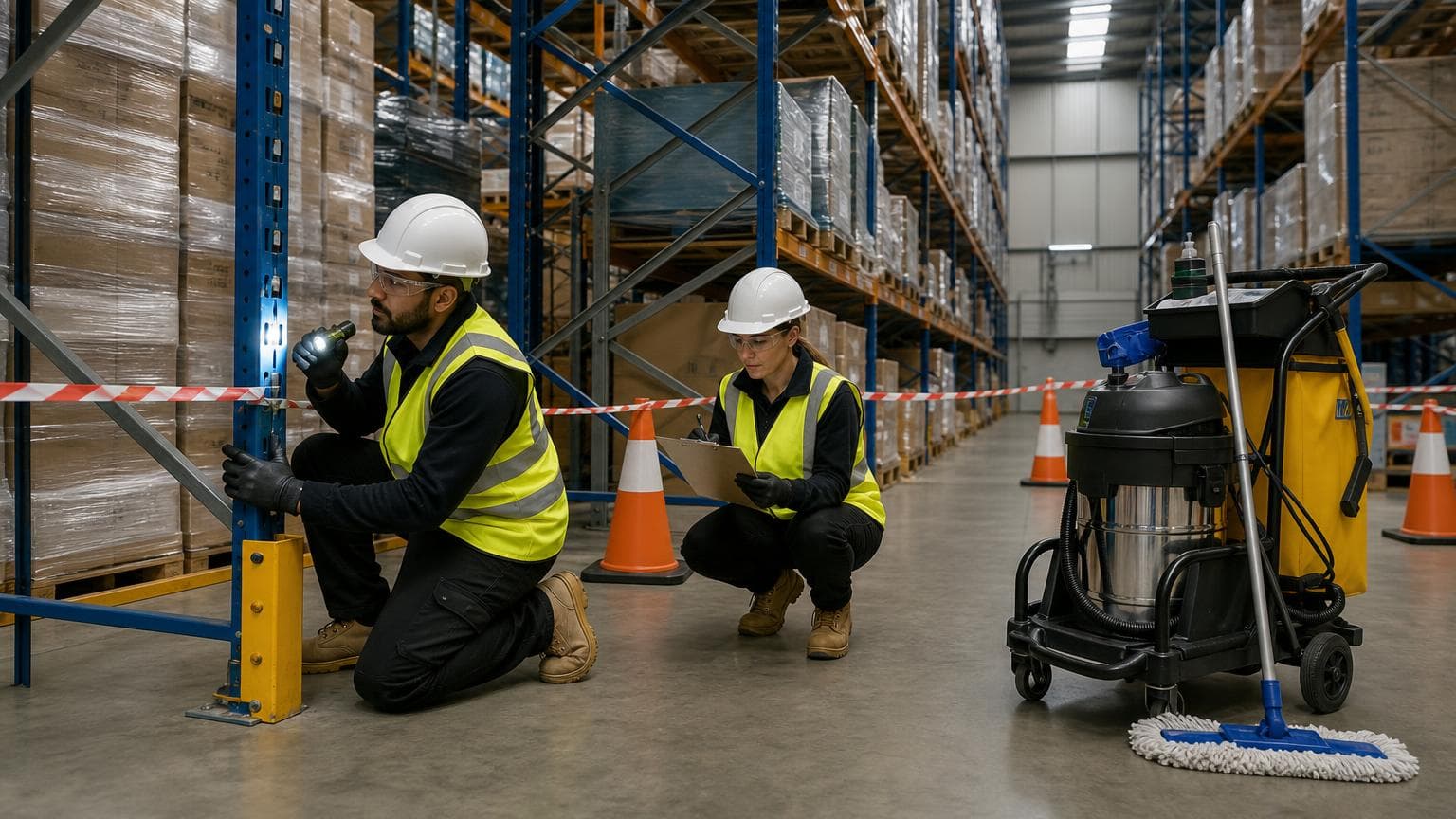
How to Clean Warehouse Racking Safely
Begin at floor level and inspect each upright, beam connection and locking part before cleaning. Isolate the aisle if you find a bent upright, damaged beam, displaced pallet or missing component. Cleaning can remove dust and residue, but it cannot repair steel, confirm a load rating or replace a competent racking assessment.
Use a documented sequence that records the site risks, closed work zone, cleaning equipment, wet-area drying check and reported defects. Record the rack row or bay when you report damage, so the responsible person can locate it without relying on a general description. Never climb pallet racking or work above a safe height without the access equipment and controls approved for that site.
Start with the risk, not the dust
Before equipment enters an aisle, identify the rack rows, forklift routes, stored products, floor contamination and any overhead work. For low-level surfaces, clean only from a stable working position and keep equipment out of travel paths. For higher areas, the site must specify the approved platform, exclusion zone and operator controls before anyone starts.
Keep forklifts, pedestrians and stored goods outside the active zone until the floor and rack surfaces are dry. A clean appearance does not prove that a bay is safe. If you find impact damage or uncertain capacity, isolate the affected area under the site procedure and refer it to the person responsible for racking safety.
A practical sequence for an occupied warehouse
- Walk the area first. Mark rack rows, access points, stored products, floor contamination, overhead work and visible damage.
- Agree the isolation plan. Confirm which aisles are closed, who controls access, where equipment will stand and how forklift movements will stop or divert.
- Remove loose dust before applying liquid. Use suitable dust-control equipment instead of pushing debris into beam connectors, pallet supports or floor joints.
- Clean one zone at a time. Finish the section, remove waste and check the floor before reopening it.
- Record defects separately. A photo, row reference and short description give the maintenance or inspection team information they can act on.
Most people start with the visible dirt. That is backwards in a working warehouse: access, traffic and falling-object controls come first, because a polished rack is not worth exposing a cleaner to an unplanned forklift movement.
Eco-friendly claims should describe the products and methods used, not vague green language. Eco Spark Facility Services presents its cleaning programmes around eco-friendly product choices, industrial cleaning and site controls, so the requested scope should identify the surfaces, contamination and methods rather than rely on a general environmental claim.
Controls that matter during racking cleaning
Separate cleaning from structural decisions. Cleaning staff should report a damaged bay, not decide that it is acceptable because it looks straight. Warehouse staff should not return a damaged bay to use simply because someone has removed the dust.
- Inspect before work starts: look for bent uprights, damaged beams, missing locking parts, displaced pallets, impact marks and unstable storage.
- Use the approved access method: follow the site procedure for ladders, mobile platforms or other equipment, and do not stand on pallets or rack beams.
- Control falling objects: clear the area below overhead work and keep people, vehicles and exposed stock outside it.
- Choose the least wet method that works: excess water can affect stock, labels, floors and metal surfaces, while residue can create a slip risk.
- Protect load information: do not cover, remove or damage capacity signs, row labels, barcodes or inspection markings.
- Escalate defects immediately: isolate visibly damaged areas according to the site procedure and refer them to the responsible person.
- Keep a release record: note the date, area, method, products used, access equipment, defects and final check.
This advice is not for structural repairs, formal racking certification or work that requires unapproved elevated access. Those tasks need the site’s appointed technical or safety personnel, not a cleaner making a judgement from ground level.
Cleaning wooden pallets without creating another risk
First decide whether the pallet should remain in service. Broken boards, protruding nails, heavy contamination, mould, chemical residue or unknown contents are reasons to remove it from circulation and assess it rather than wash it for reuse.
- Move the pallet to a designated area away from stock, pedestrians and forklift traffic.
- Remove loose debris without spreading dust through occupied work areas.
- Use a product approved for the pallet’s material and intended use, following the label and site chemical procedure.
- Use limited moisture and avoid saturating the timber.
- Let the pallet dry fully in a ventilated, controlled location before inspection.
- Reject it if cleaning reveals damage, contamination or an unsafe repair.
Do not pressure-wash a pallet merely because the method is fast. Water can drive contamination into timber, extend drying and create handling or slip risks. Cleaning cannot restore a pallet whose structure has failed.
Planning the wider warehouse clean
Use a zone plan that separates dust removal, spot cleaning, floor work, waste handling and the final release check. Prioritise tasks that affect safety and product protection, then address appearance work after traffic and access controls are in place.
- Set the scope: name rack faces, pallet areas, floors, docks, ledges, plant and other included surfaces.
- Control operations: schedule work around loading, picking and forklift movements, or isolate the affected zone.
- Remove high-level dust safely: use suitable equipment from a safe position and never improvise with pallets or rack beams.
- Clean lower surfaces and floors: remove debris instead of pushing it beneath racking, into drains or into adjacent aisles.
- Manage chemical use: label products, follow directions and prevent incompatible products from mixing.
- Inspect and release: check for wet floors, residue, remaining debris, blocked access and visible rack damage before normal work resumes.
Match the method to the contamination source. Eco Spark Facility Services provides specialised cleaning services as well as commercial and industrial cleaning, but the scope still needs to identify which surfaces require each method.
What AS 4084 means for a cleaning scope
AS 4084 addresses steel storage racking requirements. A cleaning team should not claim that cleaning satisfies the Standard, because compliance depends on the installation, design information, use, maintenance arrangements and assessment by the people responsible for the system.
Before work begins, ask the site manager where the rack information, load limits, inspection records and damage-reporting procedure are kept. Do not remove or obscure labels. If the site cannot confirm capacity or finds structural damage, pause the affected work and refer the issue to an appropriately qualified racking or engineering professional.
Visual checks by trained site personnel can support early reporting, but they do not answer every design or damage question. This article cannot certify racking, approve a repair or determine whether a particular bay complies with the current Standard.
NSW site controls to confirm before work
Cleaning controls must fit the warehouse’s operating pattern, access arrangements and service scope. Eco Spark Facility Services services commercial and industrial properties in Sydney, Greater Sydney, Wagga Wagga, Estella and Regional NSW.
For a site in Wagga Wagga, the relevant scope may sit within commercial and industrial cleaning in Wagga Wagga or commercial cleaning in Wagga Wagga. Sydney and Greater Sydney facilities may need a separate access and scheduling discussion because the work must fit the individual warehouse operation.
For workplace safety duties, check current SafeWork NSW guidance and the site’s own WHS system. A contractor should receive the site induction, emergency information, exclusion-zone rules and chemical requirements before work begins.
Decisions to make before booking
DIY is suitable only for controlled, low-level work. Warehouse staff should not improvise elevated access, work beneath moving loads or clean around operating forklifts. If the area requires specialist access, isolation or industrial equipment, use a documented contractor scope instead.
Inspection comes before presentation. If the concern is bent steel, loose components, altered load ratings or repeated impact, cleaning is not the first remedy. Isolate the risk and obtain the right technical assessment.
Recurring cleaning needs a reason. Set the scope by dust generation, stock sensitivity, traffic, construction activity and release-check results. A calendar alone cannot show whether the warehouse needs more or less work.
Prepare the cleaning brief
Before requesting a quote, prepare the warehouse address, approximate areas, rack height, access restrictions, operating hours, known contamination, required isolation arrangements and existing inspection concerns. That information lets the scope address the actual work instead of treating every rack as identical.
Eco Spark Facility Services can review a commercial or industrial cleaning requirement across NSW and provide a site-specific quote. Start with commercial cleaning services if that is the relevant service page, then include the rack condition and access details in your enquiry.
Request a quote from Eco Spark Facility Services with the warehouse location, cleaning areas and safety constraints included.
Frequently asked questions
Does warehouse racking need to be certified?
Do not assume that cleaning certification proves racking safety. Ask the site owner or manager for the applicable design, load and inspection information, then refer damage or uncertainty to a competent racking or engineering professional. Read the current AS 4084 requirements and compare them with the particular installation.
How to clean warehouse racking safely DIY?
Limit DIY work to low-level surfaces that staff can reach without climbing, entering forklift paths or working beneath loads. Isolate the area, remove loose dust with suitable equipment, use limited moisture and record defects. Stop and obtain specialist help if access equipment, structural damage or operational isolation is involved.
How to clean warehouse racking safely in Australia?
Follow the warehouse’s WHS procedures, site induction, chemical controls and traffic-management arrangements, then use current guidance from the relevant state regulator. In NSW, check SafeWork NSW information as well as the site’s own risk controls. Cleaning does not replace inspection, maintenance or racking assessment.