Childcare Cleaning Contractor Checklist
Choosing a childcare cleaning contractor requires more than comparing prices. Use a written room-by-room scope, verify insurance and business details, and check product methods, food areas, waste handling and reporting before signing.
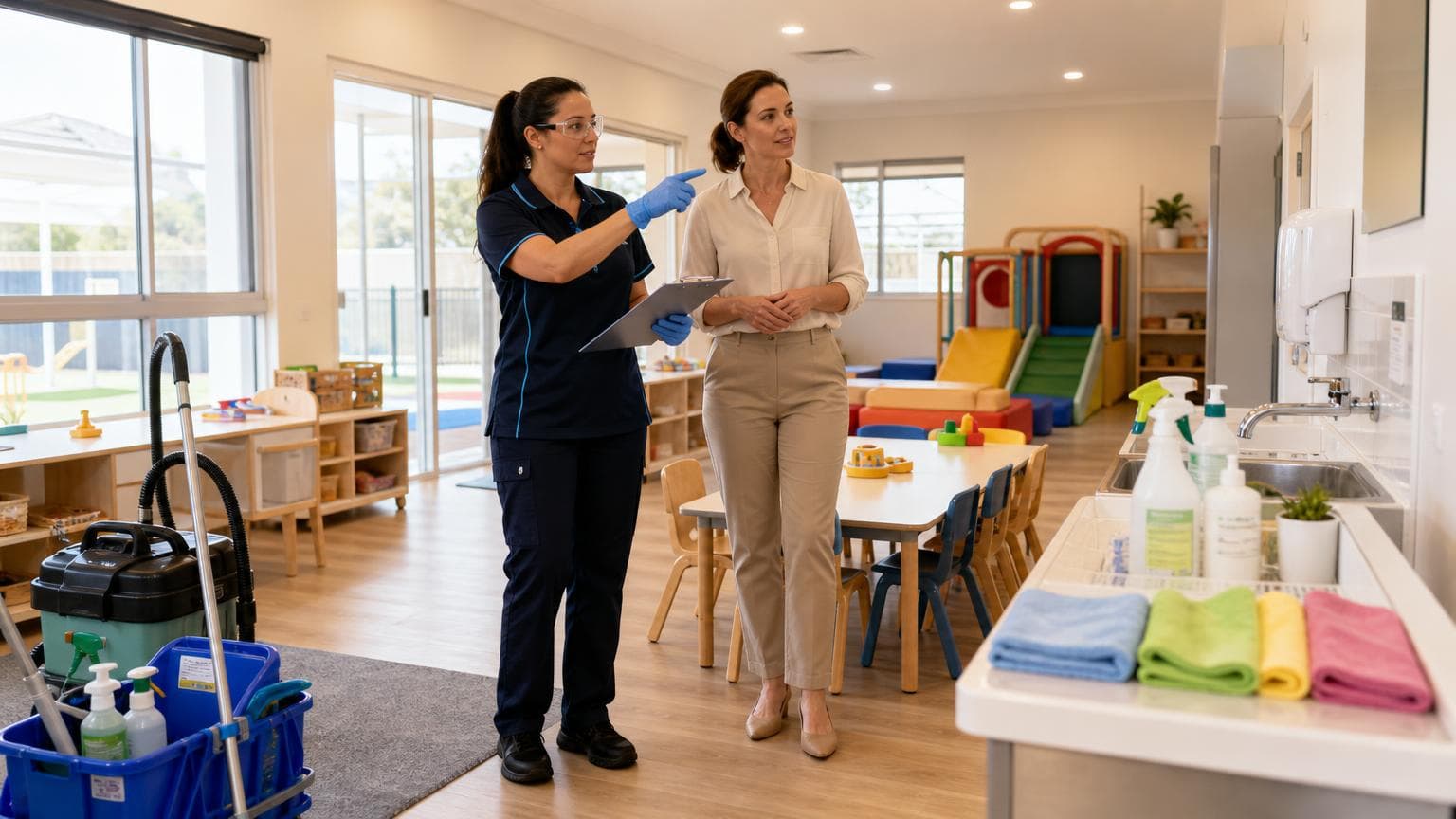
How to Compare Childcare Cleaning Contractors
If you're comparing cleaners for a childcare centre, compare the controls behind the service, not just the quoted price. Require each provider to identify every room, the surfaces covered, the cleaning method, product controls, food-area procedures, waste arrangements and current insurance before you compare costs.
A childcare centre needs more than a general office cleaning routine because different areas create different cleaning tasks. Ask providers to separate shared rooms, bathrooms, sleep spaces, play equipment and meal areas in the scope, then check that the schedule fits access times and children's routines. This guide helps facility managers and centre operators assess providers serving Sydney, Greater Sydney, Wagga Wagga, Estella and other parts of Regional NSW.
The decision starts with the scope
Most centres start with the company name or the cheapest quote. That is backwards, because neither tells you whether the contractor has priced the actual work. Begin by listing each room, surface and access condition, then require every provider to price the same bathrooms, sleep rooms, play areas, food preparation points, waste locations and restricted or locked areas.
Compare the proposals against one written checklist. The strongest proposal will show who cleans each area, at what frequency, using which method, with what sign-off or reporting process. A polished website or large portfolio should rank below a clear plan that matches your rooms and operating hours.
What the provider should put in writing
A useful proposal should answer five practical questions:
- Which rooms, surfaces, high-touch points, food areas, outdoor spaces and waste points are included?
- Which tasks happen daily, and which happen weekly, periodically or only after a reported incident?
- Which products and equipment will the team use, and how will it prevent unsuitable products from reaching children or food-contact areas?
- What are the provider's legal business details and current insurance arrangements?
- Who reports a missed task, access problem or incident, and how does the provider record the response?
Eco Spark Facility Services is a NSW commercial cleaning contractor with eco-friendly product programmes, industrial and construction cleaning experience, and insured team messaging on site. Those credentials do not remove the need to ask questions. They give a centre a starting point for checking whether the provider's capabilities match its premises.
How to assess the provider before you sign
Assess the provider by testing its proposed inspection, written scope, product methods, insurance evidence and supervision process before signing. If the representative cannot explain what happens in a bathroom, sleep space, food area or missed-task situation, the proposal is not ready for approval.
1. Test the site inspection
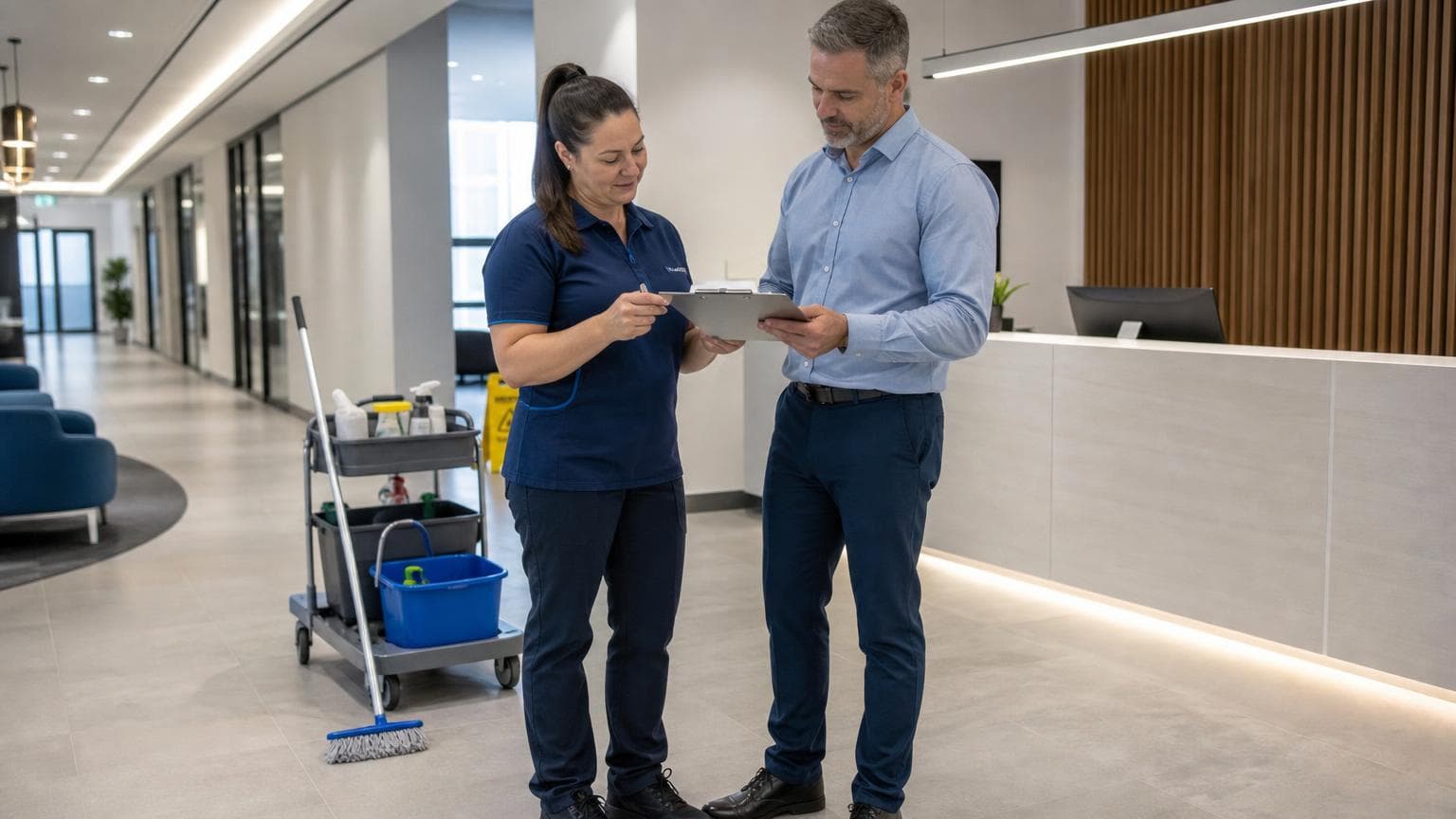
Ask the cleaner to inspect the centre before preparing a quote. The inspection should identify room types, floor surfaces, access times, locked areas, nappy-change or bathroom zones, food preparation points, waste locations and any construction or maintenance residue.
Reject a quote that treats the centre as one undifferentiated floor area. A provider cannot price or schedule the work properly without knowing what needs cleaning and when staff can enter safely.
2. Check credentials and insurance
Ask for the business's legal name, ABN and current insurance evidence. You can check an Australian Business Number through ABN Lookup. Ask what the insurance covers and when the certificate expires instead of accepting the word “insured” as sufficient proof.
Also ask who supervises the work, how new cleaners receive site instructions and how the provider manages substitutions. A centre needs a controlled process, not a promise that an unknown replacement will know the building.
3. Read the cleaning method, not just the task list
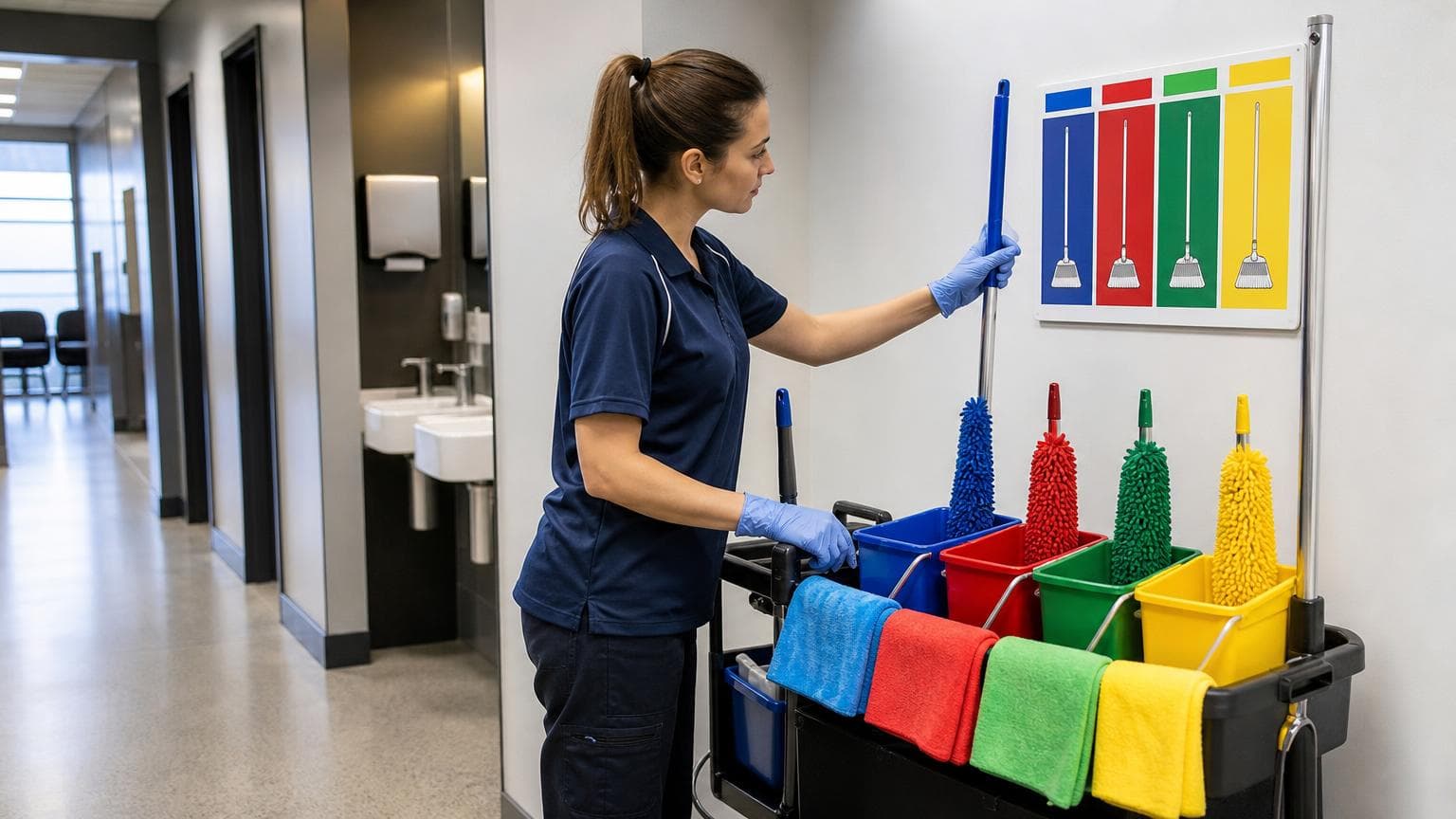
A task list tells you what someone intends to clean. A method explains the order, equipment, product use, contact time where relevant, cloth or mop separation, storage and sign-off. Request product labels or safety information for products that staff may need to store or use on site.
Eco-friendly should describe actual product and method choices. It should not function as a vague environmental claim. Ask what the provider changes to reduce unnecessary chemical use, packaging or waste, while still meeting the centre's hygiene requirements.
4. Compare supervision and reporting
Ask how the centre reports a missed task and how quickly the provider responds. Decide who receives the report, which items need an urgent response and how the provider records completed work. A simple site checklist may be enough for a small centre, but the process must match the number of rooms and the level of oversight required.
How to pick a name for a cleaning business?
The name should be the last part of your decision, not the first. Pick a provider by its verified business identity, relevant site experience, written scope, insurance, cleaning methods and communication process. A memorable name cannot prove that the contractor understands childcare environments.
For a practical check, compare the name on the quote, ABN record, insurance certificate and contract. Differences do not automatically mean a problem, because a business may trade under a different name, but the provider should explain them clearly before work starts.
What are the key qualities of a good childcare provider?
For a cleaning contractor, the most useful qualities are consistency, careful communication, controlled product use, respect for access rules and the ability to adapt the schedule without losing essential tasks. Reliability ranks above presentation because a centre needs the agreed work completed at the agreed time.
Look for a provider that asks about children’s routines, food areas, bathroom traffic, sleep spaces, storage and incident reporting. A cleaner who asks only about square metres is collecting too little information to design a responsible scope.
The National Quality Standard gives childcare services a useful reference point for health and safety expectations. Read ACECQA's National Quality Standard, especially Quality Area 2, then ask the cleaning provider how its work supports the centre's own procedures. Cleaning does not replace supervision, infection control policies or staff responsibilities.
What is the 7 step cleaning process?
A useful seven-step process for evaluating and managing a childcare cleaning service is:
- Inspect: walk through every relevant room and record surfaces, access conditions and risk points.
- Scope: separate daily, weekly, periodic and reactive tasks.
- Specify: document products, equipment, methods, storage and areas that need separate controls.
- Schedule: place tasks around enrolment, meals, sleep periods, collection and after-hours access.
- Brief: give cleaners site rules, room priorities, escalation contacts and restricted-area instructions.
- Verify: use checklists, inspections or agreed reporting to confirm completion.
- Review: change the scope when rooms, routines, surfaces or site risks change.
This process is also a useful test during tendering. Ask each provider to explain how its quote covers all seven steps. Do not pay for a larger service package until the provider has shown what the centre actually needs and how the work will be checked.
Hand hygiene and high-touch surfaces
Hand hygiene belongs in the centre's wider infection-control arrangements, but the cleaner still needs a clear role. Ask who cleans and restocks handwashing points, which surfaces receive priority, how cloths and mops are separated, and how staff report a spill or contamination event.
Focus on touchpoints that children and staff use repeatedly, such as door hardware, taps, flush controls, rails and shared furniture. Do not accept a vague promise to “sanitise everything”. The scope should identify the surfaces, timing and method so the centre can check whether the work occurred.
The Australian Government's infection control information provides broader public health context. A cleaning contractor should work within the centre's approved procedures and product instructions, not create medical claims of its own.
What about food preparation areas?
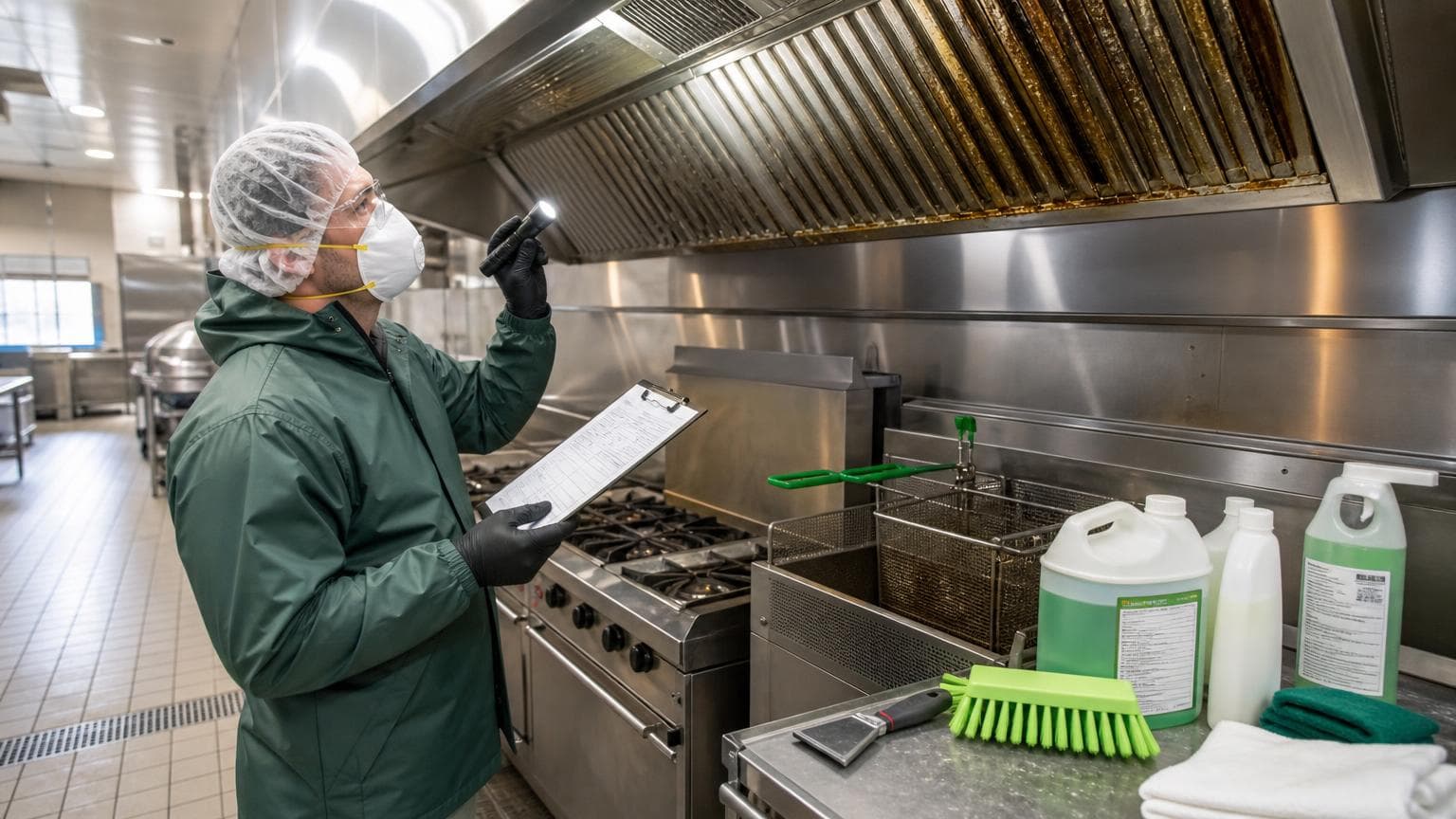
Food preparation areas need their own section in the cleaning scope. Ask how the provider handles benches, sinks, taps, cupboard handles, floors, bins and any equipment included in the agreement. Clarify which surfaces contact food and which products are suitable for those surfaces.
The centre should identify who cleans food-contact areas, who rinses or prepares them for use where required by the product instructions, and how the area is protected from cross-contamination. Do not assume that a general bathroom and floor routine covers a meal preparation space.
Use the NSW Food Authority food safety information alongside the centre's own food handling procedures. The cleaning contractor should follow the agreed site requirements and product directions. The centre remains responsible for confirming that its overall food safety system covers the activities taking place on site.
Waste handling and site safety
Include waste points in the inspection rather than treating bins as an afterthought. The scope should state which bins the cleaner empties, where waste goes, how liners are replaced, how spills are handled and which waste streams the contractor is not authorised to manage.
Ask how cleaners store equipment and products during service, particularly when children, families or other workers may enter the area. Do not assume that a green product is harmless in every situation. Storage, labelling, dilution, ventilation and the method of use still matter.
For workplace cleaning hazards and controls, consult SafeWork NSW cleaning guidance. This article does not replace a centre's risk assessment, emergency plan or work health and safety advice.
Local considerations for NSW centres
Eco Spark Facility Services serves Sydney, Greater Sydney, Wagga Wagga, Estella and Regional NSW. A centre should confirm that the proposed team can service its actual location, agreed access window and required frequency rather than relying on a generic NSW service statement.
Ask how travel, after-hours access, keys, alarms, parking and supply storage affect the quote. These details can change the practical cost and schedule, even when two centres have similar floor areas. Request a written scope that names the site and the service area instead of accepting a recycled proposal.
For broader commercial, industrial or specialised requirements, review Commercial Cleaning Services Wagga Wagga, Commercial Industrial Cleaning in Wagga Wagga and Specialised Cleaning Carpet Pressure Solar NSW. A childcare centre may need a focused cleaning scope even when the contractor also services warehouses, offices or construction sites.
Questions people also ask
How to choose a cleaner for a childcare centre Australia?
Use the same core checks across Australia: inspect the site, compare written scopes, verify the business identity and insurance, review product methods, and define how the centre will check completed work. Add the requirements of the state, council, centre policies and food handling arrangements that apply to the site.
Is a cleaning business profitable in Australia?
Profit depends on revenue, labour, travel, equipment, products, insurance, administration, tax and the scope of each contract. A centre choosing a cleaner should not use a contractor's claimed profitability as a quality test. Ask instead for a clear service scope, reliable communication and evidence that the business can deliver the agreed work.
How to choose a cleaner for a childcare centre qui?
If “qui” was intended to mean a quick question, start with three checks: ask for a site inspection, request the written cleaning scope and verify the provider's business and insurance details. Those checks expose more than a slogan or an unusually low quote.
Where to go from here
Turn this article into a one-page comparison sheet. Record each provider's site inspection date, business identity, insurance evidence, daily and periodic tasks, food-area method, waste process, product information, access assumptions and reporting contact. Send the same sheet to every contractor so the quotes are comparable.
Ignore this checklist if you need medical, food safety or risk-management advice rather than help comparing a cleaning contractor. This checklist helps you assess service providers, but it does not determine whether your centre's procedures satisfy every regulatory obligation or replace advice from the relevant authority.
If your centre needs a cleaning scope for a site in Sydney, Greater Sydney, Wagga Wagga, Estella or Regional NSW, request a quote from Eco Spark Facility Services with the rooms, access times and required services listed.