Airbnb Turnovers: A Practical Cleaning Checklist
A reliable Airbnb turnover starts with access, damage and departure checks before cleaning begins. This checklist separates routine reset work from maintenance issues, pricing decisions and specialised services.
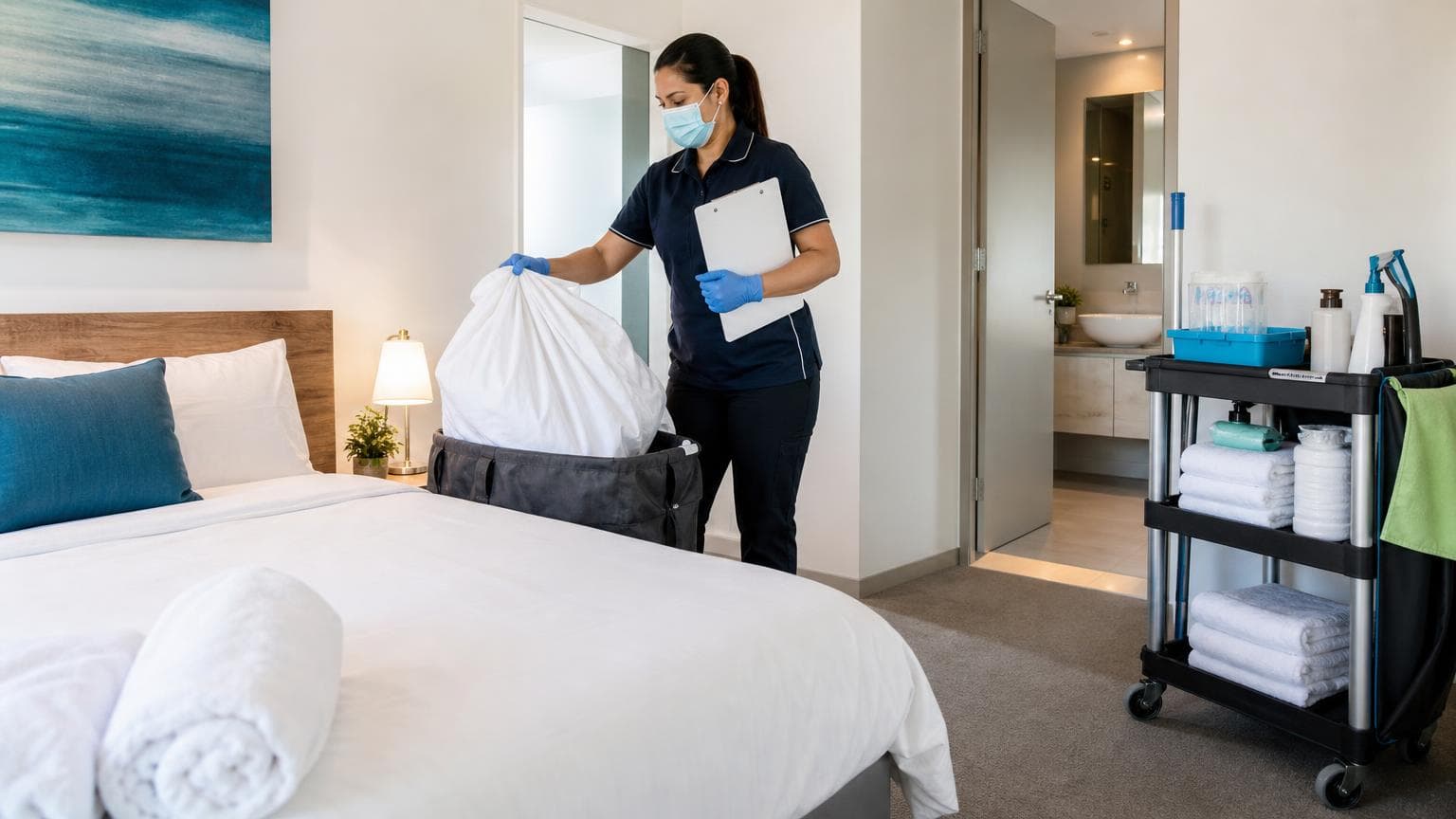
Airbnb Turnover Cleaning Checklist for a Consistent Reset
Before handover, confirm four things: used linen is removed, bathrooms are reset, agreed consumables are replenished and damage is reported. Those checks turn an Airbnb turnover cleaning checklist into a defined job rather than a general instruction to wipe surfaces.
Start with a property check, not the first room you enter. Confirm the access method, inspect appliances, count or locate linen and record visible damage before moving anything. Then remove used items, clean high surfaces before floors, restock supplies and complete a room-by-room verification. This workflow suits hosts, property managers, cleaning contractors and other STR operators working across Sydney, Wagga Wagga, Estella and other parts of NSW.
Start with the handover risk
An Airbnb turnover returns a short-term rental to the condition shown in its listing between guests. The checklist should therefore name each handover point: access, departure status, damage, rubbish, linen, towels, bathrooms, kitchen surfaces, floors, consumables, presentation and final reporting. A generic domestic-cleaning list misses the decisions that determine whether the property is ready to advertise again.
Do not treat a turnover as a shortened domestic clean. Check the items a departing guest leaves most visibly exposed, including towels, crumbs in drawers, hair in the bathroom, dusty handles and damaged appliances. Photograph a stain, leak or missing item before cleaning or discarding anything, then send it to the person responsible for maintenance. This process does not repair a failed appliance or resolve a security issue, so properties with those problems need an owner or manager's action as well as cleaning.
Map the reset to the property
Build the checklist around the individual property, not a generic room list. Record the number of beds, bathrooms, outdoor areas, bins, appliances and consumables required for each booking. The person completing the work should know the linen change, restocking level and reporting method before entering the property.
- Check access and the booking scope: confirm the property, departure status, special instructions and any areas that need attention.
- Inspect before cleaning: photograph or report damage, missing items, unusual odours, leaks, stains and unsafe conditions before moving or discarding anything.
- Strip and remove: collect used linen and towels, empty bins, remove food and clear items left by the previous guest.
- Clean in a set direction: work from higher surfaces to lower surfaces, then finish with floors. This prevents dust and debris from falling onto completed areas.
- Reset the property: make beds, replace towels, arrange furniture, restock agreed consumables and return items to their intended positions.
- Verify before leaving: inspect the entry, sleeping areas, bathroom, kitchen, living space and any included exterior area. Close the job with a report and photographs where required.
Eco Spark Facility Services operates as a NSW commercial cleaning contractor and uses eco-friendly product programmes. Its relevant cleaning background includes industrial and construction cleaning, with insured team messaging on site. For a short-term rental, define the product, application method and scope before the first clean. Eco-friendly claims should describe those choices, not rely on vague green wording.
Put guest-facing failures first
The 80/20 rule in Airbnb is an informal prioritisation idea, not an Airbnb cleaning standard. It is useful only as an order-of-work decision: secure the tasks that affect a guest's first inspection before spending time on low-visibility details.
For a turnover, rank the entry, bed presentation, bathroom hygiene, kitchen condition, odour control, floors and visible touchpoints before decorative arrangement. This does not mean ignoring the rest of the property. It means preventing a polished shelf from distracting you from hair in a shower drain or an unmade bed.
Use the rule to set the order of work, not to cut corners. It will not solve mould, pests, significant damage or a failed appliance, and DIY hosts should ignore it when the property needs maintenance, pest control or building repairs rather than cleaning.
Use observable handover tests
The 6/10 rule is not a recognised Airbnb requirement or a measurable Australian cleaning standard. It gives no usable handover test because it does not identify which surfaces, rooms or risks can remain unfinished.
Do not use 6/10 as a handover standard. Replace it with checks someone can verify: no used linen remains, bathrooms are reset, food debris is removed, floors are clean, agreed consumables are available and damage has been reported. Those checks give the host and cleaner the same definition of done.
This rule will not solve a property with mould, a pest issue, significant damage or a failed appliance. Cleaning can document and address suitable cleaning work, but it cannot replace maintenance, pest control or building repairs.
Price the work you actually accept
A reasonable cleaning fee is the amount that covers the agreed turnover work without hiding the property's real operating cost. The correct amount depends on property size, bed and bathroom count, linen arrangements, condition, access, travel, laundry, consumables and reporting requirements.
Calculate the fee from the work backwards. Identify the time required for the standard reset, add laundry and supply costs, then account for travel, difficult access, extra rooms, outdoor areas, urgent changes and occasional deep cleaning. Keep routine turnover work separate from carpet cleaning, upholstery cleaning, pressure washing and window cleaning.
Do not set a low fee simply because a competitor advertises one. The saving may reappear as rushed work, missed tasks or a cleaner who cannot sustain the booking schedule. If the property often needs extra recovery work, review the scope, guest instructions and booking gap rather than assuming the fee alone is the problem.
Control the visit without hiding scope
The most efficient workflow removes decisions from the visit. Use one property-specific checklist, one supply location and one reporting process. Keep the sequence consistent even when the property looks different after each departure.
Prepare replacement linen and consumables before starting. Work through the property once for removal and inspection, once for cleaning and once for reset and verification. Repeated trips to storage or switching between rooms make omissions harder to spot.
Separate three types of work in the job record:
- Turnover tasks: the work required for every guest changeover.
- Condition issues: stains, damage, missing items and maintenance observations.
- Periodic tasks: deep cleaning, upholstery, windows, pressure washing and other work outside the standard reset.
This separation gives the property manager a clearer basis for scheduling and quoting. It also prevents a cleaner from quietly absorbing extra work into a fee designed for a simpler visit.
Make completion auditable
A checklist works best when it creates a record, not when it sits unused in a folder. Include the property name, arrival time, departure status, exceptions, completed tasks, supply shortages, photographs and sign-off. Keep the completed Airbnb Cleaning Checklist tidy, use a clear file name if you offer a Download option, and record the named contact for each unresolved issue.
Review recurring exceptions after several turnovers. If the same consumable runs out, change the stock level or restocking trigger. If cleaners repeatedly report the same stain or broken item, send it to the property manager as a separate action rather than burying it in a general completion note. If Don or June is the nominated contact, record that person against the next action instead of leaving the name in an informal message.
Hosts should also decide who owns guest communication, maintenance escalation, linen replacement and emergency access. A cleaning contractor can complete an agreed scope, but a checklist cannot authorise repairs or make decisions that belong to the property owner or manager. Subscribe notifications should support that handover, not replace a named person who can act.
Separate local access from the checklist
Eco Spark Facility Services lists Sydney NSW, Greater Sydney, Wagga Wagga, Estella and Regional NSW within its service areas. Identify the actual property location before quoting, because travel, access arrangements, scheduling and service frequency can affect the work involved.
For a property managed alongside offices, warehouses, schools, healthcare spaces or construction sites, keep the short-term rental checklist separate from the site's commercial cleaning programme. The required products, access controls, reporting and working hours may differ. Eco Spark's specialised services also include carpet and upholstery cleaning, window cleaning, pressure washing and solar panel cleaning, but those should remain separate line items unless the agreed turnover scope includes them.
Local coverage does not remove the need for a property inspection. A Sydney apartment, a Wagga Wagga property and a home in Estella may require different access instructions and supply arrangements, even when the checklist headings look similar.
Finish with a defined handover
Read the checklist aloud during the first trial if the process is new, then remove wording that allows two interpretations. Add the exact linen count, consumable levels, reporting contact, access method and tasks outside the standard turnover. For broader commercial or specialised cleaning requirements, review Specialised Cleaning Carpet Pressure Solar NSW and Commercial Industrial Cleaning in Wagga Wagga.
This checklist does not replace maintenance, pest control, repairs or a property manager's inspection standard. If the turnover scope is clear and the property details are available, request a quote from Eco Spark Facility Services for an Airbnb or short-term rental in Sydney, Greater Sydney, Wagga Wagga, Estella or Regional NSW.