Commercial Cleaning Chemical Dilution Guide NSW
A practical NSW guide to commercial cleaning chemical dilution, accurate dosing, labelling, safe handling and waste reduction.
Commercial Cleaning Chemical Dilution Guide NSW
Accurate commercial cleaning chemical dilution is a practical safety, quality and waste reduction issue for every cleaning team. Too much concentrate can leave residue, damage surfaces, create stronger fumes and increase operating costs. Too little may fail to remove soil, grease or microorganisms as intended.
This guide explains how commercial cleaners in New South Wales can manage dilution, dosing, labelling and disposal during routine operations. It is general guidance only. Always follow the product label, current safety data sheet (SDS), manufacturer instructions and site-specific risk assessment.
Why accurate dilution matters in commercial cleaning
Cleaning chemicals are formulated for particular tasks, surfaces and soil loads. The recommended dilution is part of that formulation. Changing it without approval can affect performance and introduce avoidable risks.
- Safety: Concentrated products can irritate skin, eyes and airways, particularly during decanting or spray preparation.
- Surface protection: Excessively strong chemicals may dull finishes, damage coatings, stain fabrics or affect sensitive flooring.
- Cleaning results: Under-dosed products may spread soil rather than remove it, while over-dosing can leave a sticky film that attracts more dirt.
- Waste reduction: Correct dosing prevents unnecessary product consumption, excess packaging and avoidable disposal.
- Consistency: A documented process helps different cleaners achieve the same result across offices, warehouses, schools and medical facilities.
Read the label and SDS before mixing
The product label should be the first reference for dilution, intended use, contact time, application method and required precautions. An SDS provides important information about hazards, storage, first aid, handling and spill response. Keep current copies accessible to workers, including on mobile teams where appropriate.
Do not assume that two products with similar names have the same dilution. One disinfectant, degreaser or floor cleaner may require a different concentration from another. Check whether the instructions refer to a ready-to-use product, a concentrate, a ratio, a percentage or a dosing machine setting.
Before introducing a chemical into a workplace, confirm that it is suitable for the surface and the task. A product approved for hard floors may not be appropriate for upholstery, natural stone, painted surfaces, electronics or food contact areas.
How to calculate cleaning chemical dilution
Use clean measuring equipment and calculate the finished volume required. For products expressed as a percentage, a simple working formula is:
Concentrate required = finished solution volume multiplied by the stated concentration
For example, a product instruction stating a 1% concentration may require approximately 10 mL of concentrate for each 1 L of finished solution. This example is not a substitute for the product label. Some manufacturers define ratios differently, and the required volume may need to be adjusted so the finished solution reaches the intended total volume.
Where a label provides a ratio such as one part product to a specified number of parts water, follow that exact convention. Do not convert a ratio from another product or rely on an unmarked bottle cap. If the instruction is unclear, contact the manufacturer or appoint a trained supervisor to confirm the method before use.
Practical measuring methods
- Use graduated measuring jugs, syringes or dosing cups that are dedicated to chemical preparation.
- Use wall-mounted dilution control systems where they are suitable for the products and site.
- Check that dispensers are calibrated and not blocked, leaking or drawing the wrong concentrate.
- Prepare only the volume needed for the cleaning shift or task, unless the product instructions allow storage of a prepared solution.
- Use cool or room-temperature water unless the manufacturer specifies otherwise.
Never estimate dilution by colour, smell or foam. These characteristics are not reliable indicators of concentration.
Safe steps for preparing diluted chemicals
- Review the label, SDS and site procedure before opening the concentrate.
- Put on the required personal protective equipment, such as gloves and eye protection, as specified by the product information and risk assessment.
- Check the bottle, cap, measuring tool and spray container for damage or contamination.
- Add the required amount of water to the approved container where the manufacturer directs this sequence. In many situations, adding concentrate to water helps reduce splashing, but the product instructions take priority.
- Measure the concentrate accurately and add it carefully.
- Close the container and mix only as directed. Avoid shaking products that may create pressure, vapour or excessive foaming.
- Clean any drips immediately using the spill procedure and wash measuring equipment as directed.
- Label the prepared container before it is taken to the work area.
Do not mix different cleaning products unless the manufacturer specifically states that they are compatible. In particular, never combine bleach or hypochlorite products with acids, ammonia or other chemicals. Dangerous gases or reactions may result. Use separate equipment for incompatible products and store concentrates according to the SDS.
Labelling requirements for working solutions
A secondary container should never be left unidentified. A durable label helps prevent misuse, supports emergency response and gives the next cleaner enough information to work safely.
Depending on the product and workplace procedure, the label should identify:
- Product name and, where relevant, active ingredient
- Intended use or application area
- Dilution or concentration used
- Date prepared and any expiry or discard time
- Relevant hazard warnings and required PPE
- Responsible person, team or department
Do not use food or drink containers for cleaning chemicals. Store prepared solutions in compatible, clearly marked containers and keep them away from food, medicines, public access and incompatible substances. Spray bottles should not be transferred between tasks without being emptied, cleaned and relabelled according to procedure.
Reducing chemical waste in daily operations
Waste reduction starts with planning. Cleaning supervisors can review room sizes, surface types, cleaning frequencies and soil levels to set sensible working volumes. A large bucket of unused solution at the end of every shift indicates that preparation quantities may need to be adjusted.
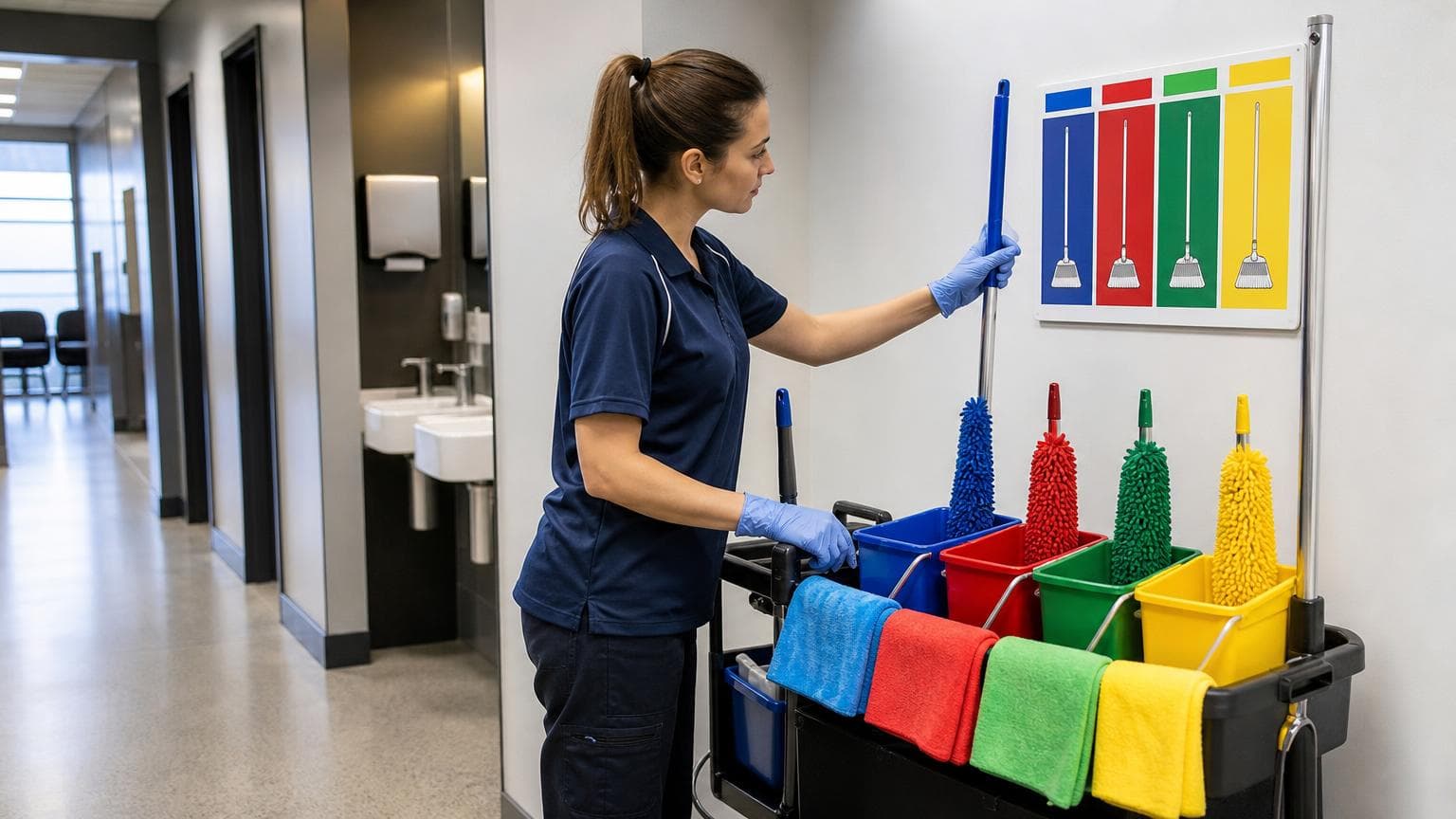
- Use colour-coded equipment and task-specific containers to prevent cross-use.
- Choose ready-to-use products or controlled dosing for tasks where manual measuring creates repeated errors.
- Record concentrate usage by site or service area to identify leaks, over-preparation or unusual consumption.
- Train staff to use the correct spray pattern and cloth method rather than increasing chemical strength.
- Use mechanical action, such as suitable agitation or microfiber systems, where it improves cleaning without extra chemical.
- Keep concentrate containers closed and stored correctly to prevent deterioration and spills.
More chemical is not a replacement for dwell time, agitation or correct technique. The cleaning plan should state the required contact time for products that need it, especially disinfectants. The surface must remain visibly wet for the instructed period where applicable.
Disposal and spill control in NSW workplaces
Do not pour leftover chemicals into sinks, stormwater drains or outdoor areas simply because the solution is diluted. Disposal depends on the product, quantity, site drainage arrangements and applicable environmental and workplace requirements. Follow the SDS, product instructions, client procedure and directions from the relevant authority or waste contractor.
Keep spill kits appropriate to the chemicals used, and make sure workers know the reporting and isolation process. A spill response should cover protecting people, preventing the product entering drains, using compatible absorbent materials and arranging disposal of contaminated waste. Never use an unapproved neutralising agent.
For larger sites, include chemical storage, dilution and waste handling in routine quality audits. A documented process is particularly important in commercial and industrial cleaning programs across Wagga Wagga and NSW, where cleaning activities may involve warehouses, loading areas, offices and shared amenities.
Training and quality checks for cleaning teams
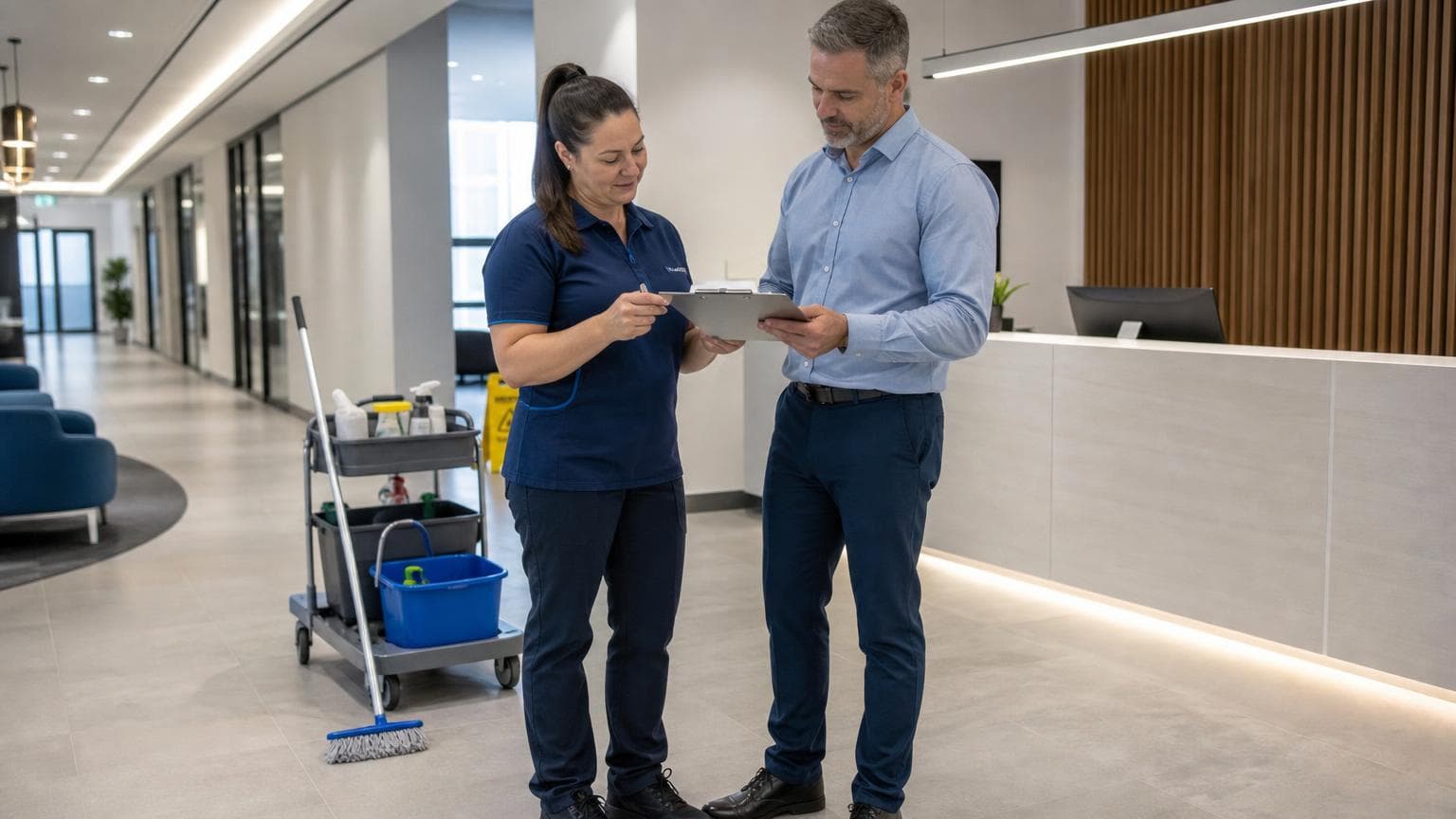
Induction should cover label reading, SDS access, PPE, measuring, incompatible chemicals, labelling, storage, spills and disposal. Supervisors can verify competence by observing a dilution task rather than relying only on a signed attendance sheet.
Useful checks include confirming that:
- Measuring tools are available, clean and marked with readable graduations.
- Secondary containers have complete labels.
- Concentrates are stored securely and separated from incompatible products.
- Prepared solutions are within their permitted use period.
- Dispensing equipment is working and serviced.
- Staff can explain what to do after a splash, spill or incorrect mix.
- Cleaning outcomes are reviewed without encouraging staff to over-dose products.
For offices, a clear chemical system can support a broader office cleaning service in Wagga Wagga. Higher-risk environments require task-specific controls. Medical centres, schools and industrial facilities should align cleaning instructions with the client’s infection prevention, safety and access requirements.
Choose a documented green cleaning approach
Eco-friendly cleaning is not simply a matter of selecting a product described as green. It also involves accurate dosing, responsible packaging, appropriate equipment, safe storage and preventing unnecessary discharge. A concentrated product used correctly may reduce transport and packaging compared with repeatedly disposing of partly used ready-to-use containers, but suitability and manufacturer instructions must come first.
For specialist surfaces and outdoor tasks, use the correct service method rather than adapting a general-purpose chemical. Eco Spark Facility Services provides specialised carpet, pressure and solar cleaning services, with procedures selected for the surface and operating environment. Solar panels, for example, should be cleaned using methods that avoid unnecessary abrasion or unsuitable chemical residue. See the dedicated solar panel cleaning service in Wagga Wagga and Estella for more information.
Commercial cleaning chemical dilution checklist
- Confirm the product, task and surface.
- Read the label and SDS.
- Measure water and concentrate accurately.
- Never mix incompatible chemicals.
- Wear the specified PPE.
- Label every secondary container.
- Prepare only what is needed.
- Store, use and dispose of solutions as instructed.
- Record and correct recurring dilution errors.
Accurate dilution supports safer workers, more consistent results and less avoidable waste. If your NSW workplace needs a cleaning program with documented procedures for offices, industrial areas or specialised tasks, contact Eco Spark Facility Services to discuss a practical commercial cleaning solution.