Cleaning Service Level Agreement Guide NSW
A practical guide to creating a cleaning service level agreement NSW businesses can use to define scope, response times, responsibilities and escalation.
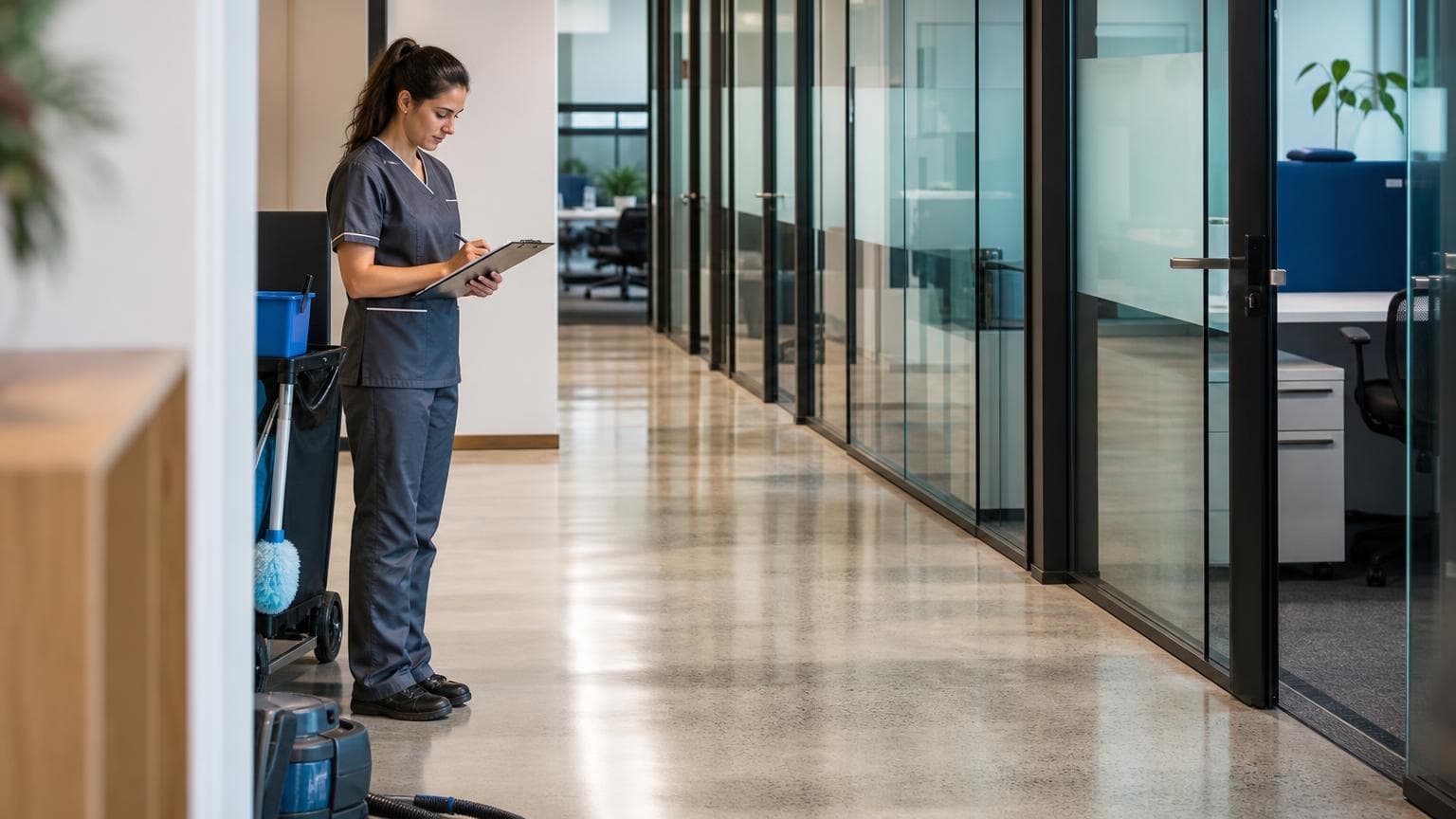
Winning a cleaning contract is only the beginning of a successful working relationship. The next step is turning the agreed service into clear instructions that cleaners, facility managers, tenants and site contacts can all follow. A well-written cleaning service level agreement NSW businesses use should explain what will be cleaned, how often tasks will be completed, how urgent issues will be handled and who is responsible for each decision.
This practical guide focuses on the post-award stage. It is designed to help NSW businesses establish workable cleaning service levels with a commercial cleaning provider, without creating vague expectations or an agreement that is difficult to manage.
What is a cleaning service level agreement?
A cleaning service level agreement, or SLA, is a working document that sets out the expected standard and delivery arrangements for a cleaning service. It usually supports a broader commercial cleaning contract by detailing operational matters such as task frequency, quality requirements, response times, reporting and escalation.
The contract may cover legal, payment and termination conditions. The SLA should be more practical. It gives the cleaning team and the client a shared reference point for day-to-day service delivery.
For example, an office SLA may distinguish between routine cleaning completed after hours, urgent spill response during business hours and periodic tasks such as carpet extraction or internal window cleaning. A warehouse, school or medical facility will need different service levels based on its risks, occupancy and operating schedule.
Start with the site and service scope
The first section should identify the premises and the areas included in the service. Avoid relying on a general description such as complete premises cleaning. List the relevant spaces and note any exclusions.
- Reception areas, offices, meeting rooms and staff kitchens
- Bathrooms, amenities and high-touch points
- Warehouses, loading zones, workshops or production support areas
- Classrooms, administration areas and shared spaces in education facilities
- Waiting rooms, consulting areas and non-clinical spaces in medical facilities
- External paths, entries, glass, car parks or waste areas where included
It is also useful to record site access arrangements, security requirements, restricted areas, alarm procedures, key control and any activities the cleaning team must not perform. Businesses needing broader support can review Eco Spark's commercial and industrial cleaning services in Wagga Wagga as an example of how different facility types may require different cleaning approaches.
Define service levels by task, not general promises
Service levels should describe the outcome and the method of checking it. A useful schedule can include the task, location, frequency, expected condition and responsibility for supplying equipment or materials.
For instance, instead of stating that floors will be cleaned regularly, specify whether the requirement is vacuuming, mopping, machine scrubbing or spot cleaning, and identify the relevant days or operating conditions. For an office, requirements may include removing visible litter, cleaning high-touch surfaces and leaving hard floors free of noticeable soil. The appropriate standard will depend on the premises and the agreed scope.
Separate routine, periodic and reactive work:
- Routine work: scheduled cleaning completed daily, weekly or according to the agreed site program.
- Periodic work: tasks such as carpet cleaning, high dusting, pressure washing, window cleaning or detailed sanitising completed at an agreed interval or during a planned service period.
- Reactive work: responses to spills, unexpected mess, weather events, access issues or other incidents outside the routine schedule.
For specialist requirements, link the SLA to a clear method statement. Eco Spark's page on specialised carpet, pressure and solar cleaning in NSW can help businesses separate specialist services from everyday cleaning duties.
Set response times that reflect urgency
A cleaning service level agreement NSW organisations can manage should not assign the same response expectation to every request. Create categories based on the potential effect on safety, operations, hygiene and access.
Suggested response categories
- Critical: an issue that may create an immediate safety, hygiene or access concern. The SLA should state who is contacted and how the issue is escalated.
- High priority: a significant problem affecting an important area or normal operations, but not presenting the same immediate risk as a critical incident.
- Routine request: a non-urgent issue, additional task or minor defect that can be recorded for the next planned service or agreed review.
Define when the response clock starts. It may begin when the request is received through the approved channel, when a supervisor confirms the issue or when an incident is reported by the site contact. Also state whether the response time means acknowledgement, attendance, containment or completion. These are different outcomes and should not be confused.
If a complete resolution depends on replacement equipment, access approval or another contractor, require the provider to communicate the interim action and next update rather than promising an unrealistic completion time.
Allocate responsibilities clearly
Many service disputes occur because both parties assumed the other was responsible. Include a responsibility schedule covering the client, cleaning provider, site contact and, where relevant, building management.
Client responsibilities may include
- Providing safe access to agreed areas and advising of restricted zones
- Communicating changes to operating hours, occupancy or site activities
- Providing relevant safety information, induction requirements and emergency procedures
- Approving periodic work, variations and access arrangements
- Reporting defects through the agreed contact method with useful location details
Cleaning provider responsibilities may include
- Providing trained and appropriately supervised personnel
- Following the agreed scope, safe work procedures and site instructions
- Using approved chemicals, equipment and consumables
- Protecting keys, access information and confidential site details
- Recording incidents, missed tasks, corrective actions and service changes
For offices, it can help to appoint one client representative rather than accepting instructions from multiple staff members. Businesses can also compare these arrangements with the practical considerations in Eco Spark's office cleaning services in Wagga Wagga.
Include green cleaning requirements
If sustainability is part of the reason for appointing a cleaning contractor, it should appear in the SLA rather than remain an informal expectation. Define what green cleaning means for the site and how it will be managed.
Possible provisions include the use of preferred low-impact products where suitable, correct dilution, responsible chemical storage, reusable materials, waste separation and reduced packaging. The agreement should also recognise that product selection must remain appropriate for the surface, task and hygiene requirement. A product should not be selected solely because it is marketed as environmentally friendly if it cannot deliver the required cleaning result or is unsuitable for the area.
Ask the provider to identify any product substitutions in advance where practical, and keep safety data and product information available as required for the workplace.
Agree how performance will be reviewed
Performance review should be simple enough to use consistently. Select measures that reflect the actual service rather than collecting reports that nobody reads.
- Completion of scheduled tasks
- Results of agreed inspections or walk-throughs
- Number and type of service complaints
- Response and update performance for reported issues
- Completion of corrective actions
- Compliance with access, safety, environmental and reporting requirements
Set out who conducts inspections, how findings are recorded and how the provider is given an opportunity to correct a missed standard. A fair process should distinguish between a genuine service failure, a change in site conditions and a task that was not possible because access was unavailable.
Use a regular service meeting to discuss patterns, not just isolated complaints. If a business has multiple sites, a consistent inspection form can make trends easier to identify while still allowing each location to retain its own scope.
Build an escalation and change process
The SLA should state what happens when an issue is not resolved at the first point of contact. A basic escalation path may move from the cleaner or site supervisor to the provider's operations manager, then to the client's contract manager or senior representative.
Include the information required for escalation, such as the location, date, affected task, photographs where appropriate, immediate action taken and requested outcome. State how unresolved matters are reviewed and how both parties will document the agreed resolution.
Changes should also be controlled. A business may add a tenancy, alter operating hours, introduce a new restricted area or require extra cleaning after construction work. The SLA should explain how a variation is requested, assessed, approved and recorded. This protects both parties from informal instructions that create an unclear scope or unexpected charge.
Review the SLA as the site changes
A cleaning service level agreement is not a set-and-forget document. Review it when the premises, occupancy, risk profile, operating hours or cleaning technology changes. A review can also be triggered by repeated complaints, a new compliance requirement, refurbishment or the introduction of specialist equipment.
Keep the current version accessible to the relevant client contacts, supervisors and cleaning staff. Remove outdated copies and record the date of each approved change. Clear version control helps prevent a cleaner working from old instructions while the client relies on a newer scope.
Get your NSW cleaning SLA ready
The strongest agreement is specific without being unnecessarily complicated. It connects the site's actual needs with measurable tasks, realistic response arrangements, defined responsibilities and a fair correction process. It should also support safe, environmentally responsible cleaning rather than treating sustainability as a separate promise.
Eco Spark Facility Services provides commercial, industrial and specialised cleaning support across NSW, including Wagga Wagga and Estella. Explore Eco Spark Facility Services to discuss a practical cleaning program for your workplace, facility or site.