Commercial Office Vacuums: Comparison & Buying Guide
Choosing the right commercial vacuum impacts cleaning efficiency, staff comfort, and long-term costs. This guide compares upright, backpack, and canister vacuums, detailing essential features like HEPA filtration and noise levels for NSW offices.
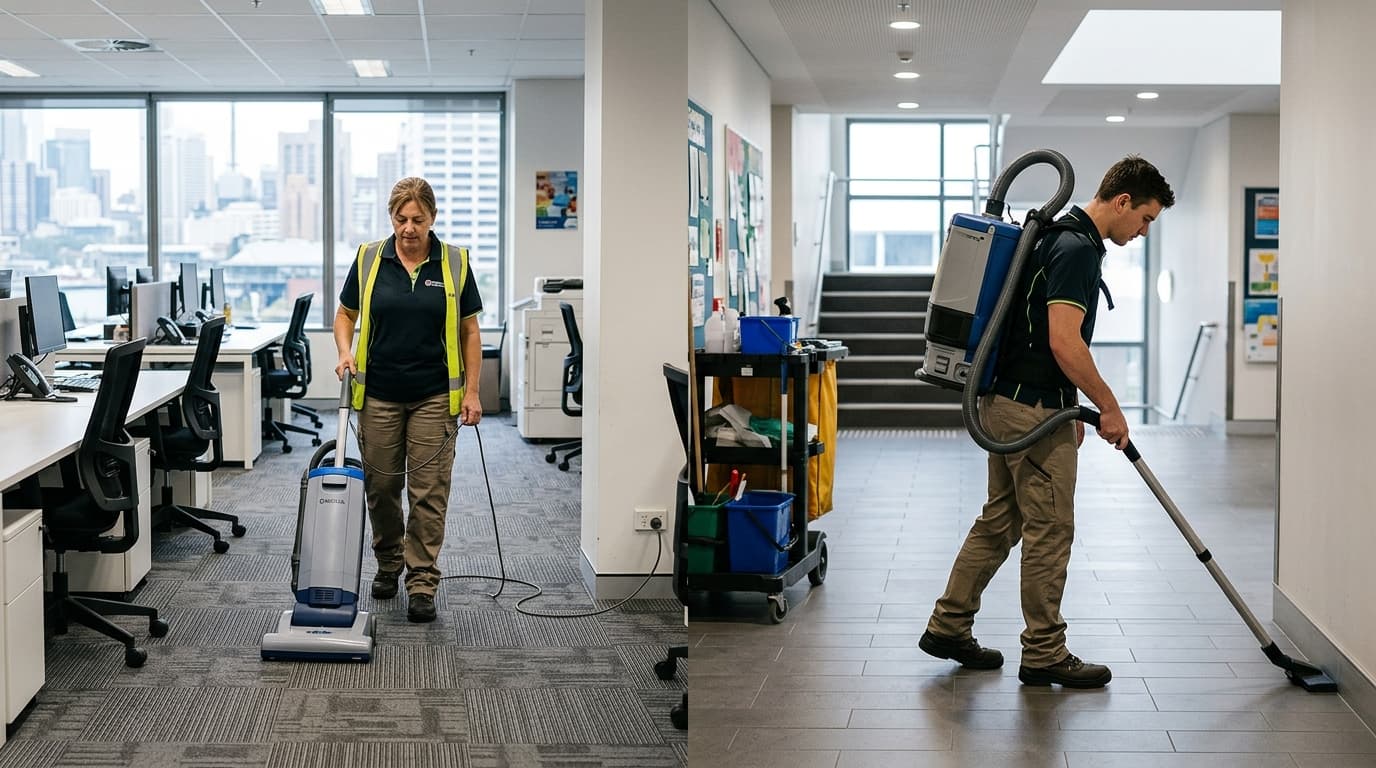
Commercial Vacuums for Offices: A Comparison Guide
A commercial vacuum for your office is a significant investment, directly influencing cleaning efficiency, staff comfort, and long-term operational costs. Choosing the wrong equipment can mean cleaners spend unnecessary hours on tasks, struggle with heavy machinery, or fail to capture fine dust, leading to poor indoor air quality. For instance, an upright vacuum designed for broadloom carpet will underperform on hard floors, forcing manual methods or requiring a second machine.
This guide provides a direct comparison of the most common commercial vacuum types—upright, backpack, and canister—highlighting their strengths and weaknesses for typical NSW office environments. We will detail critical features like HEPA filtration for air quality and noise levels for minimal disruption, helping you select a system that genuinely reduces cleaning time and improves your workspace. However, this advice focuses on general office settings and may not fully address the specialised needs of medical facilities or industrial workshops with unique particulate challenges.
Matching Vacuum Types to Your Office Layout
Each commercial vacuum design excels at different tasks. For example, a powerful upright vacuum is ideal for agitating and lifting dirt from broadloom carpets in executive offices, while a lightweight backpack model offers superior mobility for navigating open-plan areas with mixed flooring like carpet tiles and polished concrete. Understanding these distinct capabilities is crucial for matching the right tool to your office's specific surfaces and layout.
Upright Vacuums: Best for Deep Carpet
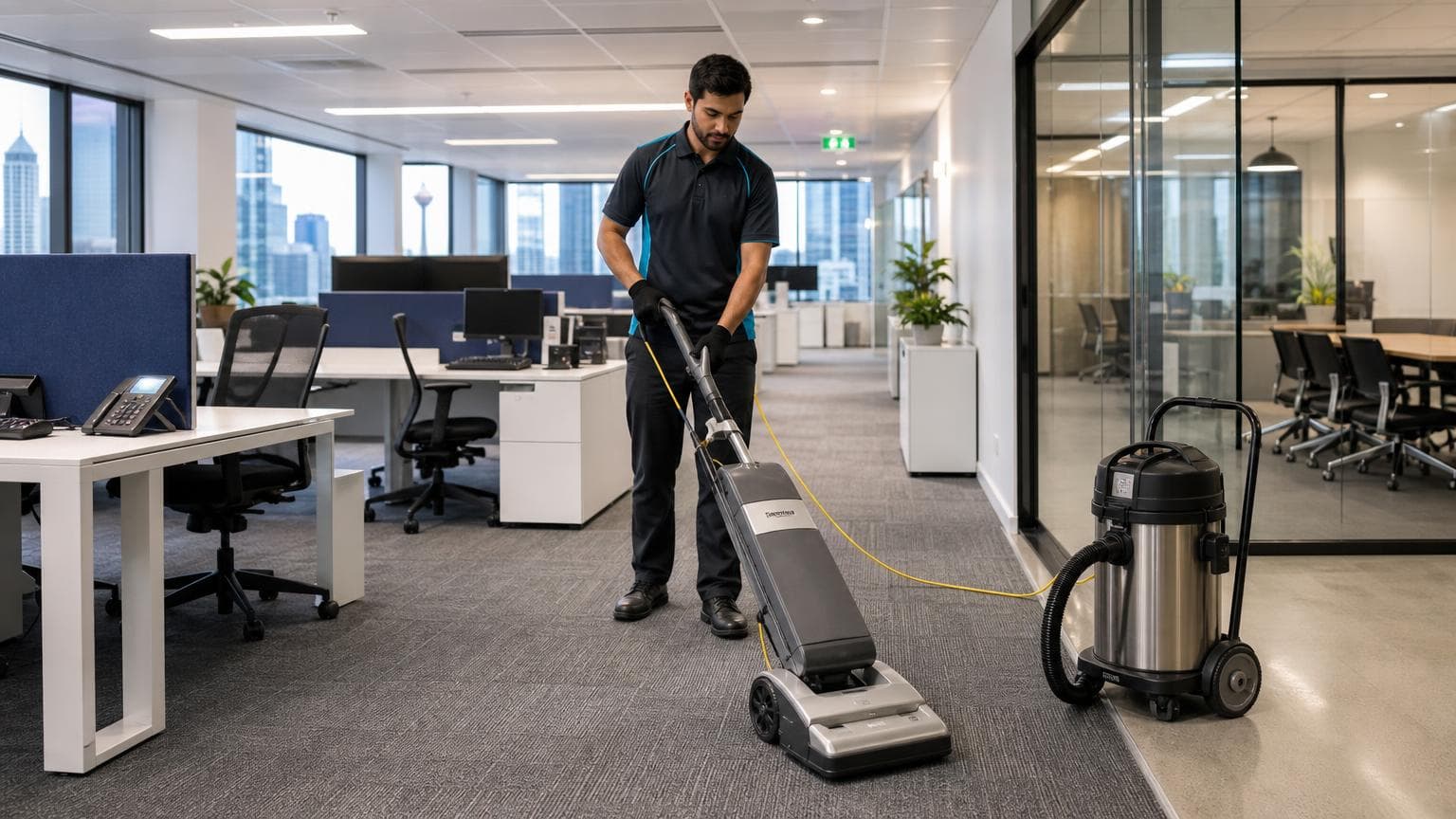
Upright vacuums are common in offices due to their familiar design and effectiveness on carpeted floors. They typically offer good suction and agitation for deep cleaning carpets, making them a solid choice for heavily carpeted areas.
- Pros: Excellent for deep cleaning carpeted areas, good for general-purpose cleaning, widely available.
- Cons: Can be heavy and cumbersome to manoeuvre, less effective on hard floors without specific attachments, noise levels can be high, potentially disrupting office work.
Backpack Vacuums: Speed and Versatility for Open Spaces
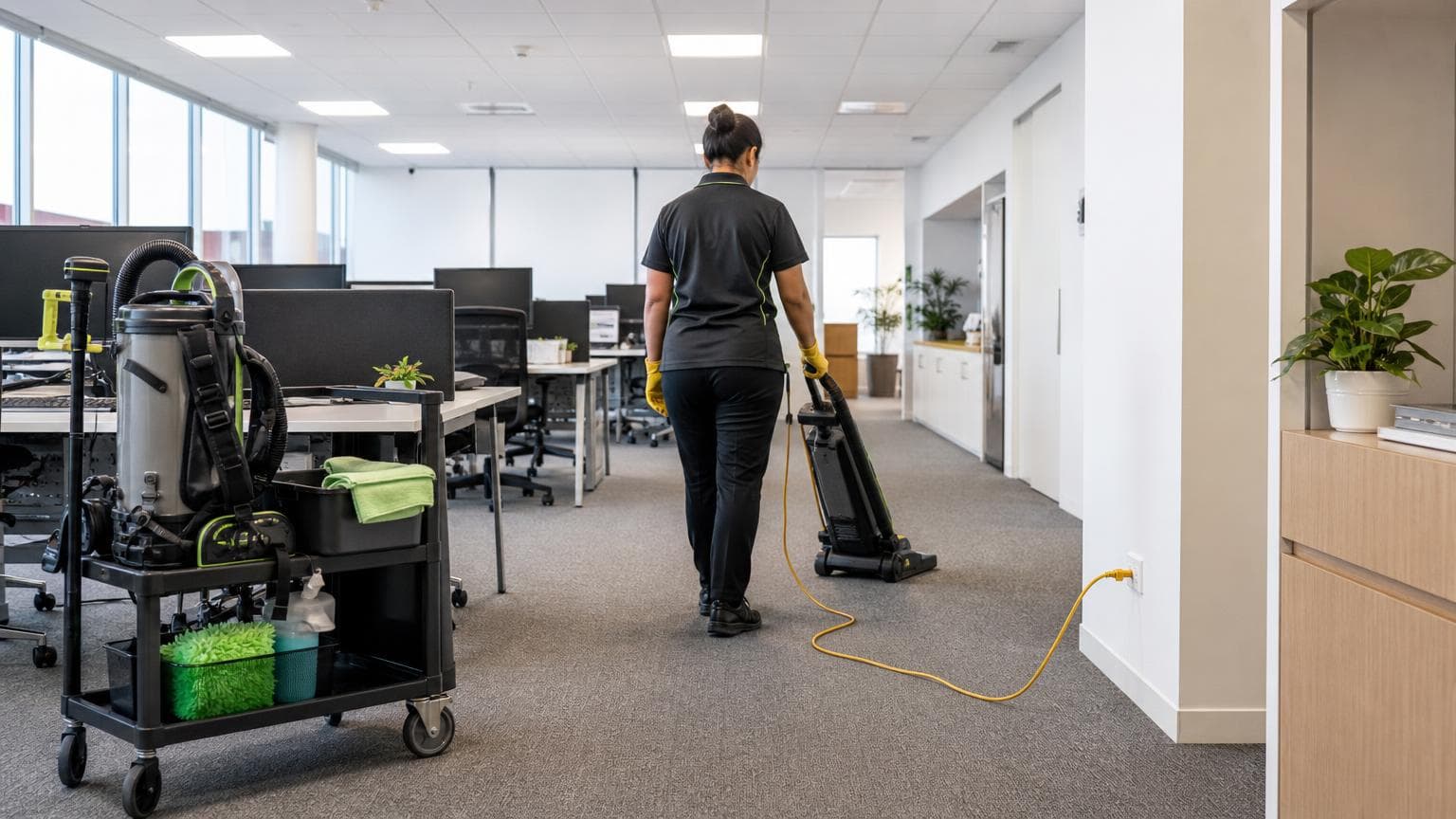
Worn on the back, these vacuums allow for greater mobility and speed, making them ideal for cleaning large, open-plan offices with mixed flooring types. Their ergonomic design can significantly reduce cleaning time and user fatigue compared to pushing a heavy upright.
- Pros: Highly mobile, efficient for large areas and mixed surfaces, can easily clean stairs and above-floor surfaces, often quieter than uprights.
- Cons: Can cause user fatigue over very long periods if not properly fitted, require proper adjustment for comfort, storage can be an issue due to their shape.
Canister Vacuums: Precision for Hard Floors and Detail
Canister vacuums consist of a separate body and hose with an attached wand, offering versatility with various attachments. They excel at cleaning hard floors, upholstery, and reaching into tight spaces that uprights cannot.
- Pros: Excellent for hard floors, highly versatile with multiple attachments, good for cleaning upholstery and tight spaces.
- Cons: The separate body can be awkward to manoeuvre around furniture and obstacles, may not offer the same deep carpet agitation as dedicated uprights.
Wet/Dry Vacuums: When to Use (and When Not To)
Many assume a wet/dry vacuum can double as a daily office cleaner due to its power, but this is a common mistake. These units lack the fine dust filtration crucial for indoor air quality and are generally too bulky and noisy for routine office use, making them unsuitable for anything beyond emergency spills.
- Pros: Capable of handling liquid spills and heavy-duty debris, very durable for demanding tasks.
- Cons: Generally bulky, noisy, and not designed for the fine dust filtration required in most offices; typically unsuitable for regular, daily office use.
Essential Features Beyond Vacuum Type
Beyond the basic type, specific features can dramatically enhance a vacuum's effectiveness and suitability for an office environment, impacting both cleaning results and operational costs.
Air Quality: Why HEPA Filtration is Non-Negotiable
For offices, particularly those with occupants who have allergies or respiratory sensitivities, a robust filtration system is paramount. HEPA (High-Efficiency Particulate Air) filters are the gold standard, capturing at least 99.97% of airborne particles 0.3 microns in size, including dust mites, pollen, and mould spores. Standard filters may recirculate fine dust, negatively impacting indoor air quality and potentially triggering health issues.
Noise Levels: Protecting Productivity
Office environments often require cleaning to occur during business hours or in proximity to occupied workspaces. A vacuum operating at 65 decibels (dB) or lower is generally considered acceptable for in-use cleaning without causing significant disruption. Higher decibel levels, such as those exceeding 70 dB, can be intrusive and may violate workplace noise regulations, leading to complaints or reduced productivity.
Durability and Maintenance: Long-Term Value
Commercial vacuums are expected to endure daily, rigorous use. Look for models constructed from high-impact plastics and robust metals, which resist wear and tear. Check for features like reinforced hoses, sturdy wheels, and easily replaceable parts, as these reduce long-term maintenance costs. A longer warranty period, typically 2-5 years for commercial models, often indicates the manufacturer's confidence in the product's durability.
Capacity and Emptying: Efficiency in Practice
Consider the dustbin or bag capacity relative to the size of the area you need to clean. Larger capacities, such as 6-10 litres for backpack vacuums, mean less frequent emptying, saving staff time. The process for emptying the bin or changing the bag should be simple and hygienic, ideally allowing staff to avoid direct contact with dust and debris, which improves workplace safety.
Ergonomics: Prioritising Cleaner Comfort
For staff who use the vacuums daily, ergonomics are vital to prevent strain and fatigue. Lightweight designs (e.g., backpack vacuums often weigh 4-7 kg), adjustable handle heights, and comfortable grips contribute to a better user experience. Backpack vacuums, in particular, need to be well-balanced and adjustable for different body types to distribute weight evenly and minimise back strain.
NSW Office Environments: Unique Cleaning Factors
When selecting commercial cleaning equipment for offices in New South Wales, consider how local conditions impact your needs. For example, facilities near industrial zones or agricultural areas, such as those around Newcastle's port or the Riverina's farming communities, often contend with higher levels of fine particulate matter, making HEPA filtration an essential requirement rather than a premium feature.
Additionally, the predominant flooring types vary significantly. Modern Sydney CBD offices frequently feature polished concrete or low-pile commercial carpet tiles, which a powerful canister or backpack vacuum can efficiently maintain. In contrast, many older buildings or regional offices might have extensive broadloom carpeting, where an upright vacuum with a brush roll designed for deep pile is more effective. Choosing a vacuum that matches your specific floor surfaces prevents premature wear and ensures thorough cleaning.
Choosing Your Office's Optimal Vacuum Solution
Selecting the best commercial vacuum for your office involves balancing performance, user comfort, maintenance, and cost. While a basic upright may suffice for small, heavily carpeted areas, larger or more complex facilities will benefit significantly from the efficiency and versatility of a backpack vacuum or the specialised cleaning of a canister model. Prioritising HEPA filtration and low noise levels is not merely a premium; it is a fundamental investment in a healthier, more productive workspace that directly supports staff well-being and reflects positively on your business's image.
Next Steps for a Cleaner Office
Choosing the right commercial vacuum is just one part of maintaining a pristine office environment. For comprehensive commercial cleaning solutions that ensure hygiene and efficiency across your NSW facility, consider partnering with experienced professionals. Eco Spark Facility Services specialises in commercial and industrial cleaning, utilising eco-friendly methods and equipment to meet diverse business needs.
To explore how professional cleaning services, supported by the right equipment strategy, can benefit your office, we invite you to request a quote. You can also download our office cleaning checklist to assess your current needs. Discuss your facility's unique requirements with our team.