Best Commercial Vacuum for Office Cleaning, Compared
The best commercial office vacuum depends on the route it must complete, not the label on the machine. Compare uprights, backpacks, canisters, wet-dry units and cordless sticks against floor types, access and recurring tasks.
Best Commercial Vacuum for Office Cleaning, Compared
Most buyers start with the vacuum label. That is backwards: map the office cleaning route first. Note carpet and hard-floor areas, the longest run to a power point, stairs, desk rows, low furniture and storage. Those details determine the vacuum type.
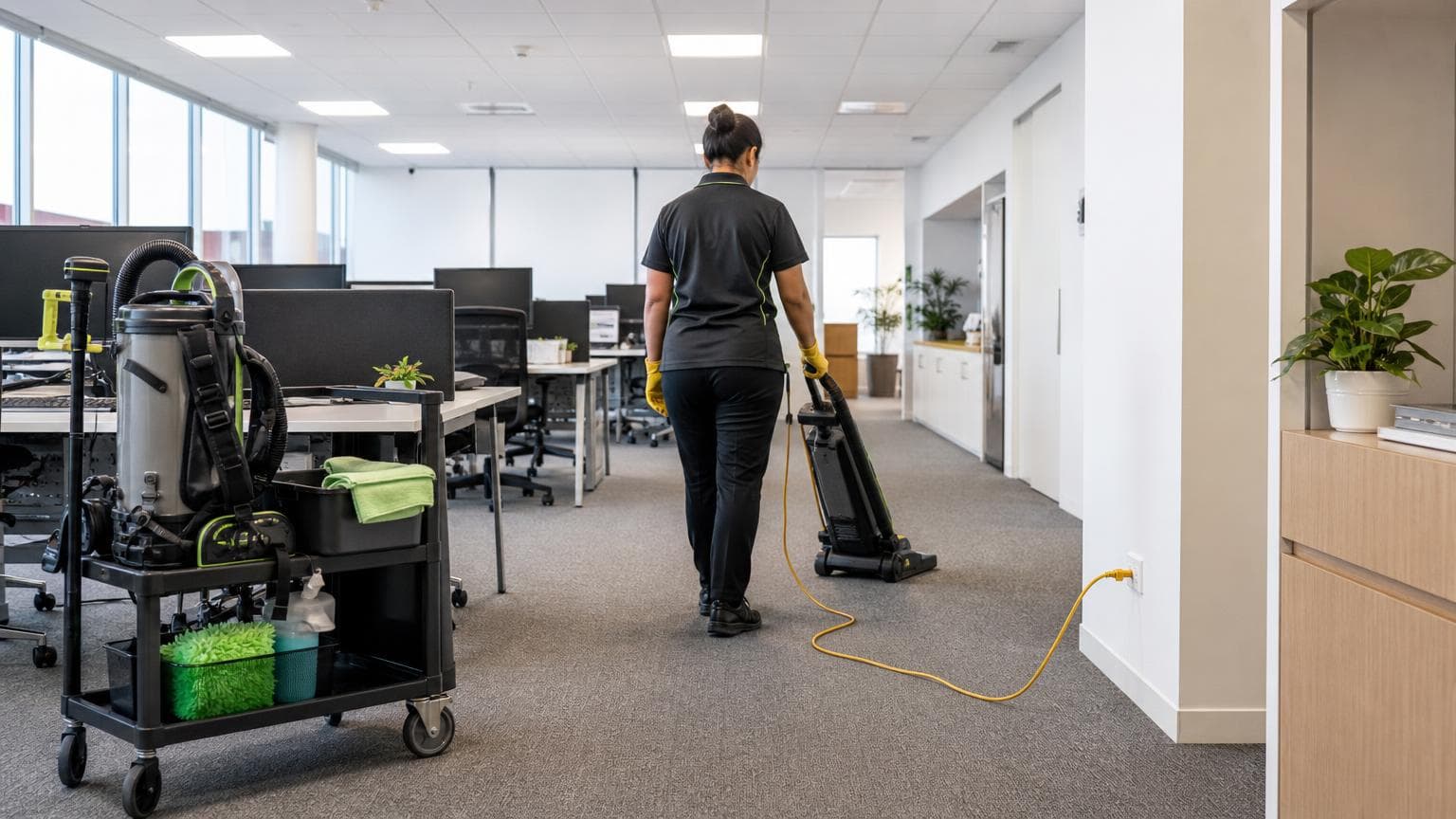
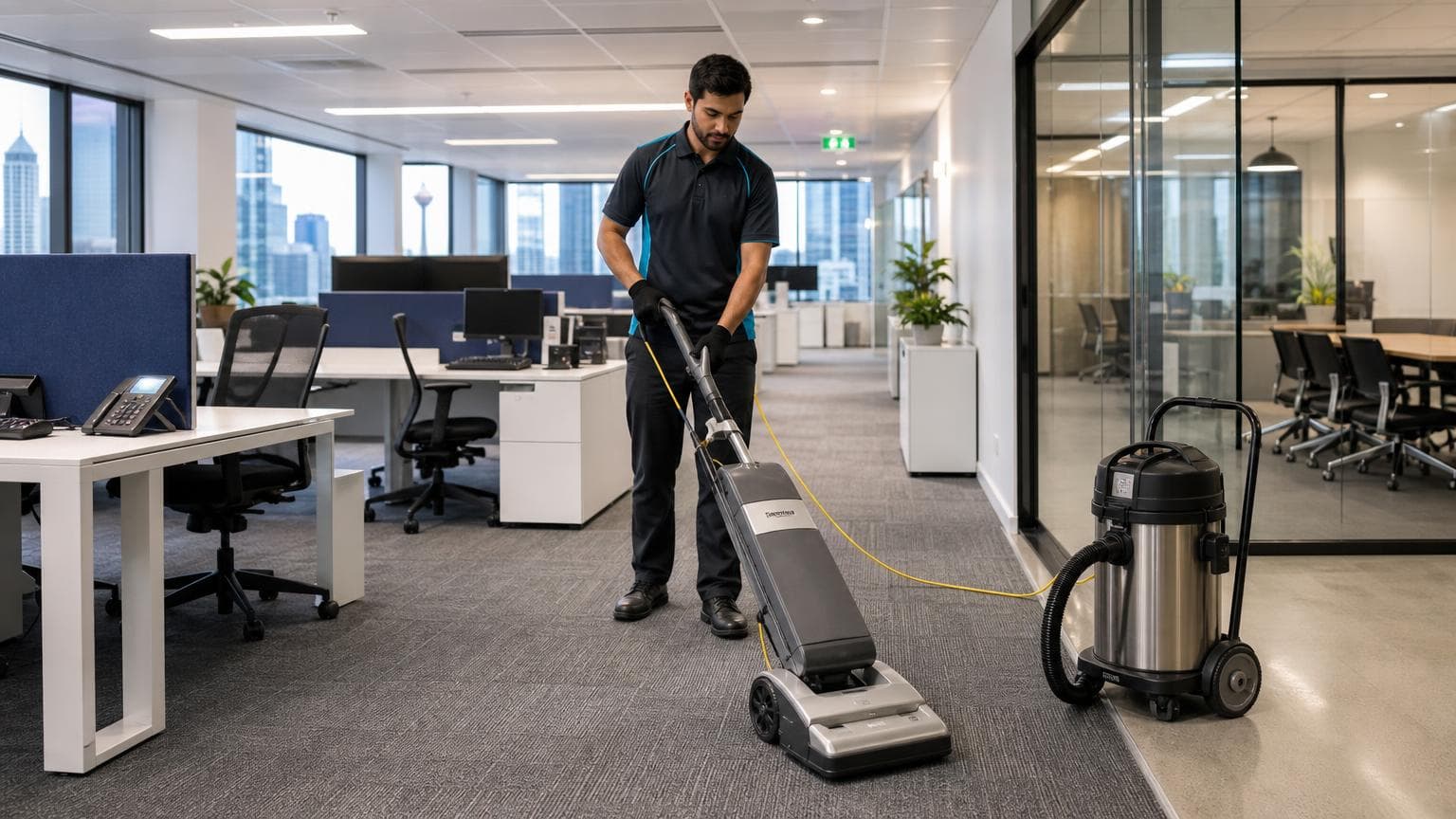
For most offices, start with a corded upright, not a backpack, when open carpet is the recurring task. Choose a backpack only when stairs, desk rows and room changes repeatedly interrupt upright passes. Use a canister for hard-floor edges and beneath furniture. Reserve wet-dry units for spills and recovery work, not desk-side vacuuming.
| Vacuum type | Best use | What you gain | What you give up |
|---|---|---|---|
| Corded upright | Open-plan carpet, carpet tiles and meeting rooms | Fast, repeatable passes across larger carpeted areas | Less practical on stairs, around dense furniture and far from power points |
| Backpack | Stairs, desk rows, corners and multi-room routes | Better reach and fewer interruptions moving the machine | Operator carries the unit, so fit, training and manual-task assessment matter |
| Canister | Hard floors, edges, under furniture and mixed surfaces | Flexible tools for detailed work | Slower across large carpeted zones because the operator manages hose and body separately |
| Wet-dry | Spills, utility areas and occasional recovery work | Handles tasks an ordinary dry vacuum should not | Usually the wrong primary machine for desk-side and carpet cleaning |
| Cordless stick | Spot cleaning and short, urgent jobs | Quick deployment without finding a power point | Battery charging and run time make it a poor default for an entire cleaning route unless the manufacturer documents sufficient capacity |
Do not buy on a suction claim alone. During a site trial, vacuum the largest recurring area, run the head along edges and beneath fixed furniture, empty the bin or bag, replace a consumable and return it to storage. If any step creates a recurring delay, reject the machine.
Route audit: choose the machine before the brand
Walk the site before comparing brands. Mark carpet, hard flooring, stairs, reception mats, chair bases, desk density, store rooms and power-point locations. Then decide which machine completes the largest share of recurring work without awkward handling.
Check the floor head before the motor specification. A head that suits carpet tiles may not pick up effectively along hard-floor edges, while an aggressive brush can be unsuitable for some finishes. For a medical centre or school, work from the facility's written cleaning and filtration requirements, then confirm the manufacturer's documentation rather than relying on a label alone.
Backpacks deserve a manual-task check before purchase. They reduce the need to drag a unit around furniture, but the cleaner wears the equipment for the route. Safe Work Australia manual-task guidance and its model code of practice help assess how the task, load and work area affect the person doing the job.
Default choice for most office routes
Buy the upright first if carpeted open areas make up most of the recurring route. Buy the backpack first only after the route proves that access, stairs and desk density are the limiting factors. Do not pay for a specialist machine until a recurring task requires it.
This advice will not settle a replacement decision if you already have a machine fleet, a documented procurement specification or a contract that names required equipment. In that case, compare the current equipment condition, task scope and manufacturer requirements before changing the setup.
Estella project: useful method, not vacuum evidence
Eco Spark Facility Services' solar panel cleaning project in Estella began with a visible condition check. The array had dust, bird droppings and leaf residue, so the work used a non-abrasive, eco-friendly clean and a pure-water rinse to avoid scratching coatings and frames. The glass was clearer after cleaning, and sunlight access across the array was restored.
That project is not a vacuum test and does not prove that one office vacuum is better than another. It does show the right purchasing sequence: inspect the surface and the contamination first, then select a method that protects the asset and completes the required work.
For an office, replace the panel inspection with a route inspection. Dust around carpet edges, tracked-in debris at entrances, chair-wheel marks and hard-floor pickup each need different tools or floor heads. A green cleaning program also does not make an unsuitable vacuum a sound purchase. Eco-friendly products need to match the surface type and facility requirements, just as the equipment does.
Reject these poor buying shortcuts
Do not confuse a domestic model with a commercial machine simply because the product description uses the word commercial. Ask for the manufacturer's intended duty, replacement parts availability, floor-head options, filtration documentation and warranty conditions before you compare purchase prices.
A low purchase price can cost more if the machine cannot cover the route or spends too much time in charging, emptying and repairs. Conversely, an oversized wet-dry unit costs space and handling effort when a straightforward upright would finish the daily work faster.
Five checks before approving a purchase
- Write down the recurring areas, floor types and access obstacles.
- Rank each area by frequency, not by how difficult it looks on one day.
- Choose the primary machine for the largest recurring task.
- Add a specialist machine only where a documented task needs it.
- Check filtration, consumables, servicing and storage before approving the purchase.
NSW building layout and service scope
Estella sits within Eco Spark's regular Wagga Wagga and Riverina service area. The business has observed agricultural dust exposure on solar arrays in regional NSW, but that observation should not be used to prescribe an office vacuum without inspecting the building, entry points and cleaning scope.
For offices in Sydney, Greater Sydney, Wagga Wagga, Estella and other regional NSW locations served by Eco Spark, the building layout matters more than the postcode. A multi-level site with dense work areas may justify a different primary machine from a single-level office with clear carpet runs, even when both facilities have similar floor area.
Compare cleaning scope before requesting a quote
Equipment is only one part of a workable cleaning plan. Review the broader scope through Commercial Cleaning Services Wagga Wagga, Commercial Industrial Cleaning in Wagga Wagga, Commercial Cleaning Wagga Wagga NSW and Office Cleaning Services Wagga Wagga NSW.
To compare a contracted cleaning scope with your in-house equipment plan, request a quote from Eco Spark Facility Services with your floor types, access constraints and recurring cleaning tasks.