Commercial Vacuum Comparison: NSW Office Cleaning Guide
This guide compares commercial vacuum types—upright, canister, and backpack models—for NSW offices. Learn which vacuum best suits your specific floor types, traffic, and air quality needs. Avoid common selection mistakes and understand key features for superior hygiene and long-term value.

Commercial Vacuum Comparison: Finding the Right Model for Your NSW Office
Choosing the right commercial vacuum for an NSW office means matching its capabilities to your specific environment. For instance, a high-traffic carpeted area needs a powerful upright with a robust brush roll, while a multi-surface office benefits from a versatile canister. An unsuitable vacuum, such as using a standard model in a high-allergen environment, fails to capture fine particles and can even recirculate dust, impacting both hygiene and operational budgets through premature wear.
This guide directly compares upright, canister, and backpack commercial vacuums, outlining which office layouts and cleaning demands each type best suits—and crucially, where they fall short. We will highlight features like HEPA filtration and motor durability that genuinely contribute to superior hygiene and long-term value, rather than just raw power.
Upright, Canister, or Backpack: Which Vacuum Suits Your Office?
For NSW offices, the 'best' commercial vacuum is never a universal model. Instead, it is the one that achieves the optimal balance of suction power, advanced filtration, and ergonomic design for your specific operational demands, which often means a combination of types, not just one.
Upright Vacuums: Ideal for Carpet-Heavy Areas
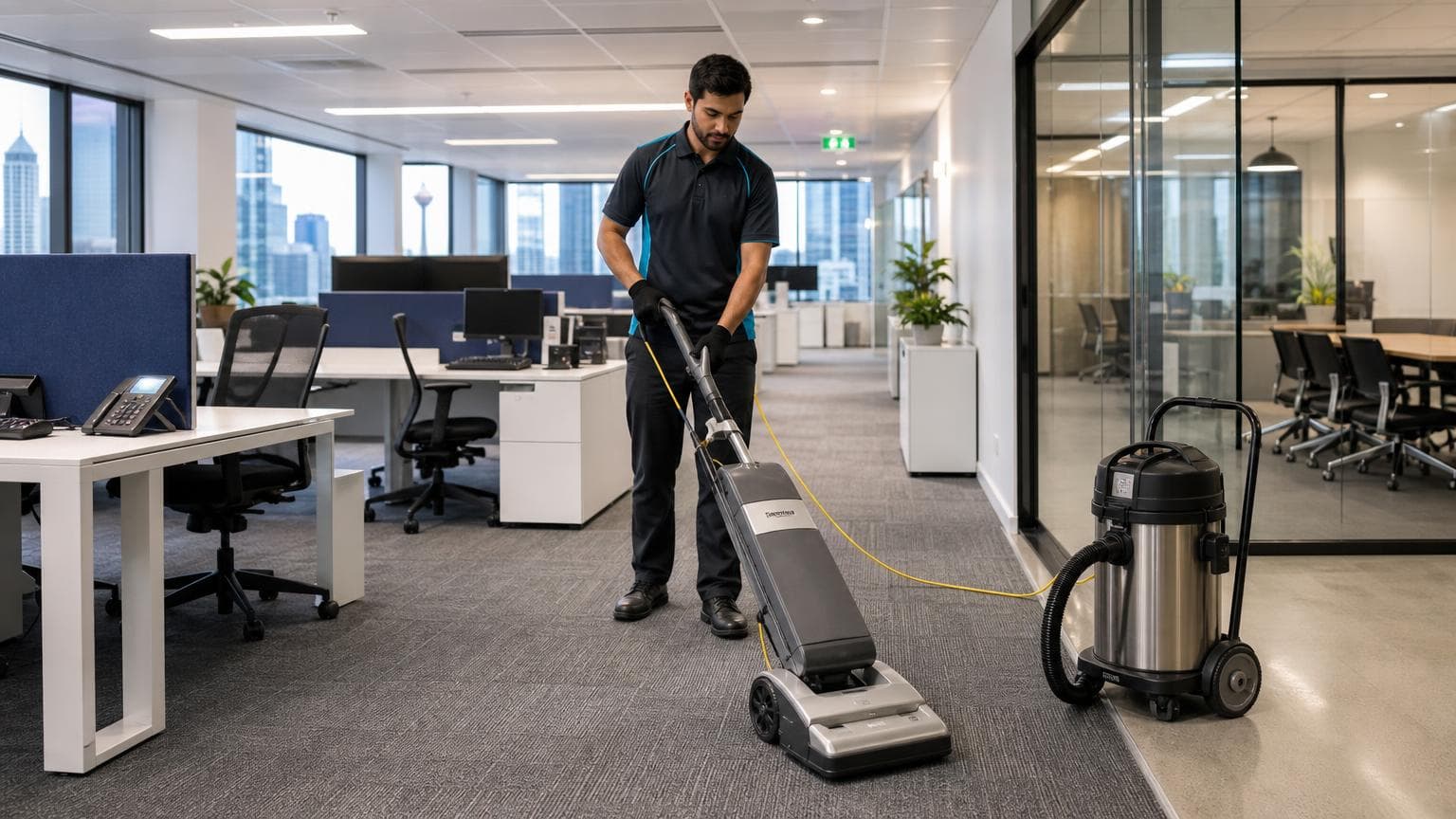
Upright vacuums are often the primary choice for general office carpet cleaning because their rotating brush rolls effectively agitate carpet fibers, lifting embedded dirt. Many models incorporate HEPA filtration, which captures 99.97% of particles 0.3 microns or larger, a critical feature for maintaining good indoor air quality in busy office spaces. While highly effective on carpets, their bulkier design makes them less ideal for extensive hard floor areas or navigating tight corners and under furniture.
Canister Vacuums: Versatility for Mixed Surfaces
Canister vacuums offer superior flexibility due to their separate motor unit and a hose with various attachments. This design makes them highly adaptable for cleaning a mix of carpeted areas, hard floors, upholstery, and reaching high or awkward spots. They typically provide strong, consistent suction and are often quieter than upright models, a significant advantage when cleaning during business hours. However, their multiple components can demand more storage space and a slightly longer setup time for cleaners.
Backpack Vacuums: Efficiency for Open-Plan Layouts
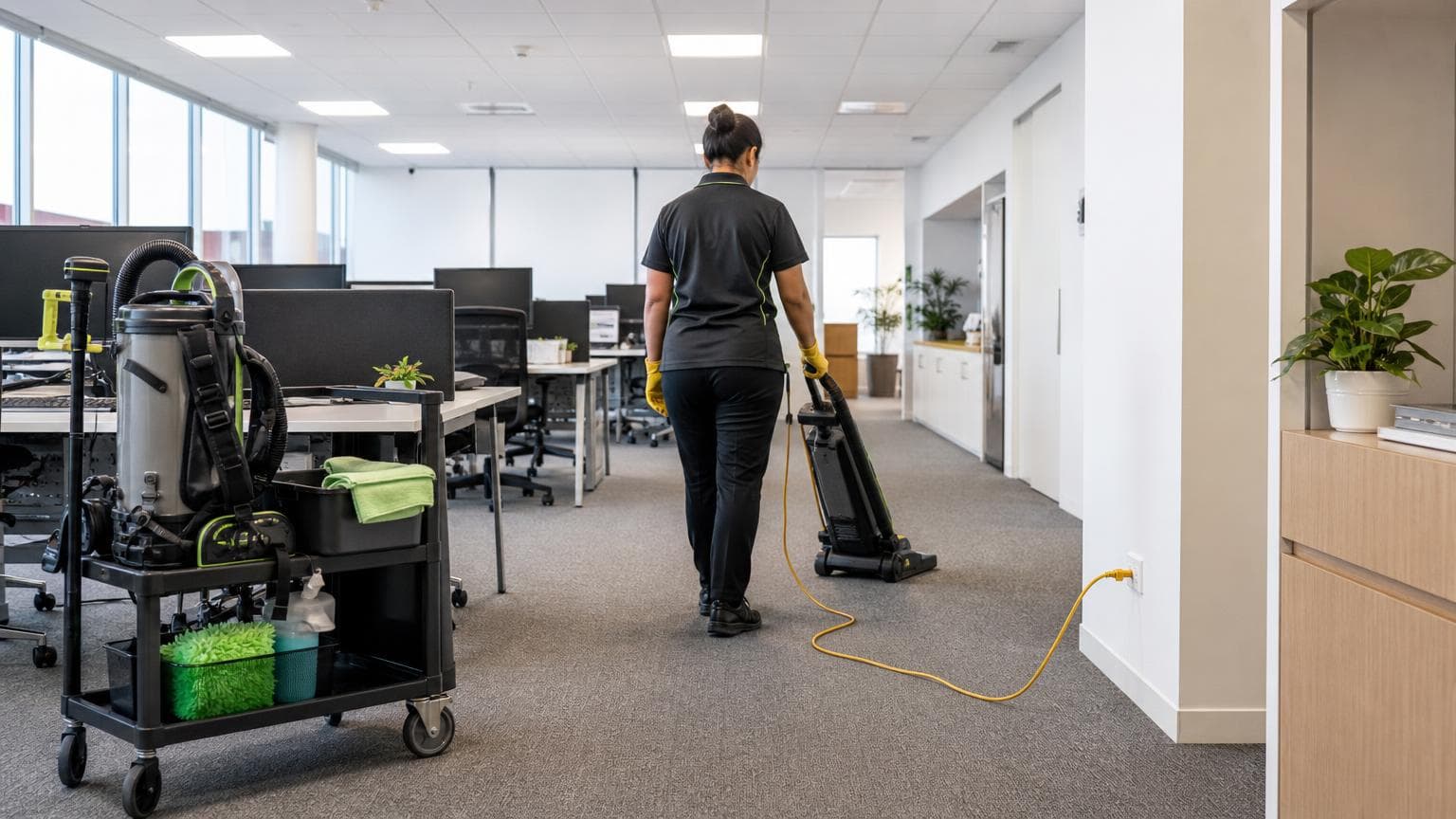
Lightweight and designed to be worn on the back, backpack vacuums excel in speed and efficiency across large, open areas and in spaces with numerous obstacles like cubicles. Their exceptional mobility allows cleaning staff to cover significantly more ground quickly and navigate around furniture with minimal effort. While excellent for productivity, some users may find them less comfortable for extended periods, and their smaller dust capacity often necessitates more frequent emptying compared to other types.
Key Features: Beyond Suction Power for Office Hygiene
Beyond the basic vacuum type, several features directly impact a machine's effectiveness and suitability for commercial use in New South Wales. Prioritising these ensures your investment delivers optimal results.
- Filtration System: HEPA filtration is paramount for office environments, especially in areas prone to dust or where staff have allergies. It prevents fine particles from being recirculated, significantly improving indoor air quality and reducing potential health complaints.
- Durability and Construction: Commercial vacuums face heavy daily use. Look for models with robust motors, durable housing (often metal or high-impact plastic), and quality components designed to withstand constant wear and tear. This reduces costly downtime and frequent repair expenses.
- Noise Level: A quieter vacuum (measured in decibels, with commercial models typically ranging from 60-75 dB) is less disruptive in an active office. This allows cleaning to occur during business hours without disturbing staff, a key consideration for many NSW businesses.
- Ergonomics and Weight: Ease of use for cleaning staff is vital for efficiency and safety. Lighter models, adjustable handles, and comfortable harnesses (for backpack vacuums) reduce fatigue and the risk of injury, directly improving cleaning productivity and staff retention.
- Cleaning Path Width: A wider cleaning path (e.g., 30-45 cm for uprights) can cover more area in less time, enhancing productivity, particularly in large open-plan offices common in urban NSW.
Common Mistakes: What to Avoid When Choosing a Commercial Vacuum
Many facility managers mistakenly prioritize raw motor power over effective filtration, leading to poor indoor air quality and increased allergen issues, even with frequent cleaning. This oversight can significantly reduce staff productivity and contribute to more sick days. A common error we observe is selecting a single vacuum type for all floor surfaces, which often leads to inefficient cleaning, premature equipment wear, or even damage to delicate flooring. For instance, using a powerful carpet-specific upright on polished concrete or timber floors can cause irreversible scratches. We recommend investing in a combination of specialised vacuums or a versatile canister model with appropriate attachments to handle diverse flooring types effectively.
This guide focuses on general office environments and may not fully address the specialised needs of medical facilities or industrial settings with unique particulate challenges, where specific regulatory compliance or extreme debris types might dictate different equipment choices.
NSW Office Environments: Tailoring Your Vacuum Choice
In New South Wales, cleaning challenges vary significantly by region. Offices in high-traffic urban centres like Sydney often require vacuums built for constant use and quick cleanups, prioritising maneuverability and quiet operation to minimise disruption. In regional NSW, such as around Wagga Wagga or Estella, agricultural dust or construction-related debris can be a more significant factor, making robust filtration systems and powerful suction even more critical for maintaining indoor air quality. For example, a vacuum with a multi-stage filtration system is often essential in these environments.
The types of flooring also vary across NSW. Many modern offices in Greater Sydney feature a mix of carpeted areas, hard floors, and reception spaces. A versatile vacuum, or a combination of specialised equipment, might be necessary to effectively clean these different surfaces without causing damage. For instance, a vacuum with adjustable height settings and interchangeable brush rolls or attachments can adapt efficiently to various carpet pile heights and hard floor surfaces, preventing damage and ensuring thorough cleaning.
Making the Best Choice for Your Facility's Cleaning Needs
Choosing the right commercial vacuum is a key part of an effective office cleaning strategy. It impacts not only the appearance of your space but also the health and productivity of your staff. If you're evaluating your current equipment or seeking professional cleaning services across NSW that use the best tools for the job, consider how a specialised approach can benefit your facility.
Eco Spark Facility Services provides commercial cleaning services across NSW, focusing on eco-friendly methods and effective results. We understand the importance of the right equipment for maintaining a clean and healthy environment.
To discuss your specific office cleaning requirements and receive a tailored recommendation, request a quote today.