Commercial Vacuum for Office Cleaning: Real-World Effectiveness
Choosing an effective commercial vacuum for your office involves more than just power. We assess real-world effectiveness, filtration, noise levels, and total cost of ownership. Prioritise features that maintain hygiene, improve air quality, and operate efficiently without disruption.
Commercial Vacuum for Office Cleaning: How to Assess Real-World Effectiveness
Choosing a commercial vacuum for your office requires a strategic approach beyond just motor wattage or raw suction. The true value comes from equipment that maintains consistent hygiene, improves indoor air quality, and operates efficiently without disrupting your team. Many facility managers initially focus on purchase price, but this often overlooks critical long-term factors like certified HEPA filtration, noise levels below 65 dB, and robust commercial-grade durability. Neglecting these can lead to higher operational costs and a less healthy workspace. An effective commercial vacuum directly supports a productive and clean office environment, which is a priority for businesses across NSW.
What to Prioritise: Essential Features for Office Vacuums
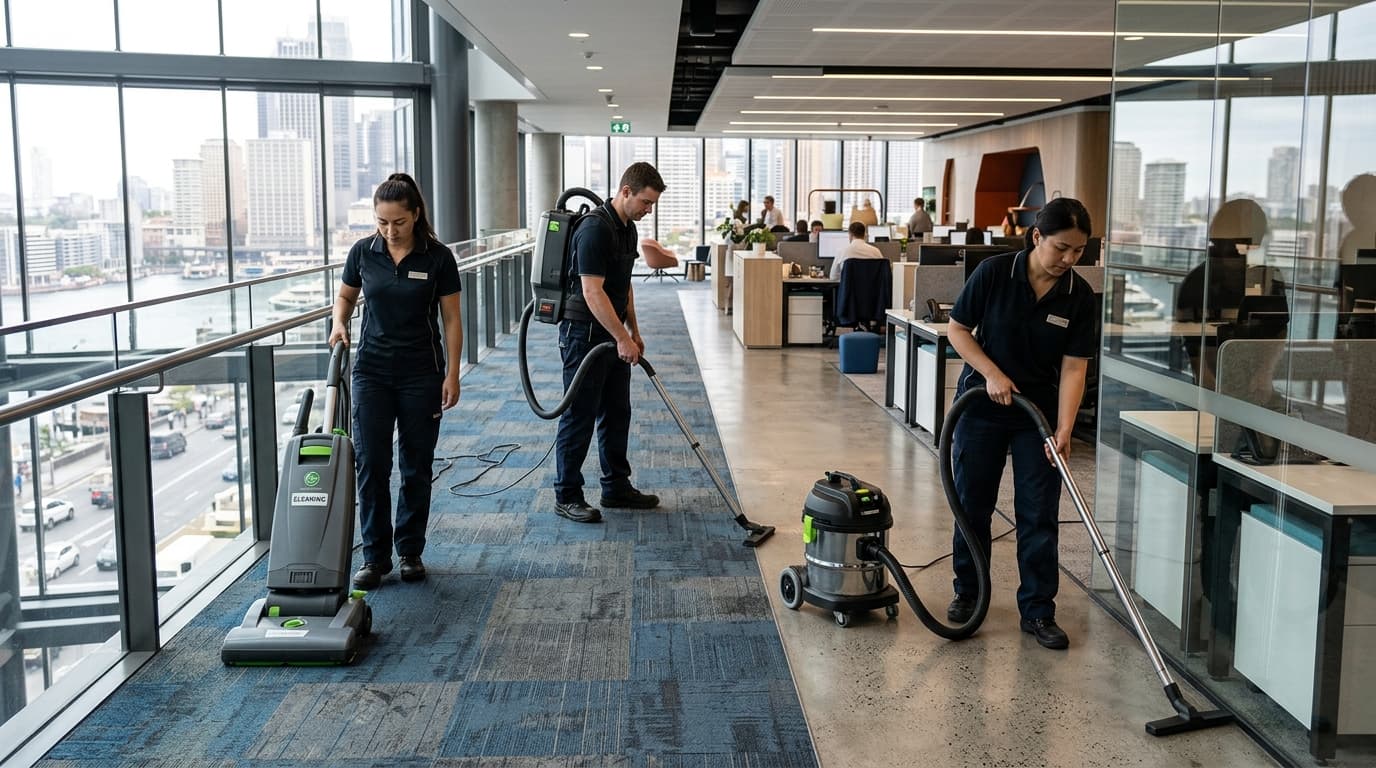
The 'best' commercial vacuum is not a universal model, but one that aligns with your specific office environment and cleaning objectives. Prioritise certified HEPA filtration (H13 or H14 standard) to capture 99.97% of particles down to 0.3 microns, significantly improving indoor air quality. A low noise output, ideally below 65 dB, is essential for daytime cleaning in active offices, preventing disruption to staff and maintaining productivity. Finally, the vacuum's design must suit your layout: a backpack or canister offers superior versatility for navigating workstations, while upright models best suit large, open carpeted areas where manoeuvrability is less critical.
Many facility managers mistakenly prioritise raw suction power. However, for office environments, superior particle capture (e.g., certified HEPA filtration) and quiet operation (under 65 dB) deliver greater real-world impact than sheer motor wattage. Neglecting these can lead to increased allergen circulation and noise-related complaints, directly affecting employee well-being and focus. Prioritise models with commercial-grade motors and robust housing, like those with reinforced chassis, to reduce repair frequency and extend operational life beyond typical consumer-grade units.
Choosing Your Type: Upright, Canister, or Backpack?
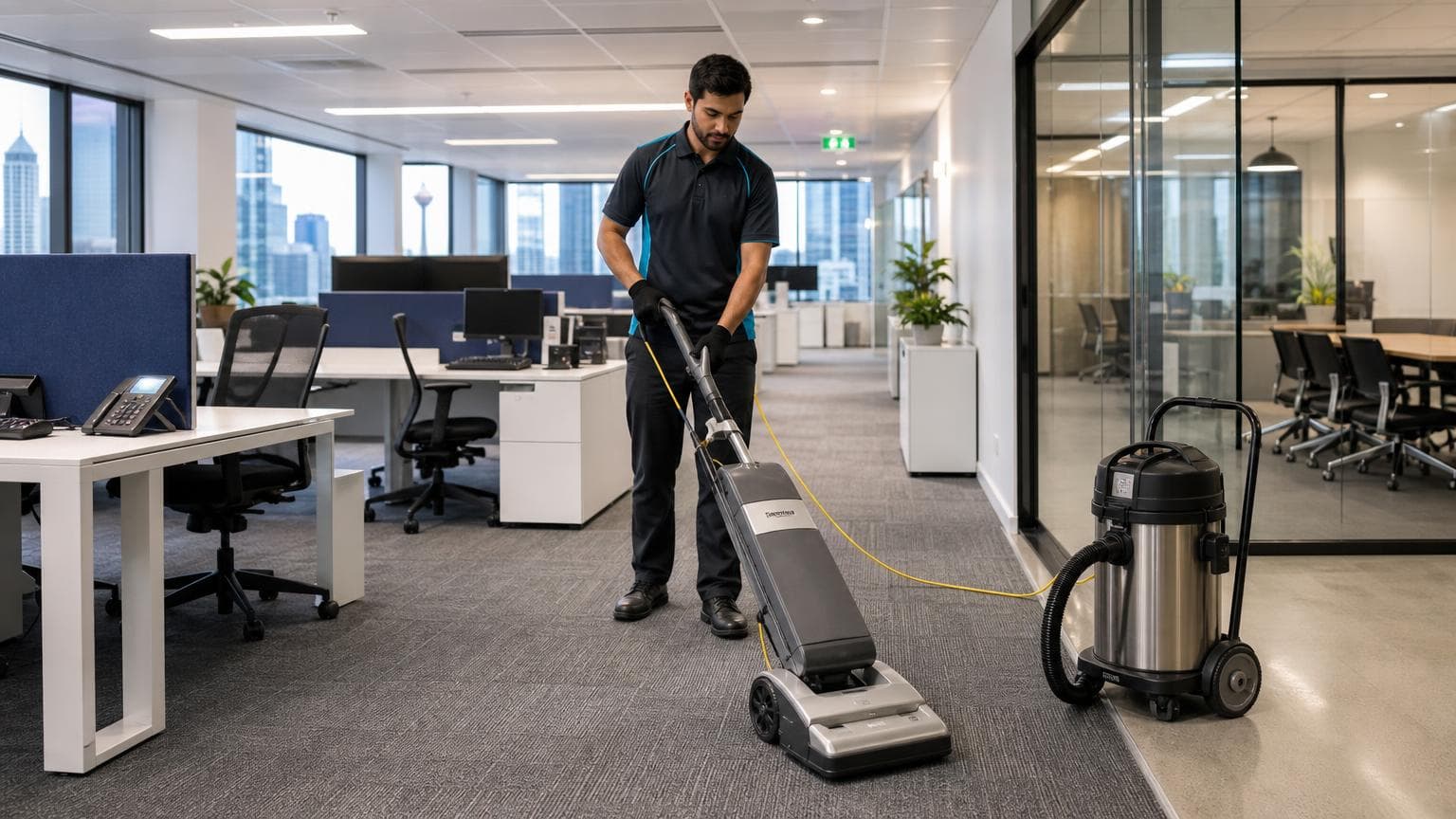
- Upright Vacuums: Best suited for large, open areas with extensive carpeting. They offer powerful brush agitation for deep carpet cleaning. However, their bulkiness makes them impractical for navigating tight office spaces, under desks, or around numerous obstacles. They are often louder, typically ranging from 70-80 dB.
- Canister Vacuums: Highly versatile for mixed flooring, including hard surfaces and low-pile carpets. Their separate powerhead and hose allow for excellent manoeuvrability around furniture and into corners. Many models feature multi-stage filtration and quieter operation (55-70 dB), making them a strong contender for general office use.
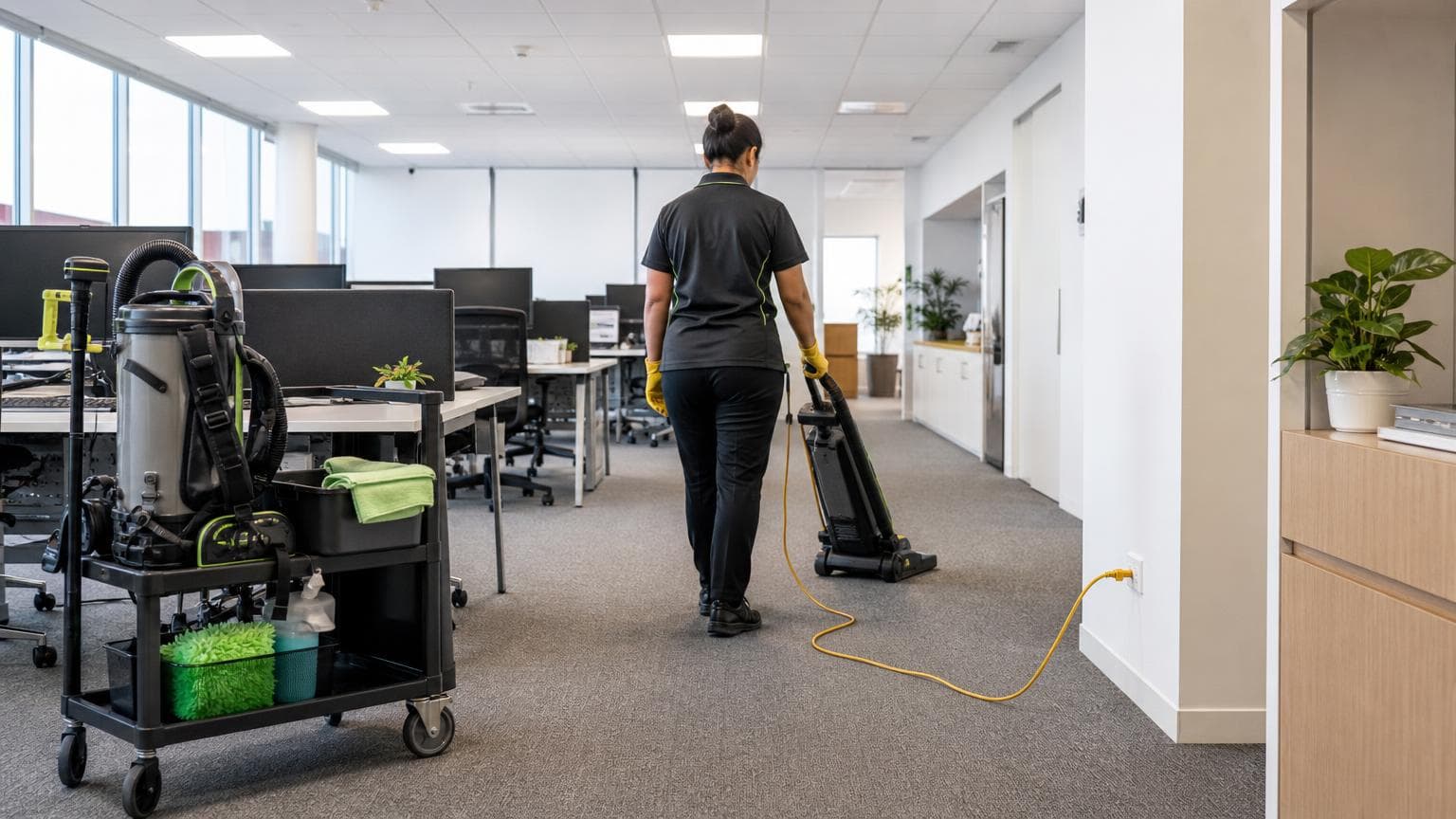
- Backpack Vacuums: Ideal for offices with many workstations, stairs, or areas requiring maximum agility. Cleaners wear the unit, allowing for faster cleaning times and reduced fatigue in complex environments. They excel on both hard floors and carpets, often operating at 60-70 dB. However, their capacity might be smaller, requiring more frequent bag changes.
While robotic vacuums can supplement cleaning in low-traffic zones, they cannot replace the deep cleaning power of commercial-grade upright, canister, or backpack models. Their limited suction, smaller dustbin capacity, and less precise navigation mean they often miss embedded dirt and larger debris in high-traffic zones. Relying solely on them for primary office cleaning in a busy environment is a common mistake that compromises overall hygiene, as they are not suitable for offices requiring thorough daily cleaning and consistent allergen removal.
Beyond Purchase Price: Total Cost of Ownership & Durability
While the initial purchase price is a factor, the true cost of a commercial vacuum becomes clear over its lifespan. Investing in models with durable components, such as metal wands instead of plastic, commercial-grade motors, and robust casings (e.g., impact-resistant ABS), significantly reduces repair frequency and extends the equipment's operational life. This minimises downtime and the need for premature replacements, leading to savings that, depending on usage intensity and specific model, can quickly outweigh a cheaper initial outlay through reduced repair costs and extended operational life.
Sustainability also plays a crucial role. Modern commercial vacuums contribute to eco-friendly cleaning by offering energy-efficient motors, which reduce power consumption during operation, lowering both utility costs and environmental impact. Advanced filtration systems, particularly certified HEPA filters (H13 or H14 standard), effectively trap 99.97% of particles down to 0.3 microns, preventing their recirculation and creating healthier indoor environments. This commitment to cleaner air and reduced waste aligns with the broader goals of Office Cleaning Services Wagga Wagga NSW and other services provided by Eco Spark Facility Services.
One common oversight is neglecting the availability and cost of replacement parts and consumables like bags and filters. Opting for a cheaper unit with proprietary or hard-to-find parts can quickly erode any initial savings through significantly inflated maintenance costs and extended service delays. We advise clients to prioritise models with readily available, non-proprietary parts and filters from major commercial brands like Nilfisk, Tennant, or Karcher. This ensures lower running costs and minimal downtime, contributing to a more predictable total cost of ownership. This advice will not help if your budget is strictly limited to the lowest upfront cost, as quality often comes with a higher initial investment.
Regional & Operational Factors: Tailoring to NSW Offices
Office environments across NSW present diverse challenges that influence vacuum selection. For instance, regional areas like Wagga Wagga may contend with higher levels of agricultural dust and pollen, necessitating vacuums with superior filtration systems and larger capacity dust bags to maintain air quality effectively. In contrast, a Sydney CBD office often faces more urban particulate matter and high foot traffic, demanding robust vacuums capable of handling constant use across various flooring types.
The operational hours of your office also dictate equipment choice. For businesses operating during standard hours, a low-noise vacuum (under 65 dB) is essential to prevent disruption to employees. This is a crucial factor for maintaining a productive atmosphere. When Eco Spark Facility Services provides Commercial Cleaning Wagga Wagga NSW, we carefully select equipment that meets these specific operational and environmental requirements, ensuring minimal disturbance and maximum cleanliness.
Making an Informed Decision: Your Office Vacuum Checklist
Selecting the ideal commercial vacuum for your office is a strategic decision that directly impacts hygiene, indoor air quality, and operational efficiency. While this guide outlines key considerations and comparisons, it cannot replace a professional on-site assessment of your specific office layout, traffic patterns, and environmental factors. A thorough assessment ensures you invest in equipment that truly meets your needs.
To discuss your office cleaning requirements and receive a tailored recommendation that considers your facility's unique environment across NSW, contact Eco Spark Facility Services today. As an experienced NSW commercial cleaning contractor, we specialise in eco-friendly product programs and industrial cleaning. We provide Commercial Cleaning Services Wagga Wagga and Commercial Cleaning Services Wagga, and can help you develop a comprehensive cleaning strategy for your office.