Comparing Commercial Vacuums for NSW Offices | Eco Spark FS
Selecting the right commercial vacuum for your NSW office involves more than just suction power. Compare upright, backpack, canister, and robotic models based on your specific floor types, noise constraints, and air quality needs. A tailored approach ensures efficiency and meets WHS standards.
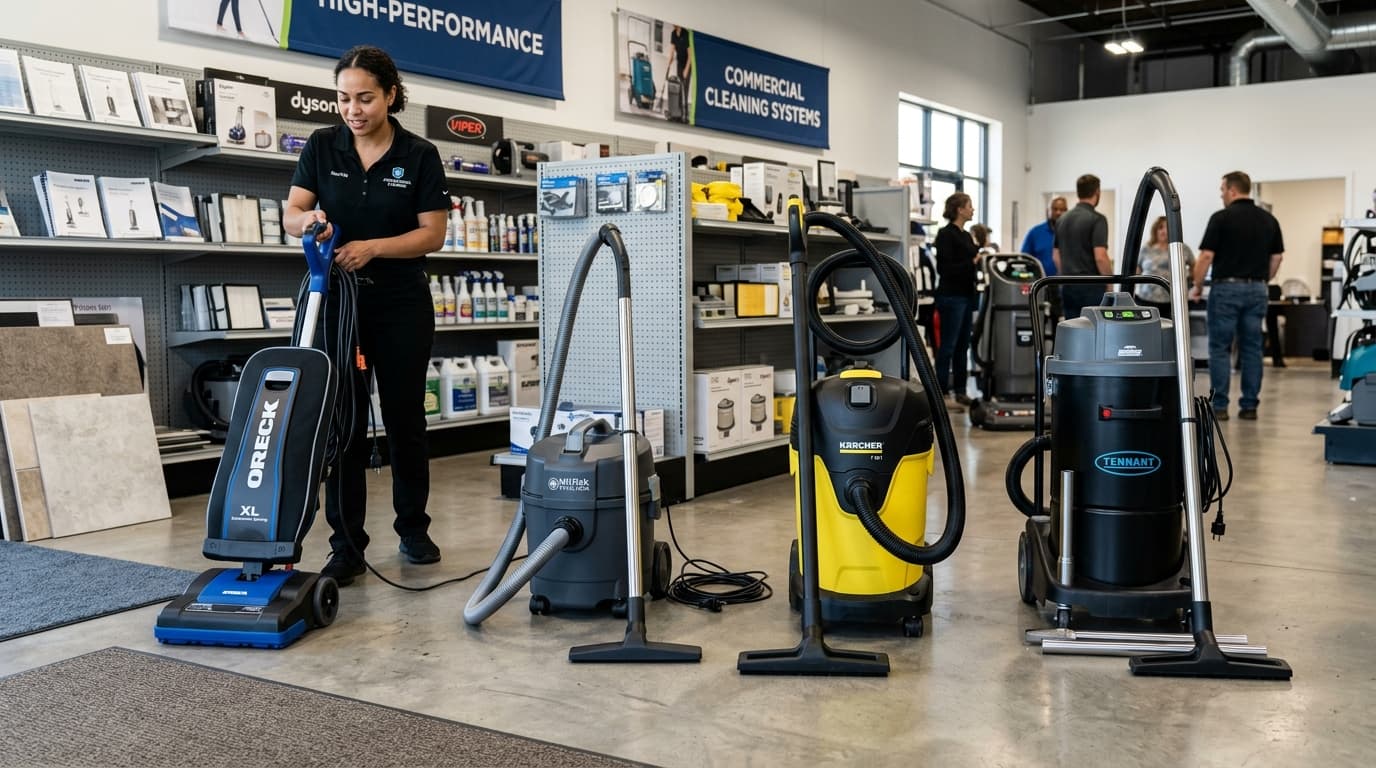
Comparing Commercial Vacuums for NSW Offices | Eco Spark FS
Defining Your Office's Cleaning Profile
Many NSW businesses mistakenly believe raw suction power is the sole indicator of a commercial vacuum's effectiveness. This is a common pitfall. The 'best' model always directly solves your facility's specific cleaning challenges. Consider factors like noise levels (e.g., under 70 dB for active offices) and the type of particulate matter it needs to capture. A vacuum's ability to pick up debris depends equally on airflow, brush system efficiency, and its suitability for the environment. For example, a large open-plan office with mostly carpet will benefit from a different vacuum type than a multi-level office with mixed flooring and strict noise restrictions. Prioritising these operational realities over generic specifications ensures you invest in equipment that genuinely improves cleaning efficiency and indoor health.
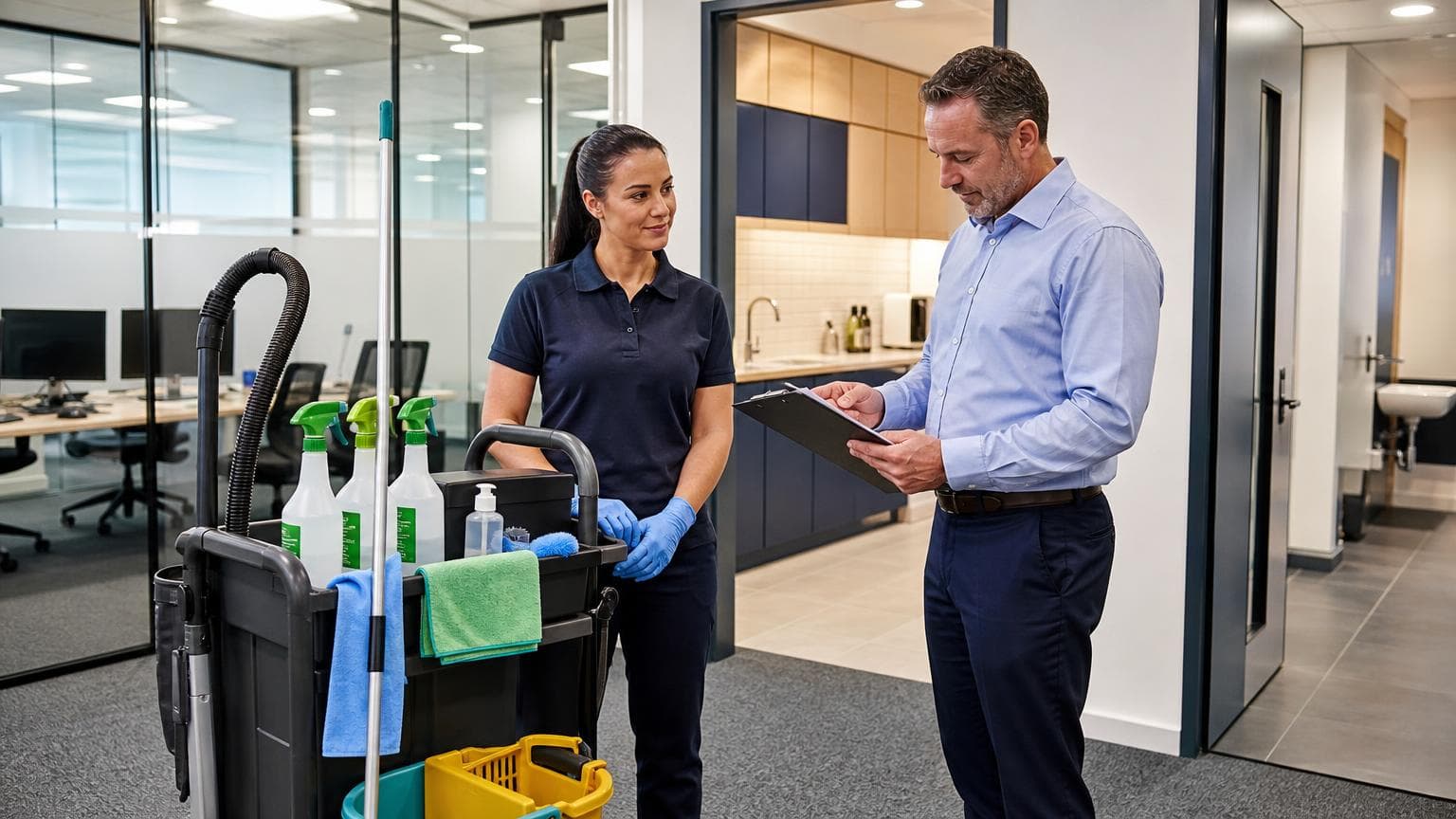
At Eco Spark Facility Services, we begin every cleaning project with a detailed site assessment. This initial step pinpoints specific challenges, such as high-traffic carpet zones that benefit from dual-motor uprights, or areas with sensitive electronics where advanced HEPA filtration is essential for air quality. Without this tailored assessment, businesses risk investing in unsuitable vacuums, leading to wasted budget and cleaning that falls short of WHS standards.
Commercial Vacuum Types: A Direct Comparison for NSW Offices
While matching tools to task is crucial, determining the 'best' commercial vacuum for a specific office demands detailed insight. We advise starting your evaluation by identifying primary floor types and common debris. For example, fine toner dust requires HEPA filtration to prevent recirculation, whereas general office crumbs might not. In offices with high foot traffic and mixed flooring, a canister vacuum offers superior versatility. Conversely, a quiet backpack vacuum often performs better for maintaining air quality in partitioned, carpeted spaces. We find that a vacuum's filtration system and brush head design often impact overall cleaning effectiveness and indoor air quality more significantly than raw motor power alone.
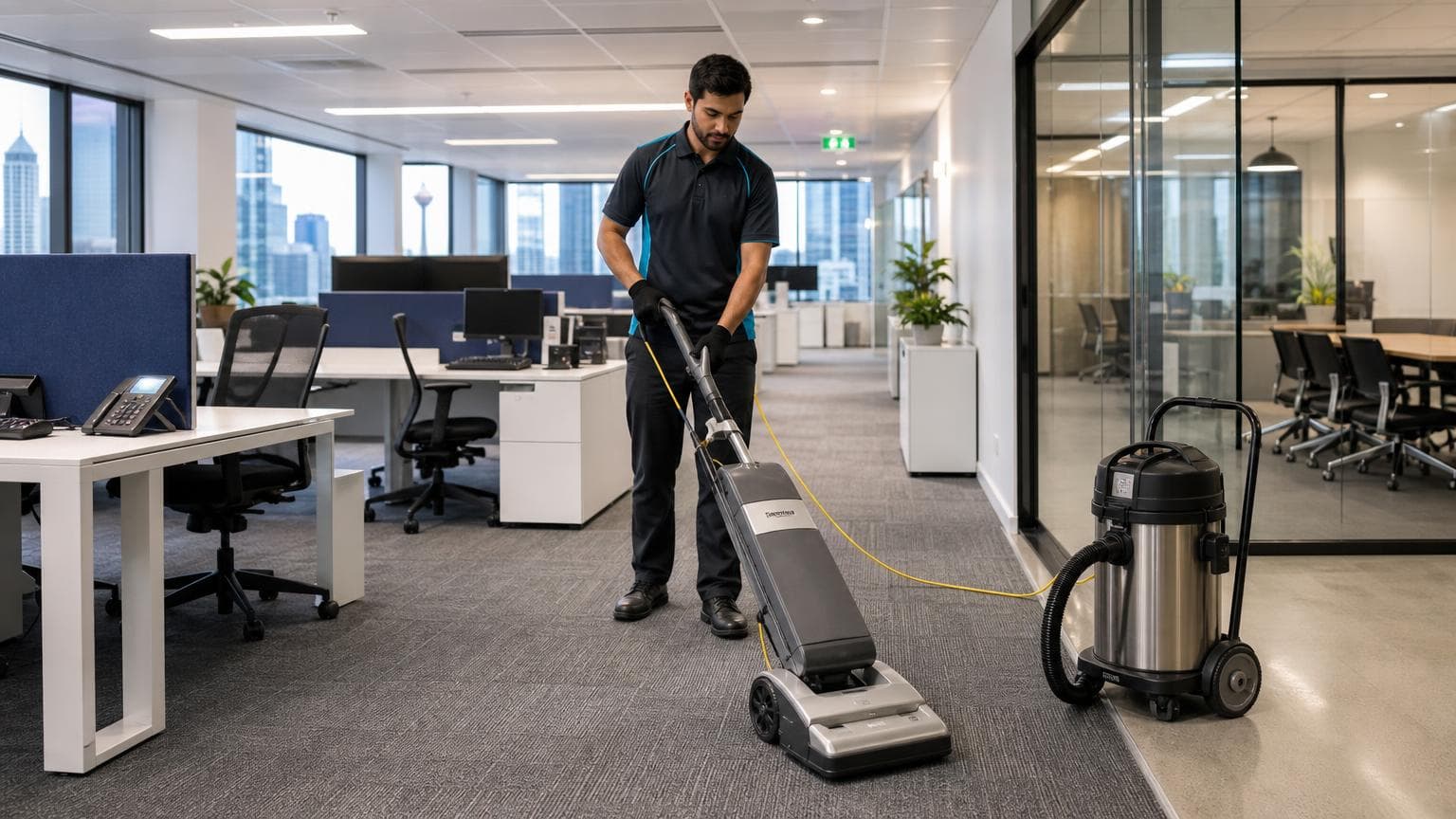
For large, open carpeted areas: Upright vacuums remain a strong choice, offering powerful deep cleaning with typical paths of 12-18 inches for quick coverage. However, their bulk and aggressive brush rolls make them less suitable for tight spaces or delicate hard floors, where they can cause damage. They also tend to be the loudest option, often exceeding 75 dB, which can disrupt a busy office during working hours.
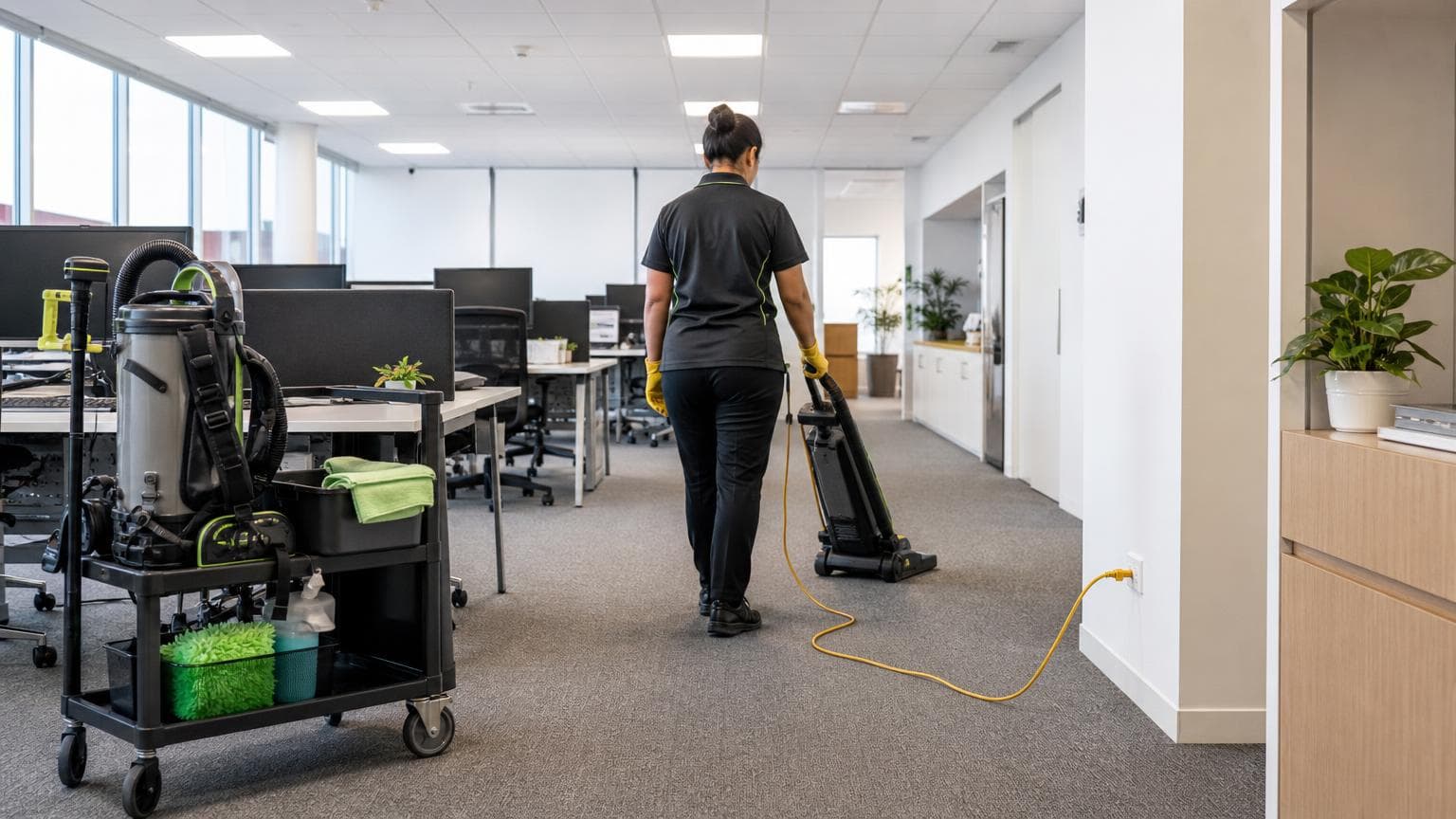
For agility and air quality in busy, mixed spaces: Backpack vacuums excel in offices with cubicles, stairs, and varied flooring. Their lightweight design (typically 5-10 kg) and ergonomic fit reduce operator fatigue. Many models include advanced HEPA filtration, capturing fine dust and allergens as small as 0.3 microns, significantly improving indoor air quality. Their main limitation is a smaller capacity (often 4-6 litres), requiring more frequent emptying than other types.
For versatility across all surfaces: Canister vacuums strike a balance of power and adaptability. Equipped with various attachments, they effectively clean carpets, hard floors, upholstery, and reach into tight crevices. They are generally quieter than uprights, often operating around 60-70 dB, making them a better fit for offices sensitive to noise. The primary drawbacks include their two-piece design, which can be less convenient to store and manoeuvre, and a tendency to tip if pulled too aggressively.
For automated routine maintenance: Commercial robotic vacuums offer convenience for light cleaning in specific, low-traffic zones, typically covering up to 200 sqm on a single charge. They are ideal for maintaining cleanliness outside of business hours but are not a substitute for deep cleaning. Their effectiveness is limited by battery life, navigation around obstacles, and inability to handle stairs or complex layouts without manual intervention. We caution against relying on them for anything beyond supplementary cleaning.
Beyond Suction: Critical Features to Prioritise
Many facility managers tend to prioritise raw suction power, mistakenly believing it is the sole indicator of cleaning effectiveness. This often leads to purchasing a machine that is either too aggressive for delicate surfaces (e.g., damaging polished concrete), too loud for an active office (exceeding 70 dB), or simply too cumbersome for daily use. We caution against making a purchase based purely on online reviews or generic specifications. Instead, we advise clients to test vacuums in their actual environment, focusing on factors like manoeuvrability around furniture and noise levels during business hours. Overlooking these aspects can lead to a powerful but ultimately ineffective machine, resulting in poor indoor air quality despite visible surface cleanliness, and unnecessary equipment wear.
A key part of our service involves training client staff on the correct use and maintenance of new equipment, ensuring they understand how to optimise settings for different surfaces (e.g., adjusting brush height for carpet vs. hard floor) and maintain filtration systems for consistent air quality. This prevents premature equipment failure and ensures sustained hygiene standards, ultimately extending the lifespan of your investment.
NSW Office Environment: Dust, Noise, and WHS Compliance
When selecting commercial cleaning equipment for offices across NSW, environmental factors can influence the ideal choice. For instance, offices in regional NSW, such as the Wagga Wagga and Riverina areas, may experience higher levels of agricultural dust compared to metropolitan Sydney offices. This difference can impact the required filtration system and frequency of maintenance for a commercial vacuum.
While there are no universal NSW-specific regulations dictating specific commercial vacuum models, adherence to Work Health and Safety (WHS) standards, particularly regarding noise levels (e.g., AS/NZS 1269.1 for occupational noise management) and ergonomic design, is crucial. For healthcare facilities, specific hygiene protocols often necessitate vacuums with advanced HEPA filtration to maintain air quality and prevent cross-contamination from airborne pathogens. As an NSW commercial cleaning contractor with industrial and construction cleaning experience, Eco Spark Facility Services understands these varied demands across the state.
Making the Right Vacuum Choice for Your Facility
Choosing the best commercial vacuum is a foundational decision that impacts the overall cleanliness, health, and operational efficiency of your NSW office. While this guide offers a comprehensive framework for comparing options, it cannot account for every unique facility layout or specific cleaning demand. For complex or large-scale environments, a professional site assessment remains essential to identify the precise models and strategies that will genuinely benefit your operation. Do not assume a general recommendation will suffice if your office has unique floorings, high-traffic patterns, or specific air quality requirements.
Eco Spark Facility Services provides comprehensive Commercial Industrial Cleaning in Wagga Wagga, Sydney, and across regional NSW. We understand the nuances of various commercial environments, from offices to warehouses and healthcare spaces, and integrate eco-friendly cleaning programs into our services.
To discuss your office cleaning requirements and receive a tailored recommendation that considers your facility's unique environment, request a consultation with Eco Spark Facility Services today.