Commercial Vacuum Comparison: Performance, Health & ROI
Selecting a commercial office vacuum involves more than just comparing wattage. Prioritise certified HEPA filtration, low noise, and durable construction suited to specific flooring types for genuine efficiency. This guide helps NSW businesses compare critical features for a healthier, more cost-effective workspace.
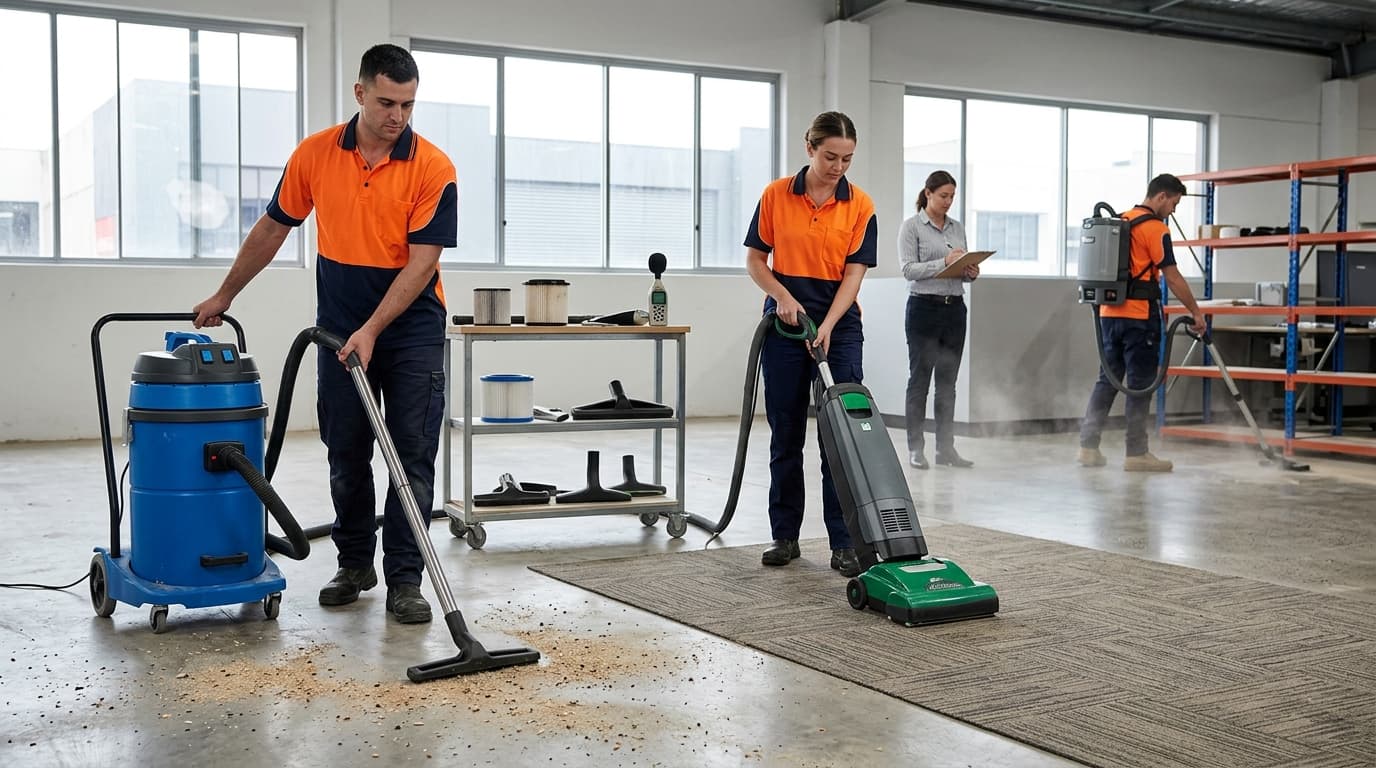
Commercial Vacuum Comparison: Performance, Health & ROI
Many facility managers begin their search for a commercial office vacuum by comparing raw suction power or motor wattage. This common approach, however, often misleads, as high wattage alone does not guarantee superior cleaning. For NSW businesses, from bustling Sydney offices to regional clinics, the right vacuum significantly impacts indoor air quality, staff well-being, and operational budgets. Its effectiveness hinges on design and specific features, not just raw power figures.
An effective commercial vacuum prioritises certified HEPA filtration, low noise output, and durable construction suited to specific flooring types, rather than just impressive specifications on a box. For example, a HEPA filter certified to capture 99.97% of particles at 0.3 microns is essential for maintaining high indoor air quality. Without it, fine dust and allergens recirculate, impacting staff health and productivity. This guide explains these critical differences for a healthier, more efficient workspace.
Beyond Marketing Claims: What Truly Drives Vacuum Performance?
The 'best' commercial vacuum for an office is rarely the one with the highest wattage. Instead, it's the model that delivers certified HEPA filtration (capturing 99.97% of particles at 0.3 microns), operates below 70 dB to minimise workplace disruption, and features robust construction with cleaning mechanisms specifically suited to your predominant flooring types. Prioritise these measurable factors alongside long-term durability, as they directly contribute to a healthier environment and lower total cost of ownership. Do not assume a higher price automatically means a better vacuum; focus instead on certified features like HEPA and dB ratings.
A common pitfall is equating high wattage directly with superior cleaning performance. While motor power is a component, it's secondary to the vacuum's overall engineering. For commercial office environments, the design of the brush system, the efficiency of the airflow path, and the integrity of the filtration system are far more critical. A vacuum with a 1200-watt motor but poor brush agitation or air sealing will underperform a well-engineered 800-watt unit on most office surfaces.
Key Comparison Points: Features That Deliver Real Value
Filtration Systems: HEPA vs. Standard
Indoor air quality is paramount in any office. Standard vacuums can recirculate fine dust, allergens, and airborne pathogens, affecting staff health and productivity. For this reason, true HEPA filtration is not optional; it's essential. A certified HEPA filter captures 99.97% of particles down to 0.3 microns, significantly improving air quality.
When evaluating vacuums, look for a sealed system design. This crucial feature prevents dust from escaping around the filter, ensuring all air passes through the HEPA medium. Without a truly sealed system, even a certified HEPA filter offers limited benefit, as unfiltered air bypasses the filtration, releasing fine particles back into the office environment.
Power vs. Design: Where Cleaning Efficiency Lies
We frequently see NSW businesses invest in high-wattage machines that lack the appropriate brush roll for their specific flooring, leading to premature carpet wear or ineffective hard floor cleaning. For instance, an aggressive brush roll designed for deep pile carpets can fray low-pile commercial carpet fibres within months, costing thousands in early replacement. This common oversight results in higher long-term costs due to damaged surfaces or the need for more frequent deep cleaning services.
Noise Levels & Ergonomics: Impact on Productivity
Cleaning often occurs during or directly before/after business hours. A loud vacuum disrupts work, impacting productivity and comfort for employees and clients. Commercial vacuums should operate below 70 dB, with many models now achieving 60-65 dB, comparable to a normal conversation. This is especially important in medical centres or schools where noise sensitivity is higher.
Ergonomics also play a role in efficiency and staff well-being. Lightweight designs, adjustable handles, and comfortable harnesses for backpack vacuums reduce operator fatigue, leading to more thorough and consistent cleaning. A less fatigued cleaner is a more effective cleaner.
Durability & Maintenance: Long-Term Cost Comparison
Commercial environments demand equipment that withstands heavy use. Consumer-grade vacuums are not built for daily, hours-long operation and will fail prematurely, leading to higher replacement costs and downtime. Invest in models known for robust motors, heavy-duty components, and easy access for routine maintenance.
Consider the availability of parts and service in NSW. A vacuum that can be quickly repaired with readily available components reduces long-term operational costs. Simple, tool-free brush roll replacement or filter changes are indicators of a well-designed commercial unit.
Eco-Friendly Options: Performance vs. Sustainability
Eco-friendly cleaning extends beyond just products; it includes equipment choice. Many modern commercial vacuums are designed for energy efficiency, using less power without compromising performance. Additionally, look for models with reusable or washable filters to reduce waste.
Eco Spark Facility Services applies green cleaning principles to all aspects of our work. We know that eco-friendly products can meet commercial hygiene standards when matched to surface type and facility requirements. This same philosophy applies to vacuum selection, ensuring minimal environmental impact while maintaining high cleanliness standards.
Matching Your Needs: NSW-Specific Considerations
Businesses across NSW face diverse cleaning challenges. For instance, offices in metropolitan Sydney might contend with higher foot traffic and urban dust, while facilities in regional areas like Wagga Wagga or Estella may experience agricultural dust or specific environmental residues. The choice of vacuum should reflect these local conditions.
When selecting a vacuum, consider the predominant flooring types in your specific NSW location. Carpets require strong brush agitation, while hard floors benefit from powerful suction and gentler brush rolls or specialised attachments. A versatile commercial vacuum can adapt to various surfaces, ensuring comprehensive cleaning across different areas of your facility.
One frequent oversight we encounter is selecting a single, general-purpose vacuum for an entire facility with varied flooring types. This leads to either inadequate cleaning on certain surfaces or accelerated wear on others. For example, using a powerful upright vacuum designed for deep pile carpet on delicate hard floors can cause scratches or dull finishes over time. Specialised attachments or a combination of machine types often yield superior results and extend floor life.
Making Your Decision: Avoiding Common Pitfalls
Choosing the best commercial vacuum is a strategic decision that affects your office's cleanliness, air quality, and operational budget. Rather than guessing, assess your specific needs: what are your main flooring types, what are your air quality goals, and what are your operational hours? This forms the basis for a tailored selection. While this guide provides a framework for evaluating vacuum features, it does not replace a professional on-site assessment, especially for facilities with complex layouts or unique hygiene requirements. Additionally, this comparison focuses solely on vacuum cleaners and does not cover other essential commercial cleaning equipment like scrubbers or polishers.
Our approach at Eco Spark Facility Services involves a detailed site assessment to understand your unique cleaning challenges. We evaluate flooring materials, traffic patterns, air quality concerns, and operational schedules before recommending equipment or service plans. This ensures that any solution, whether it's a specific vacuum model or a comprehensive cleaning program, is precisely matched to your needs for optimal performance and efficiency.
For comprehensive Commercial Industrial Cleaning in Wagga Wagga, or general Commercial Cleaning Services Wagga Wagga, the equipment used is critical. If you are managing an office in Wagga Wagga, a dedicated Office Cleaning Services Wagga Wagga NSW provider will understand these nuances. For broader Commercial Cleaning Wagga Wagga NSW needs, or general Commercial Cleaning Services Wagga, making the right choice ensures consistent results.
To discuss your office cleaning requirements and receive tailored advice on equipment or professional cleaning services across NSW, contact Eco Spark Facility Services today. As an experienced NSW commercial cleaning contractor with eco-friendly product programs, we can help you make an informed decision that supports a healthier, more efficient workspace.