Commercial Office Vacuums: Upright, Canister & Backpack Compared
Selecting the optimal commercial vacuum cleaner impacts office hygiene, flooring lifespan, and client impression. This guide compares upright, canister, and backpack models, helping NSW businesses make an informed decision for daily cleaning needs. Understand essential features like filtration, durability, and ergonomics to ensure effective, long-term performance.
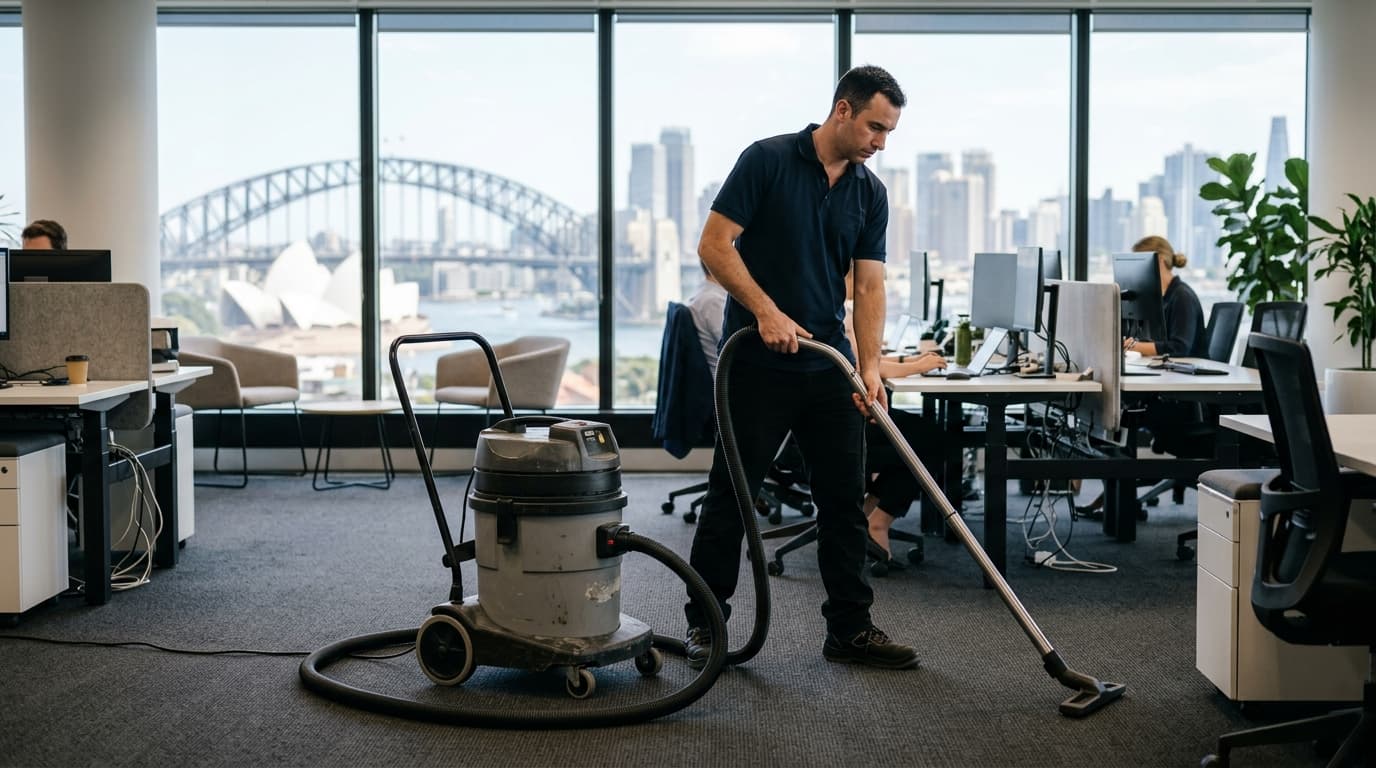
Choosing the Best Commercial Vacuum for Your Office: A Comparison
Selecting the optimal commercial vacuum cleaner directly impacts your office's hygiene, the lifespan of your flooring, and the overall impression on clients and staff. For instance, a vacuum with poor filtration can recirculate fine dust, worsening indoor air quality and potentially triggering allergies, a common concern in offices with synthetic carpets. Faced with diverse models—from uprights to canisters and backpacks—many facility managers struggle to identify which features truly matter for their specific environment. This guide compares the core types and essential features, helping NSW businesses make an informed decision for their daily cleaning needs.
Understanding Commercial Vacuum Types
For most offices, the best commercial vacuum prioritises durability, effective filtration, and user-friendliness over sheer raw power. A 1000W model with superior brush roll design and HEPA filtration often outperforms a 1200W unit that lacks these features, especially on low-pile commercial carpets, demonstrating that wattage alone is a misleading metric. While strong suction is a baseline requirement, consistent performance in high-traffic commercial settings depends more on robust construction, advanced HEPA filtration for air quality, and an ergonomic design that reduces operator fatigue. Focusing solely on motor wattage often overlooks these critical long-term benefits.
Upright Vacuums: Ideal for Large Carpeted Areas
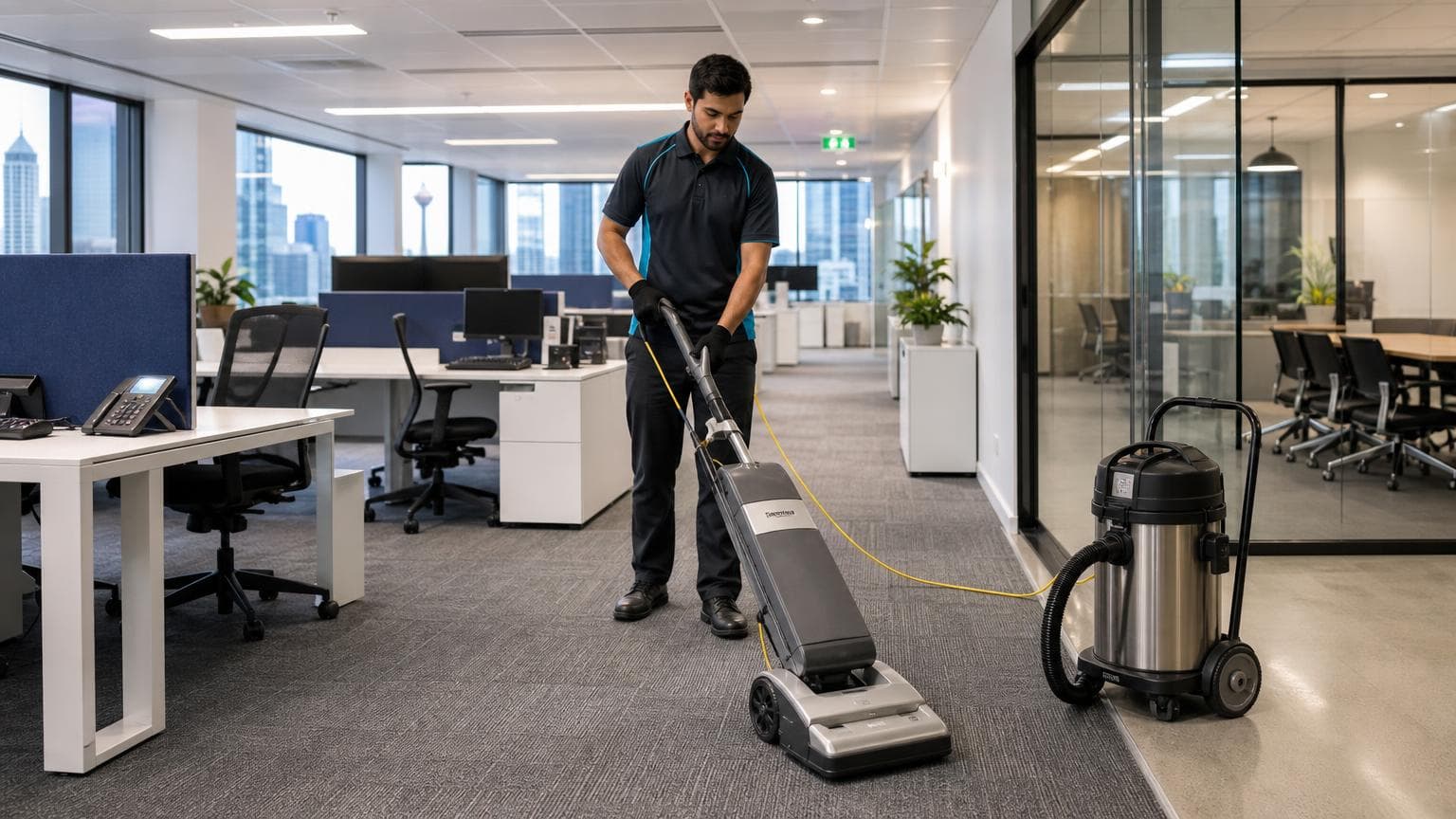
Ideal for large, open carpeted areas, upright vacuums excel at deep cleaning with powerful brush rolls that agitate carpet fibres. We generally recommend them for spaces over 50 square metres of uninterrupted carpet, where their bulk is less of a hindrance. However, for smaller offices or those with significant furniture, an upright will prove cumbersome and inefficient, making it a poor choice.
Canister Vacuums: The Versatile Choice for Mixed Floors
Canister models offer superior versatility for mixed flooring, easily transitioning between hard surfaces and carpets with interchangeable heads. Most quality canister vacuums include a dedicated powerhead for carpets and a separate hard floor tool, allowing quick adaptation without sacrificing performance on either surface, unlike some uprights that struggle on hard floors. Their maneuverability around furniture is a significant advantage, making them a strong choice for offices with varied layouts and upholstery. For offices with varied layouts and a mix of hard floors and carpets, a high-quality canister vacuum is often the most practical and efficient single investment, outweighing the minor speed advantage of an upright on vast open carpets. The trade-off is often a larger footprint for storage and slightly slower operation on vast open carpets compared to an upright.
Backpack Vacuums: Maximising Agility in Complex Spaces
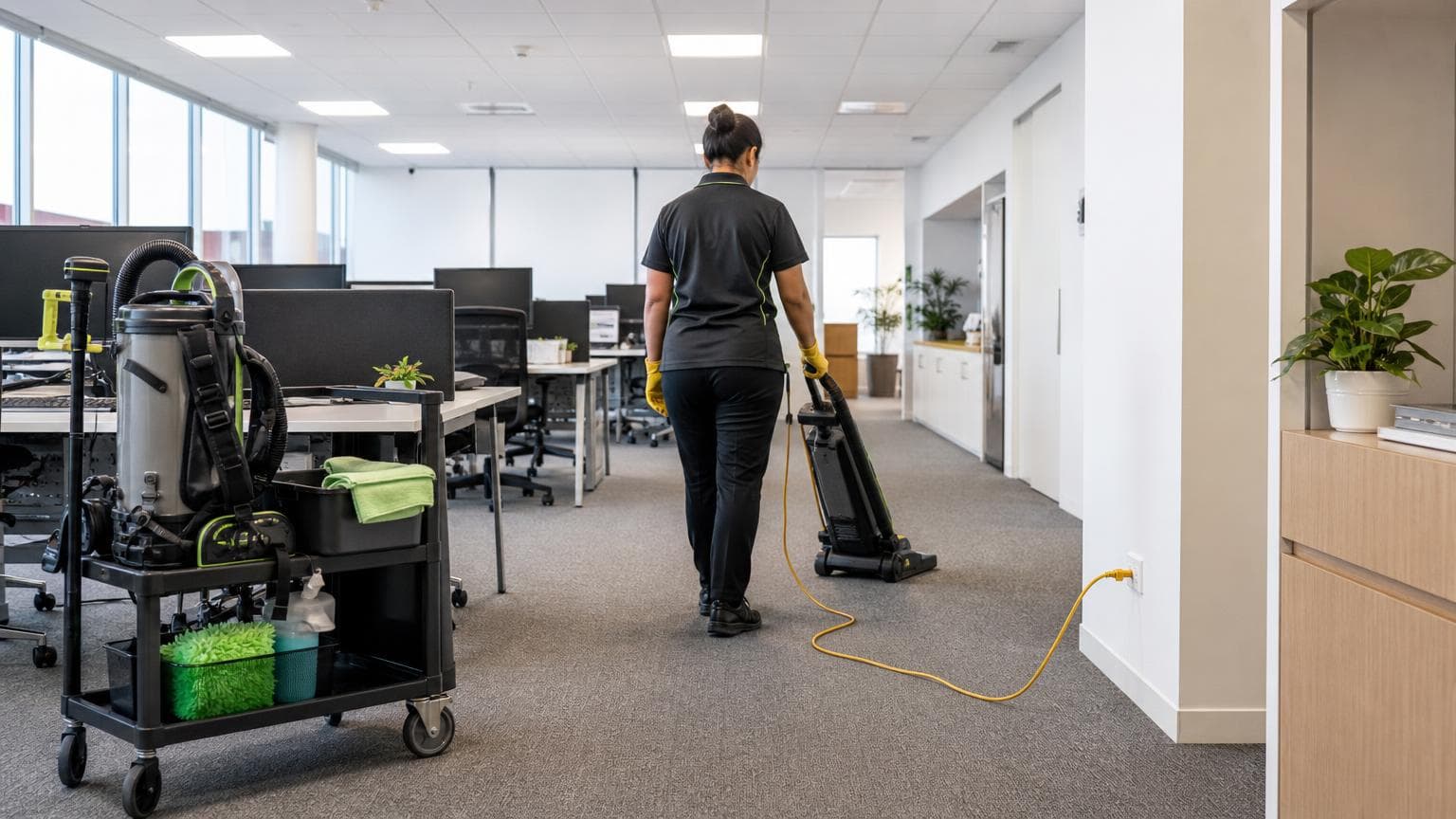
For rapid cleaning of stairs, small offices, or areas with numerous obstacles, backpack vacuums are unmatched in speed and ergonomic comfort. Their lightweight design and freedom of movement significantly reduce cleaning time. However, their dust capacity is typically smaller, often around 4-6 litres, requiring more frequent emptying, and they are not designed for deep carpet extraction.
Essential Features for Optimal Performance
Filtration: Protecting Indoor Air Quality
Maintaining excellent air quality in an office is fundamental. A multi-stage filtration system, ideally featuring HEPA filters, captures 99.97% of particles down to 0.3 microns. This is paramount for employee health and preventing the recirculation of dust, allergens, and even some viruses. Standard filters simply won't offer this level of protection, often leading to poorer indoor air quality despite visible cleanliness.
Durability: Built for Daily Commercial Use
Commercial vacuums endure daily use. Look for models with robust motor housings, reinforced hoses, and industrial-grade wheels. A plastic body might save upfront cost, but a metal or high-impact composite chassis will withstand bumps and drops far better, translating to fewer repairs and longer service life. We find that investing in a reputable brand with accessible spare parts significantly reduces long-term operational costs.
Ergonomics and Maneuverability: Reducing Fatigue
The ease with which a vacuum can be operated directly impacts cleaning efficiency and staff comfort. Consider the machine's weight, wheel design, hose flexibility, and cord length. An ergonomic design reduces operator fatigue, especially during extended cleaning shifts, which ultimately leads to more thorough and consistent results.
Matching the Tool to the Task: Precision Cleaning
Choosing the right cleaning equipment always hinges on understanding both the surface and the desired outcome. For example, in a recent solar panel cleaning project in Estella NSW, our team focused on removing fine dust, bird droppings, and leaf residue without scratching delicate surfaces. We used a non-abrasive, eco-friendly process with a pure-water rinse. This meticulous approach restored optimal sunlight access and protected the panels' longevity. The same principle applies directly to vacuum selection: using an industrial-grade wet/dry vacuum on delicate office carpet, for instance, would be just as inappropriate as using abrasive chemicals on solar panels. It risks damaging fibres, reducing carpet lifespan, and failing to achieve a truly clean, residue-free finish. The right vacuum preserves assets, the wrong one degrades them.
In an office setting, the daily accumulation of dust, dirt tracked in from outside, and general debris requires a vacuum that can handle consistent use without rapid wear. For large carpeted areas, an upright vacuum with a powerful brush roll and good suction is often effective. For smaller, more complex spaces with furniture, a canister or backpack vacuum might offer better maneuverability. The key is matching the vacuum's capabilities to the floor types and layout of your specific office.
Beyond Purchase Price: Total Cost of Ownership
Beyond the initial purchase, consider the ongoing expenses. Filter replacement frequency, availability and cost of spare parts, and energy consumption contribute significantly to the total cost of ownership. A vacuum with easily replaceable, affordable filters and a high energy efficiency rating will almost always prove more economical over its lifespan, even if its upfront price is higher. Neglecting routine maintenance, such as brush roll cleaning or hose checks, is a common mistake that drastically shortens a vacuum's effective life. For businesses focused on sustainability, inquire about energy efficiency ratings and the availability of eco-friendly product lines.
NSW Specifics: Adapting to Local Cleaning Challenges
In New South Wales, particularly in areas like Sydney and Wagga Wagga, the type of debris encountered can vary. Agricultural dust in regional NSW can be particularly fine and pervasive, making effective filtration essential for both cleaning and maintaining indoor air quality. Building sites, even post-construction clean-ups, present different challenges with plaster dust and larger debris. Selecting a vacuum with robust dust containment and strong suction is vital in these environments. For businesses in Sydney, the sheer volume of foot traffic means vacuums must be built for constant use.
Eco Spark Facility Services, as a NSW commercial cleaning contractor experienced with industrial and construction cleaning, understands these varied demands. Our approach involves matching the right equipment to the specific environment, ensuring effective cleaning without compromising the longevity of surfaces or the health of occupants. This includes understanding how different floor types, from commercial carpets to hard surfaces, respond to various cleaning methods and equipment.
Making an Informed Decision for Your Office
Choosing the right commercial vacuum cleaner involves understanding your specific office environment, the types of flooring you have, and the daily cleaning demands. Comparing models based on durability, filtration, and ease of maintenance will lead to a more effective and cost-efficient choice over time. This guide focuses on general office environments and may not fully address highly specialised cleaning needs, such as hazardous material clean-up or post-disaster restoration, which require specific certifications and equipment. For those niche applications, consulting with a specialist equipment provider is essential.
If you are looking to enhance your office cleaning program in Sydney, Wagga Wagga, or across Regional NSW, consider how the right equipment, combined with professional cleaning services, can make a significant difference. Get in touch with Eco Spark Facility Services to discuss your facility's unique needs and explore tailored cleaning solutions.