Commercial Office Vacuums: NSW Comparative Selection Guide
Selecting the right commercial vacuum for your NSW office impacts efficiency, air quality, and staff health. This guide compares backpack, upright, and canister vacuums, detailing key factors like filtration, noise, and ergonomics. Learn to avoid common selection mistakes and tailor your choice to specific NSW regional demands for optimal cleaning results.
Commercial Office Vacuums: A Comparative Guide for NSW Businesses
Selecting the optimal commercial vacuum for an office involves more than surface-level aesthetics; it directly impacts operational efficiency, indoor air quality, and staff well-being. For NSW facility managers, understanding that the right vacuum can reduce cleaning time by up to 20% and significantly lower airborne dust levels is crucial for long-term cost savings and a healthier environment. This guide compares common commercial vacuum types, helping you select the best fit for your office's unique demands.
Understanding Your Options: Backpack, Upright, and Canister Vacuums
Backpack Vacuums: Pros, Cons, and Ideal Use Cases
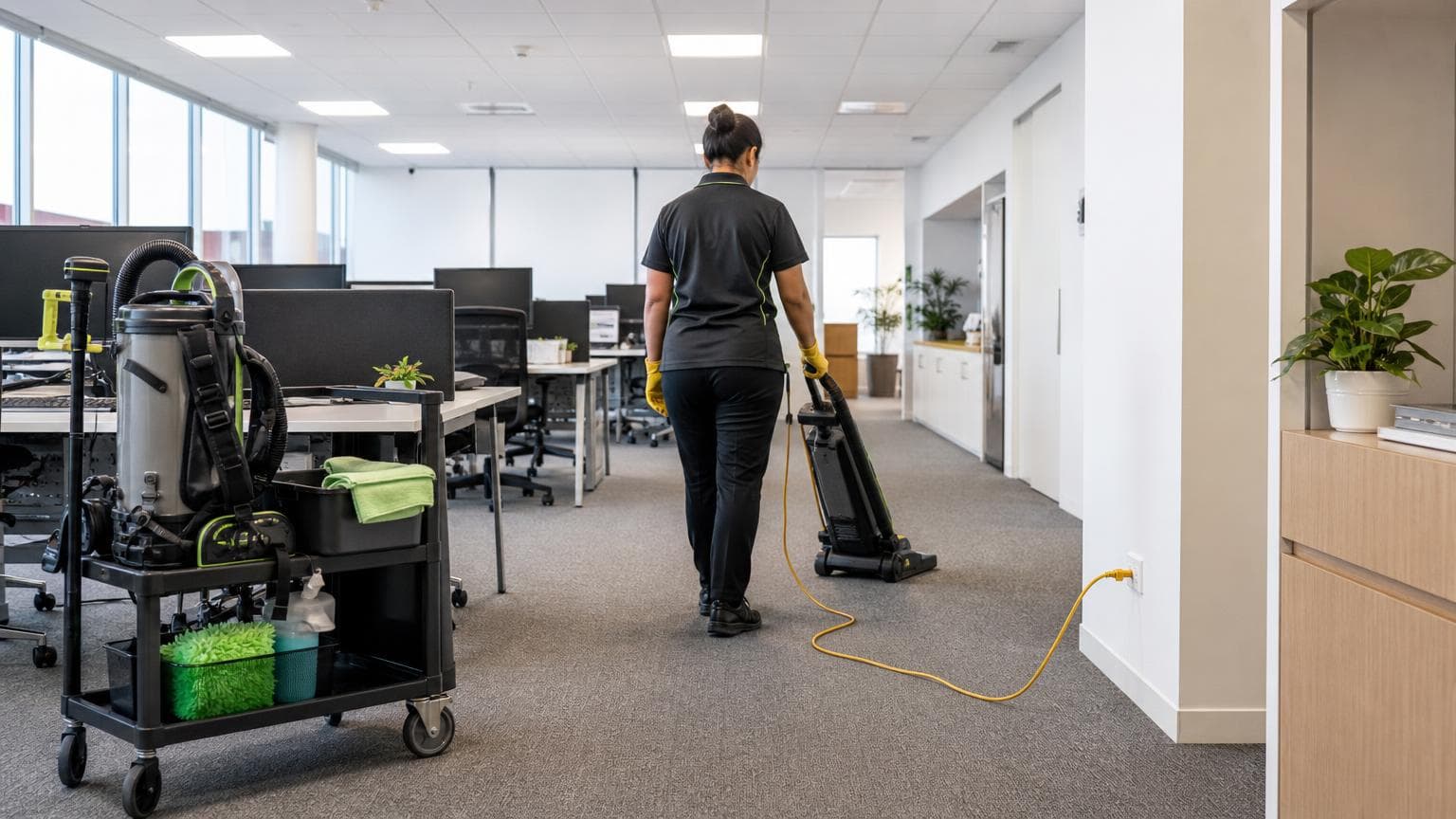
Backpack vacuums excel as the most efficient choice for general office cleaning, particularly in modern, dynamic environments with high workstation density or multiple levels. Their ergonomic design, typically weighing 4-6 kg, and exceptional portability allow cleaners to navigate cubicles, stairs, and tight spaces up to 30% faster than traditional upright models, significantly reducing physical strain. They perform well on both carpeted and hard surfaces, offering a versatile solution. However, their typical 4-6 litre capacity might require more frequent emptying in very large, open-plan spaces, a trade-off for their agility.
Upright Vacuums: Pros, Cons, and Ideal Use Cases
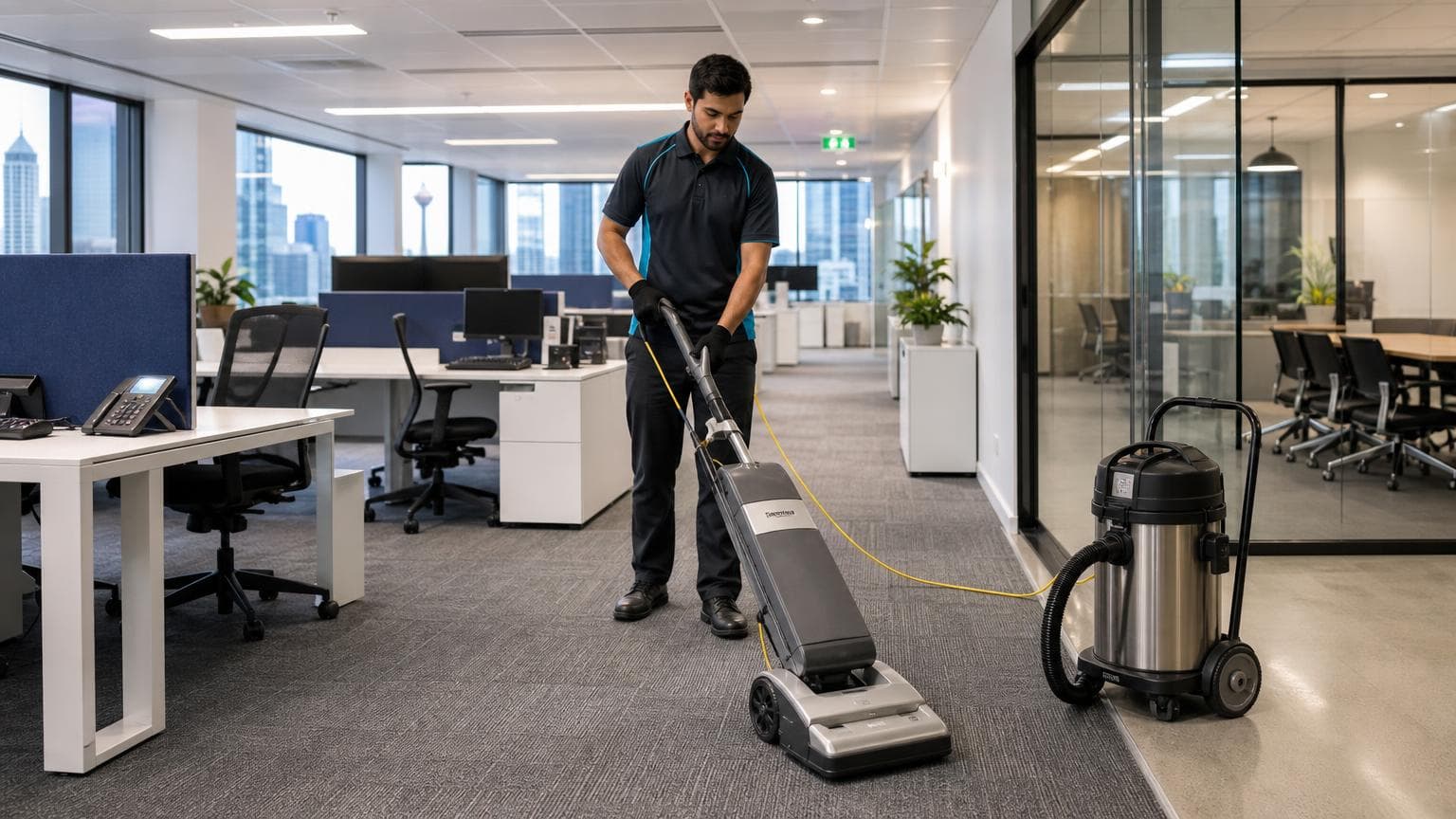
Upright vacuums are best suited for large, open-plan offices dominated by extensive carpeted areas. Their wider cleaning paths, often 30-45 cm, and powerful brush agitation are highly effective for deep cleaning carpets and extracting embedded dirt. Many models also feature attachments for edges and upholstery. However, their typical weight of 7-10 kg and limited agility make them a less efficient choice for offices with numerous obstacles or predominantly hard floors, often increasing cleaning time in mixed environments. Relying solely on an upright for a mixed-surface office is a common misstep.
Canister Vacuums: Pros, Cons, and Ideal Use Cases
Canister vacuums offer excellent versatility and reach, making them suitable for offices with a mix of hard floors, carpets, and intricate areas. Their separate motor and collection unit provide strong suction through a hose and wand, allowing for precise cleaning under desks, around furniture, and on delicate surfaces. They are often quieter than upright models, typically operating at 60-65 dB, which is beneficial for cleaning during business hours. While canister vacuums offer unmatched precision for detail work, relying on them for large, open carpeted areas can be a slower process than using a dedicated upright, underscoring the trade-off between versatility and raw speed for specific tasks.
Key Factors for Choosing the Right Office Vacuum
Beyond the vacuum type, several factors determine the best choice for your NSW office:
- Filtration: For office settings, HEPA filtration is not merely an upgrade; it is a necessity for occupant health, capturing 99.97% of particles 0.3 microns or larger. This significantly improves indoor air quality.
- Noise Level: For offices requiring cleaning during business hours, prioritising models operating below 65 dB, common in many canister and some backpack designs, is essential to minimise staff disruption.
- Ergonomics and Weight: Prioritise models under 6 kg for backpack vacuums and those with adjustable handles for uprights; this directly reduces staff fatigue and the risk of musculoskeletal injuries, a common oversight in purchasing.
- Capacity: For large offices, vacuums with a dust capacity of 8 litres or more significantly reduce emptying frequency, saving valuable cleaning time.
- Attachments: Ensure the vacuum includes essential attachments like a crevice tool (for tight corners), dusting brush (for surfaces), and upholstery nozzle (for chairs), as their absence forces manual cleaning or requires separate purchases, adding hidden costs.
Many assume raw suction power is the sole indicator of effectiveness, but this is a common misconception. Filtration and brush agitation are equally critical for indoor air quality and carpet longevity. Prioritising a vacuum solely on low upfront cost is a false economy; it inevitably leads to higher labour time, reduced indoor air quality, and premature wear on flooring, ultimately costing more.
Common Mistakes in Vacuum Selection (and How to Avoid Them)
One common mistake we observe is prioritising a low upfront cost without considering the long-term operational expenses. A cheaper, less durable vacuum often leads to more frequent repairs, higher energy consumption, and less effective cleaning, ultimately costing more in labour and replacement parts. Another error is overlooking the importance of advanced filtration, especially in offices with occupants sensitive to allergens or dust. Clients often underestimate the impact of poor air quality on employee health and productivity, leading to hidden costs that far outweigh initial savings. This guide focuses on general office environments and may not fully address highly specialised cleaning needs, such as those in medical facilities or industrial cleanrooms, which often require specific certifications or equipment.
NSW Considerations: Tailoring Your Choice to Local Demands
Businesses across New South Wales face varying cleaning demands. While Sydney offices demand quiet operation (under 65 dB) for daytime cleaning, regional NSW locations, such as those near Wagga Wagga, often face unique challenges like fine particulate dust from agricultural activities or specific environmental residues like red soil. This necessitates vacuums with advanced multi-stage filtration, not just HEPA, to prevent premature filter clogging and maintain air quality effectively.
When selecting a commercial vacuum for your NSW office, consider factors such as local air quality challenges and any specific industry standards your facility must meet. As an NSW commercial cleaning contractor with extensive industrial and construction cleaning experience, Eco Spark Facility Services understands the diverse requirements across the state. We ensure our Commercial Industrial Cleaning in Wagga Wagga and Commercial Cleaning Wagga Wagga NSW services, as well as those in Sydney and Estella, are equipped with methods and tools appropriate for each unique environment.
Making an Informed Decision for Your Office
This guide provides a framework for selection, but for highly specialised environments or large-scale facilities, a professional cleaning assessment offers tailored insights. Eco Spark Facility Services conducts a thorough site assessment to identify high-traffic zones, specific allergen concerns, and flooring types. This allows us to recommend equipment that not only cleans effectively but also minimises disruption and maximises long-term value, integrating seamlessly into an eco-conscious cleaning strategy. To refine your office's cleaning strategy, or to explore options for Office Cleaning Services Wagga Wagga NSW and other locations across Sydney and Regional NSW, consider speaking with an experienced partner.
Ready to optimise your office cleaning? Contact Eco Spark Facility Services for a tailored consultation and discover how the right equipment and eco-conscious methods can enhance your workspace's cleanliness and efficiency.