Compare Commercial Office Vacuums | NSW Cleaning Guide
Selecting the right commercial vacuum for your NSW office involves more than just suction power. Balance floor type suitability, air quality, and durability to ensure efficient cleaning and a healthier workspace. Avoid common pitfalls by understanding filtration, noise levels, and the true cost of ownership.

Comparing Commercial Vacuums for Office Cleaning in NSW
Many businesses default to the cheapest vacuum or the one with the highest advertised suction, but this often leads to inefficient cleaning and higher long-term costs. For office environments, selecting the right commercial vacuum means balancing its suitability for your specific floor types—from low-pile carpets to polished concrete—with its ability to maintain healthy indoor air quality and endure daily use. This guide focuses on general office environments and may not fully address the highly specialised needs of industrial or cleanroom facilities.
Key Factors for Selecting an Office Vacuum
For most NSW offices, robust HEPA filtration is non-negotiable, especially given the prevalence of fine dust and agricultural particulates in many areas. Prioritise a vacuum that explicitly states its filtration class, not just 'HEPA-like'. While raw suction power is important, it's secondary to a sealed system that prevents dust recirculation. For example, a busy healthcare clinic *must* prioritise advanced filtration and quiet operation, whereas a small accounting firm might find a versatile canister model with multiple attachments more practical than a dedicated upright for its mixed surfaces.
Understanding Commercial Vacuum Types
When selecting a commercial vacuum for an office, consider these primary types and their best applications:
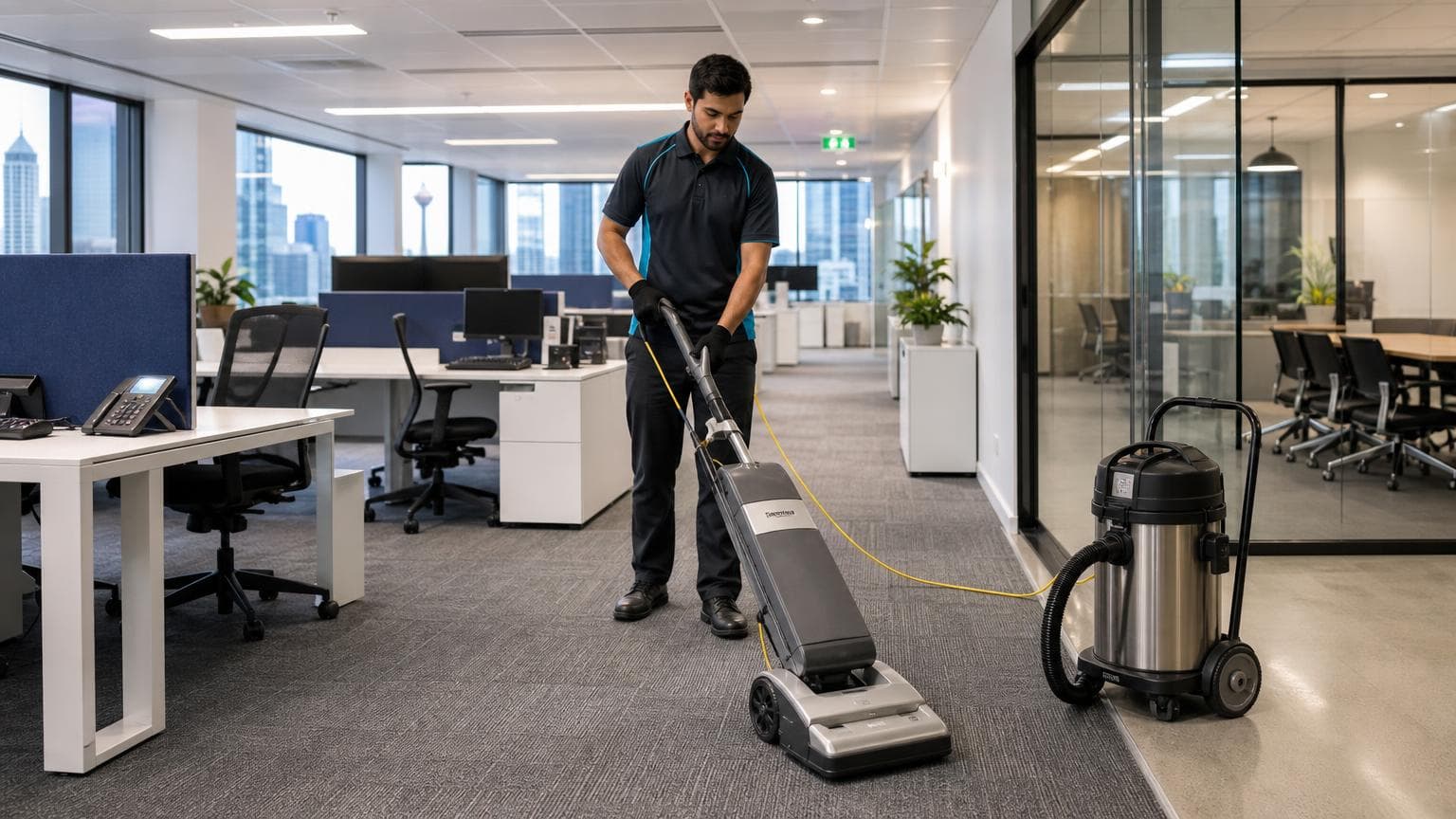
- Upright Vacuums: Best suited for large, open carpeted areas, providing strong brush agitation for deep cleaning. Their larger size, however, limits their use in offices with many obstacles or tight spaces, making them less versatile for mixed environments.
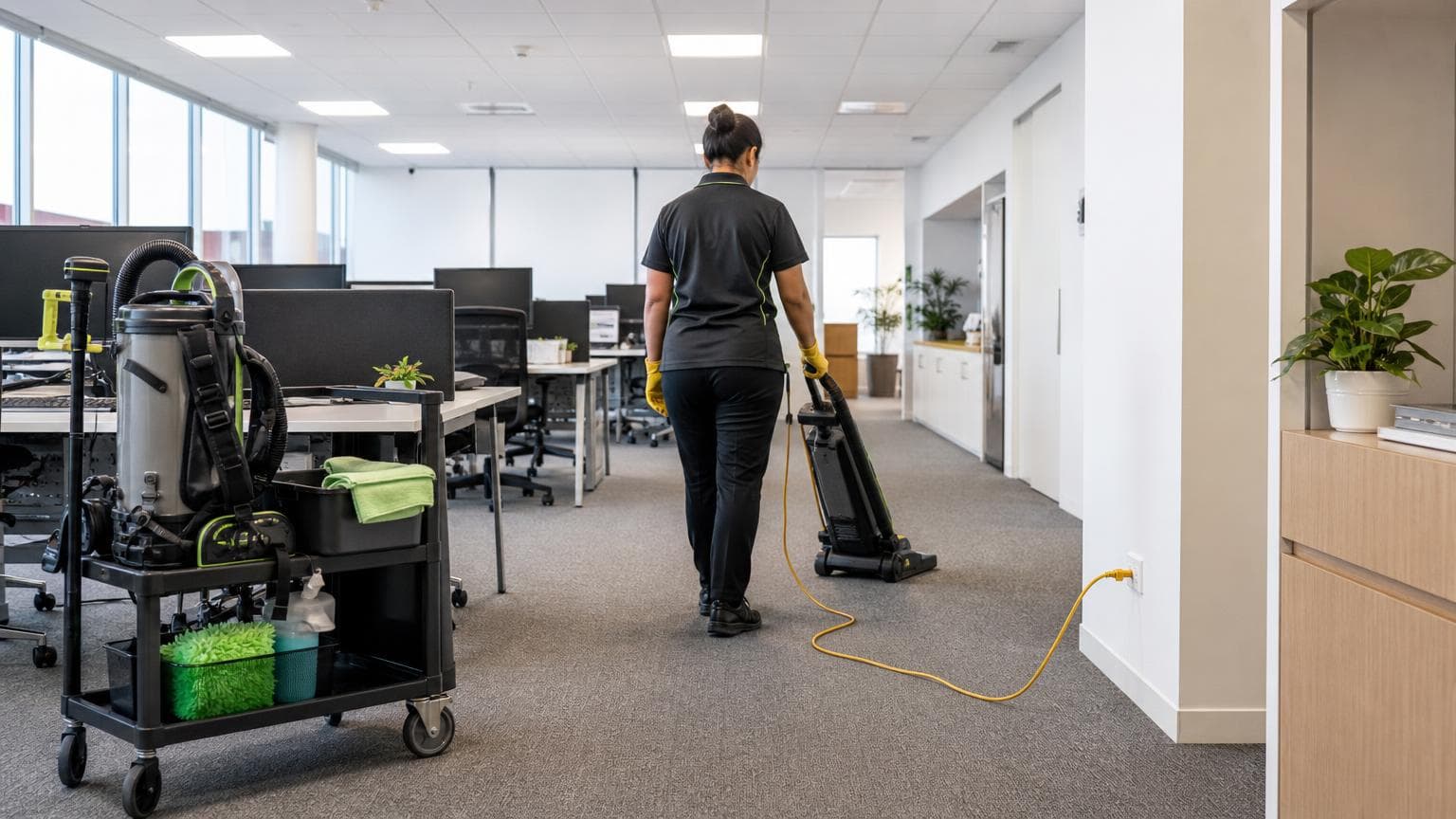
- Backpack Vacuums: Offer superior maneuverability, making them ideal for cluttered offices with numerous workstations, cubicles, or for cleaning stairs. They allow for efficient spot cleaning and reduce operator fatigue due to their ergonomic design. The main trade-off is typically a smaller dust capacity compared to upright models.
- Canister Vacuums: Highly versatile for hard floors, detailed above-floor cleaning with various attachments, and navigating around furniture. While they excel in adaptability, their separate hose and body can make them slower for extensive, open carpeted areas.
It's a common mistake to expect one vacuum to excel on both deep-pile carpet and polished concrete; for mixed-surface offices, a single machine will always involve a compromise. We recommend either a high-quality canister vacuum with dedicated attachments for both hard floors and carpets, or, for larger spaces, investing in a combination: an upright for extensive carpeted zones and a backpack or smaller canister for hard surfaces and detailed work. While this multi-machine approach has a higher upfront cost, it significantly improves cleaning effectiveness and reduces labour time compared to a single, less-optimised unit.
Beyond Suction: Filtration and Air Quality
Consider the impact of dust and debris on office environments. Effective filtration is not just about the filter itself, but the entire sealed system of the vacuum that prevents fine particles from escaping back into the air. In regional NSW, where agricultural dust can be a factor, a vacuum with inadequate filtration might simply recirculate fine dust, impacting air quality and potentially exacerbating allergies among staff. Understanding HEPA filtration in commercial settings is crucial. Eco Spark Facility Services prioritises assessing the specific type and source of dust in an office—whether it's fine office particulate, construction debris, or external environmental dust—to recommend solutions that genuinely improve indoor air quality, not just surface cleanliness. This approach ensures that the chosen equipment, combined with proper technique, contributes to a healthier workspace.
Durability, Noise, and Operational Efficiency
- Durability and Build Quality: Commercial vacuums endure daily, rigorous use. Always prioritise models constructed from robust materials designed for longevity and ease of maintenance. While a cheaper machine might save on upfront costs, its shorter lifespan and increased downtime will almost certainly result in higher overall expenses.
- Noise Level: Consider the operational noise, especially if cleaning during business hours. Quieter models minimise disruption to office occupants, improving the working environment for staff and cleaning professionals alike.
- Bagged vs. Bagless: Bagged vacuums offer superior containment of dust and allergens, making them the preferred choice for hygiene-sensitive environments like medical clinics. Bagless models can seem more cost-effective due to no bag purchases, but they often expose operators to dust during emptying and require more frequent filter cleaning, which can negate perceived savings if not managed properly.
Common Pitfalls in Vacuum Selection
Facility managers sometimes make choices that lead to inefficiency or compromise hygiene. One common oversight is selecting a vacuum based solely on price or basic suction power, neglecting the importance of advanced filtration. A cheaper vacuum that recirculates fine dust can negatively impact staff health and increase allergy-related absences, incurring hidden costs that significantly outweigh initial savings. The true cost of a vacuum extends beyond its purchase price to its operational lifespan, maintenance needs, and impact on occupant health and productivity. Another mistake is not considering the specific environment. For example, using a vacuum designed for light residential use in a high-traffic commercial setting will lead to premature failure and ineffective cleaning. It's crucial to match the vacuum's capabilities to the demands of the space, understanding that a mismatch often results in higher overall expenses and poorer outcomes.
Local Considerations for NSW Offices
For businesses in New South Wales, environmental factors can influence vacuum choice. Regional areas, particularly those with agricultural activity like Wagga Wagga and Estella, may experience higher levels of outdoor dust that can infiltrate buildings. This reinforces the need for robust HEPA filtration to maintain indoor air quality. Furthermore, the type of flooring prevalent in Sydney offices, which might include extensive carpeting or polished concrete, will guide the selection between upright, backpack, or canister models. Understanding these local conditions helps in making a more informed decision that supports both cleanliness and operational efficiency.
Making an Informed Choice
Choosing the correct commercial vacuum is a foundational step toward a consistently cleaner, healthier office environment. If you need assistance evaluating your facility's specific cleaning needs or require professional cleaning services that leverage the right equipment, Eco Spark Facility Services provides expert guidance across NSW. We help businesses implement effective cleaning strategies, ensuring optimal hygiene and efficiency. Learn more about our commercial cleaning services.