Solar Panel Cleaning in NSW: When and Why It Matters for Business
Solar panels in NSW can lose access to valuable sunlight when dust, pollution and bird droppings build up. Learn when commercial sites should clean panels, how regional conditions affect maintenance, and why safe eco-conscious methods matter.
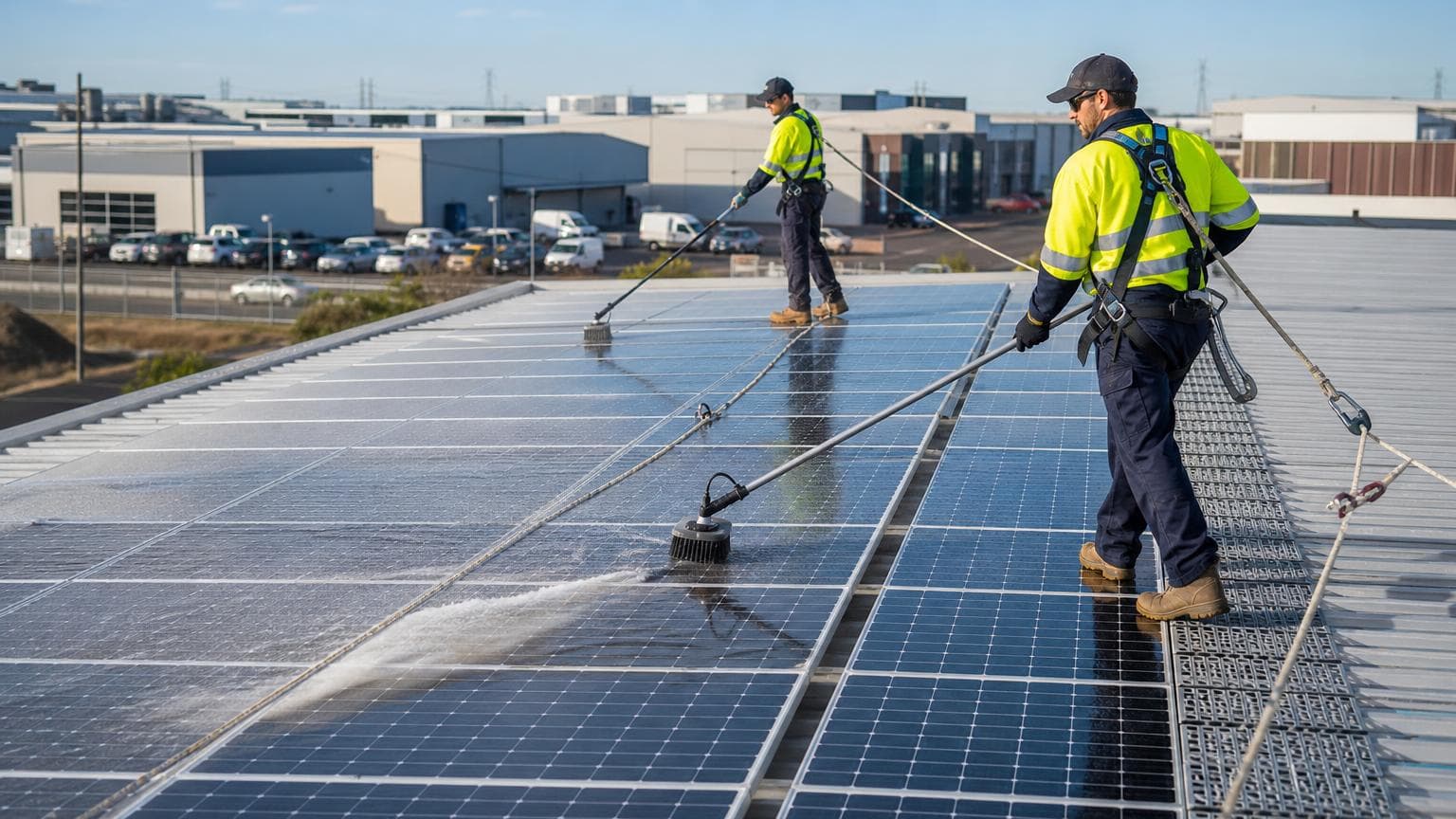
Solar panels are designed to work outdoors, but that does not mean they stay clean enough to perform at their best. Across New South Wales, commercial arrays collect fine dust, pollen, bird droppings, vehicle emissions, construction residue and airborne industrial particles. Over time, this surface contamination can reduce the sunlight reaching photovoltaic cells, create uneven shading and make it harder for facility managers to understand whether an energy system is delivering as expected.
For businesses investing in rooftop solar, solar panel cleaning is a practical maintenance task, not an optional cosmetic extra. The right schedule depends on your location, roof environment, panel tilt, nearby activity and energy monitoring data. In 2026, with electricity costs and sustainability reporting still high priorities for many organisations, keeping panels clean can support better energy performance while protecting a valuable business asset.
Solar Panel Cleaning NSW: Why Clean Panels Support Energy Performance
Even a thin layer of grime can block part of the light needed for solar generation. The effect is not always obvious from ground level. Panels may look broadly clean while fine dust, traffic film or dried rain spots reduce light transmission across the glass. Bird droppings are particularly important because they create concentrated shading over individual cells.
How much output is affected varies significantly. A lightly soiled urban roof may see only a modest loss, while a warehouse beside an unsealed yard, active construction site or high-traffic freight corridor can accumulate contamination much faster. The most reliable indicator is a comparison of system output against expected production, taking season, weather and system age into account.
Cleaning is worth investigating when you notice:
- A sustained output decline that cannot be explained by cloudy weather or seasonal daylight changes.
- Visible dust build-up, soot, bird droppings, leaves or residue along the lower edge of panels.
- Nearby construction, earthworks, roadworks, farming activity or industrial processing.
- Solar panels installed at a low tilt, where rain is less likely to wash loose dirt away.
- New shade from equipment, roof structures or vegetation that is trapping debris around the array.
- A gap in maintenance records, particularly on leased, multi-site or recently acquired premises.
Cleaning should be part of a broader solar maintenance plan. It does not fix faulty inverters, damaged cabling, defective modules or permanent shading. However, it removes a controllable source of lost generation and allows closer visual inspection of the array during the visit.
Regional Dust Exposure and Solar Panel Cleaning in Wagga Wagga
NSW has varied conditions, so a single cleaning frequency does not fit every site. Coastal Sydney sites can experience salt-laden moisture, traffic pollution and dense urban dust. Western Sydney commercial estates often contend with warehouse vehicle movements, nearby development and dry airborne particles. In the Riverina, dry spells, agricultural activity and windblown soil can create a more persistent fine-dust layer.
Businesses seeking solar panel cleaning Wagga Wagga or solar panel cleaning Estella should consider local conditions rather than relying only on a generic annual schedule. A facility near open land, new housing development, distribution routes or frequently disturbed soil may need inspections more often than an office in a sheltered, low-dust location. After extended dry weather, a light shower may leave mud spotting rather than properly rinsing panels.
For most commercial properties, a sensible starting point is:
- Low-exposure office roofs: inspection every 6 to 12 months, with cleaning when monitoring or visual checks show soiling.
- Urban commercial and retail sites: inspection every 6 months, especially near major roads or construction activity.
- Warehouses and industrial premises: inspection every 3 to 6 months where dust, diesel particulates, loading yards or manufacturing residue are present.
- Riverina and high-dust regional sites: inspection after prolonged dry periods, dust events and nearby earthworks, plus a planned annual clean where justified.
These are planning guidelines, not rigid rules. A site with real-time solar monitoring can make more informed decisions by identifying unusual performance changes before scheduling work.
Safe Solar Panel Cleaning for Commercial Cleaning Sydney Properties
Cleaning solar panels involves more than applying water to glass. Rooftop work introduces fall hazards, electrical considerations, fragile panel surfaces and roof-access risks. Commercial cleaning Sydney businesses should use trained professionals who assess access, isolate hazards where required and follow the panel manufacturer guidance.
The safest cleaning method generally uses purified or deionised water with soft, non-abrasive equipment. Purified water helps reduce mineral spotting, while soft brushes and low-pressure water lifting tools remove surface grime without scratching protective coatings. Work should be planned for cool conditions where possible, such as early morning, to reduce rapid evaporation and thermal stress on hot panels.
A professional process should include:
- Site-specific risk assessment, safe roof access and fall-prevention controls.
- Visual checks for cracked glass, loose clamps, damaged frames, nesting activity and obvious debris.
- Soft-bristle, non-abrasive cleaning tools designed for solar glass.
- Purified water or manufacturer-approved cleaning solutions used sparingly.
- Low-pressure application, not aggressive pressure washing.
- Care around cables, junction boxes, inverter equipment and roof penetrations.
- Before-and-after reporting, including photos where practical and any defects requiring an electrician or solar technician.
High-pressure washers, harsh solvents, abrasive pads and domestic glass cleaners can damage panels, seals or coatings. Standing directly on modules is also unsafe and can cause microcracks. A cleaning contractor should never promise to repair electrical faults unless they are separately qualified and authorised to do that work.
Industrial Cleaning NSW Sites Need a Planned Roof Maintenance Approach
At factories, logistics hubs and warehouse cleaning Sydney sites, solar arrays are often large and difficult to inspect from the ground. These roofs can be exposed to forklift and truck traffic, diesel emissions, loading-bay dust, exhaust vents and particulate from nearby operations. Contamination may be uneven, with the dirtiest panels located near vents, roof edges or prevailing wind directions.
Integrating solar cleaning into your industrial cleaning NSW or facility management schedule can improve coordination and reduce disruption. For example, roof-access checks, gutter-clearing plans, skylight inspections and solar-panel cleaning may be programmed during the same maintenance window, subject to appropriate safety controls. This gives managers one clear record of roof-condition observations rather than disconnected contractor reports.
Before booking, gather useful site details such as:
- Number of panels and approximate roof area.
- Building height, roof pitch and available access points.
- Whether a roof anchor system, edge protection or elevated work platform is needed.
- Known contamination, including dust, soot, bird activity or construction residue.
- Preferred operating hours and any warehouse traffic restrictions.
- Solar monitoring screenshots or inverter alerts from the previous few months.
Costs vary with access complexity, panel count, water access, safety equipment and the level of contamination. Rather than relying on a flat online price, commercial clients should request a site-specific quote. This ensures the scope accounts for safe access and reporting, not simply the number of panels.
Eco Friendly Cleaners Sydney Businesses Can Trust Around Solar Assets
Environmental responsibility matters on rooftops as well as inside buildings. Eco friendly cleaners Sydney businesses should prioritise methods that limit chemical runoff and avoid products that may leave films on solar glass. In many cases, purified water and mechanical agitation from soft equipment are enough to remove routine dust and grime.
Responsible solar cleaning also means managing wastewater appropriately, avoiding overspray near drains where contaminants may travel, and using only manufacturer-compatible products for stubborn residues. This approach aligns with wider sustainable facility care, whether your property also needs office cleaning Sydney services, school cleaning NSW support, window cleaning or post-construction cleaning.
A reputable provider will be transparent about what can be cleaned safely. Heavy cement dust, paint overspray, hardened bird residue or industrial fallout may require a tailored method and a careful test area before work begins. Rushing these jobs with harsh chemicals or excessive force risks turning a maintenance issue into an expensive replacement issue.
When to Book Solar Panel Cleaning in NSW
The best time is usually before contamination becomes severe and when work can be safely coordinated around weather, roof access and business operations. Book an inspection after major dust events, extended dry weather, nearby building works or repeated bird activity. If your monitoring platform shows an unexplained decline, arrange an assessment rather than assuming the system simply needs cleaning.
For a practical 2026 maintenance plan, combine scheduled inspections with condition-based cleaning. This avoids unnecessary work on panels that are performing well, while ensuring high-exposure sites are not left until soil build-up is substantial. Keep cleaning reports with inverter and energy-production records so you can identify patterns over time.
Eco Spark Facility Services delivers careful, eco-conscious solar panel cleaning NSW solutions for commercial and industrial properties. Whether you manage a Sydney office roof, a regional warehouse or a high-dust industrial facility, our team can assess site conditions and create a safe cleaning plan. Contact Eco Spark Facility Services to request a tailored quote for your NSW property.